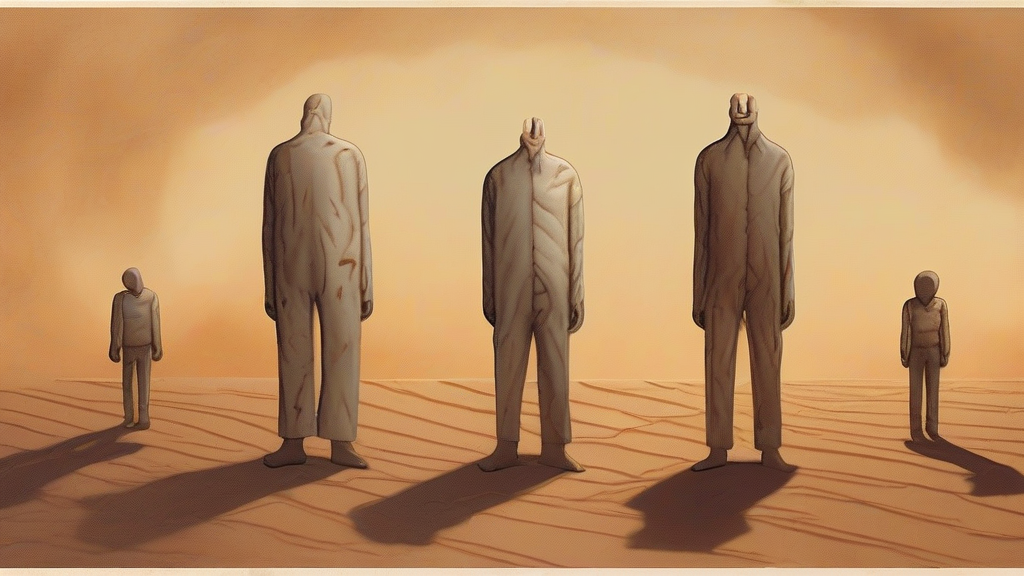
What does deformity mean?
Deformity is a noun referring to a malformation — an abnormality in the shape or structure of a body part, whether congenital, developmental, or caused by injury or disease. The word carries strong connotations: in medical and clinical settings it is a precise, neutral descriptive term, appearing in phrases such as "spinal deformity," "facial deformity," or "congenital deformity." Outside medicine, however, it can feel blunt or even offensive, since it frames a bodily difference as a flaw; modern usage increasingly favors more neutral terms such as "condition" or "difference" when speaking about individuals. Derived from Latin roots meaning "to misshape" (from de- "away, wrongly" plus forma "shape, form"), the word entered English in the late Middle English period. It pairs naturally with adjectives like "severe," "minor," "progressive," and "visible." Understanding both its technical precision and its social weight makes "deformity" a word best used carefully — accurate in diagnosis, potentially hurtful in description.
nounA deformity is a physical malformation or abnormality in the shape or structure of a part of the body, especially one present from birth or resulting from injury or disease.
- A visible malformation or abnormality in body structure, especially congenital or from injury/disease.
"The surgeon corrected the deformity in the child's spine through a series of operations."
"She was born with a mild deformity in her left hand that never limited what she could do."
"The X-rays revealed a progressive spinal deformity that would require surgical intervention."
Standard plural; countable noun, used for multiple instances or types of malformation.
"Rheumatoid arthritis can lead to joint deformities over time if left untreated."
The word "deformity" shares its Latin root with "conformity" — literally the difference between being shaped wrongly and shaped together.
Reviewed by Deb Chak, Editor. AI-assisted content curated by RJS Tech Solutions LLP.
Etymology of deformity
"Deformity" comes from the Latin deformitas, itself derived from deformis ("misshapen, ugly"), formed from de- ("away, off, wrongly") combined with forma ("shape, form"). It entered Middle English via Old French in the late medieval period, retaining its core sense of physical misshapenness. The same Latin root gives English related words including "deform," "deformed," "deformation," and, by extension, "conform" and "conformity" — all built around the idea of form or shape.
Related word forms
How deformity is actually used
The term is clinical and neutral in medical contexts but can sound harsh or stigmatizing when applied to people in everyday speech; phrases like "difference" or "condition" are often preferred in sensitive or person-first language. Commonly used attributively as in "birth deformity" or "facial deformity."
Easily confused with deformity
"Deformation" refers to the act or process of changing shape (often of objects or materials), while "deformity" refers to a permanent state of physical malformation, especially of the body.