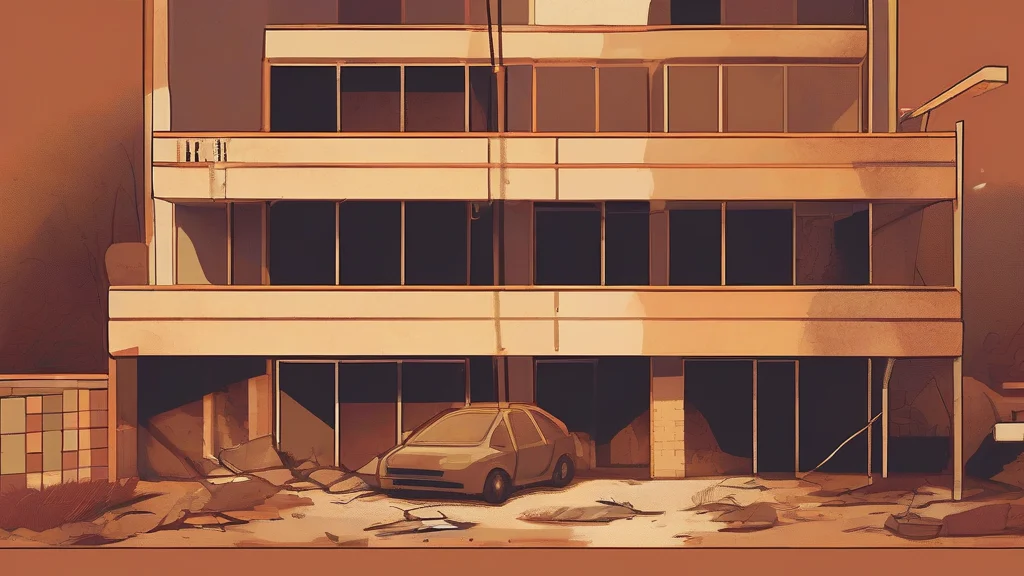
What does degenerated mean?
"Degenerated" is the past tense and past participle of the verb "degenerate," meaning to have declined from a previous, better state into a worse one. It is most often used of situations, institutions, discussions, or conditions that have slipped gradually out of control — a negotiation may degenerate into hostility, a neighborhood into neglect, or a person's health into serious impairment. The word carries a distinctly negative connotation and frequently implies not just worsening but a fall away from an accepted standard, which lends it a formal or even moralizing tone. As an adjective, "degenerated" describes something corrupted from its proper form, though this use is now relatively rare outside phrases like "degenerate art." Derived from the Latin degenerari, meaning to depart from one's ancestry or kind, the word retains that vivid sense of falling away from what something ought to be. It remains valuable for writers who want to convey progressive, dispiriting decline with precision and weight.
Past tense and past participle of 'degenerate': to have declined from a higher or better state into a lower or worse one.
"The protest degenerated into rioting after nightfall."
Typically followed by 'into' when naming the worse state that resulted.
Having declined or fallen from the normal or desirable qualities of its type; morally corrupt.
"He dismissed the movement as a degenerated imitation of the original philosophy."
Less common than the verb; mostly literary or technical.
The same Latin root that gives us 'genius' and 'generous' also gave us 'degenerate' — literally to 'step down' from one's kind or origin.
Reviewed by Deb Chak, Editor. AI-assisted content curated by RJS Tech Solutions LLP.
Etymology of degenerated
"Degenerate" comes from the Latin verb degenerare, formed from de- ('down, away') plus genus, generis ('race, stock, kind'), so its literal sense was to depart from one's ancestral quality or kind. English adopted the verb in the late 15th to early 16th century, first in the sense of falling below the virtues of one's forebears before broadening to describe any decline from a better state. It shares its root with words like "generate," "generous," and "regenerate," all ultimately tracing back to the Proto-Indo-European root *gene- meaning to give birth or beget. The related noun "degeneration" and adjective "degenerative" developed alongside it, particularly in medical and scientific usage.
Related word forms
How degenerated is actually used
'Degenerated' is largely formal or literary when describing decline; in everyday speech, 'went downhill' or 'fell apart' are more common. When applied to people rather than situations, it can sound judgmental or dated. The adjective sense is most familiar today in fixed phrases like 'degenerate art'.
Easily confused with degenerated
'Degraded' implies being lowered in rank, quality, or dignity, often by an outside force, while 'degenerated' emphasizes a gradual internal decline from a former better state.
'Deteriorated' is the neutral, general term for becoming worse, whereas 'degenerated' often carries a stronger implication of moral or structural collapse.