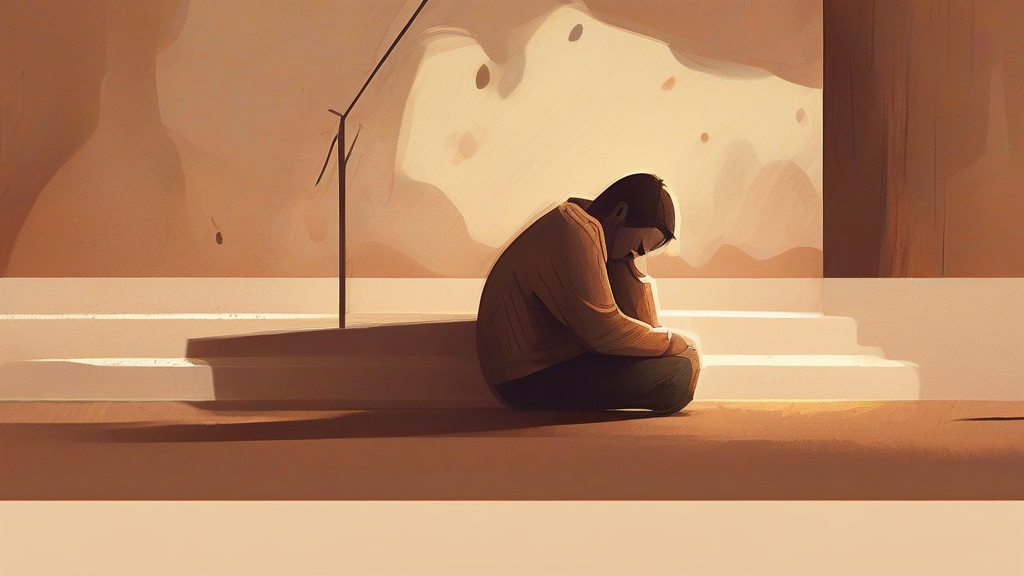
What does depressiveness mean?
Depressiveness is an abstract noun denoting the quality or tendency of being depressive — that is, of producing or reflecting gloom, sadness, or low spirits. Unlike 'depression', which usually names a state of mind or a clinical condition, depressiveness is most naturally applied to things that exude bleakness: an atmosphere, a landscape, a novel's closing chapters, or a person's habitual temperament. It belongs chiefly to formal and literary registers, appearing more often in critical writing than in everyday speech. The word carries an inherently negative connotation, so it is chosen when a writer wants to characterize something as pervasively dispiriting rather than merely momentarily sad. Though rare, it fills a genuine gap in English by allowing speakers to name gloom as an enduring attribute rather than a passing episode.
nounThe quality or state of being depressive; a tendency toward gloom, sadness, or low spirits, whether in mood, atmosphere, or character.
- The quality of tending to cause or reflect low spirits; gloominess or bleakness, especially of an atmosphere, place, or work of art.
- A habitual tendency toward despondency in a person's temperament.
"A pervasive sense of depressiveness hung over the abandoned mining town."
"Critics noted the oppressive depressiveness of the film's final act."
"Her letters from that winter reveal a deepening depressiveness of spirit."
Virtually never used in the plural; the noun is almost always treated as uncountable, referring to an abstract quality.
"The essay contrasted the depressivenesses of two national literatures."
While 'depression' describes the storm, 'depressiveness' names the weather system — the built-in tendency toward gloom that can belong to a person, a place, or even a piece of music.
Reviewed by Deb Chak, Editor. AI-assisted content curated by RJS Tech Solutions LLP.
Etymology of depressiveness
Depressiveness is formed within English by adding the noun-forming suffix '-ness' to 'depressive', which derives ultimately from the Latin verb 'deprimere', meaning 'to press down' — from 'de-' ('down') plus 'premere' ('to press'). The same Latin root gives English 'pressure', 'compress', 'suppress', and 'repression'. The figurative sense of being emotionally 'pressed down' developed in English over the seventeenth century and later, with '-ness' formations supplying the abstract quality.
Related word forms
How depressiveness is actually used
A relatively rare, formal word; it is far less common than 'gloominess' or 'bleakness'. It most often appears in literary criticism and descriptive prose, typically applied to atmospheres, settings, works of art, or temperaments rather than to clinical mental-health contexts.
Easily confused with depressiveness
Depression is the condition or state of low mood itself, while depressiveness is the abstract quality or tendency of being depressive — often applied to places, atmospheres, or temperaments rather than to clinical illness.
Depressive is primarily an adjective (or a person with depressive tendencies), whereas depressiveness is the noun naming that quality.