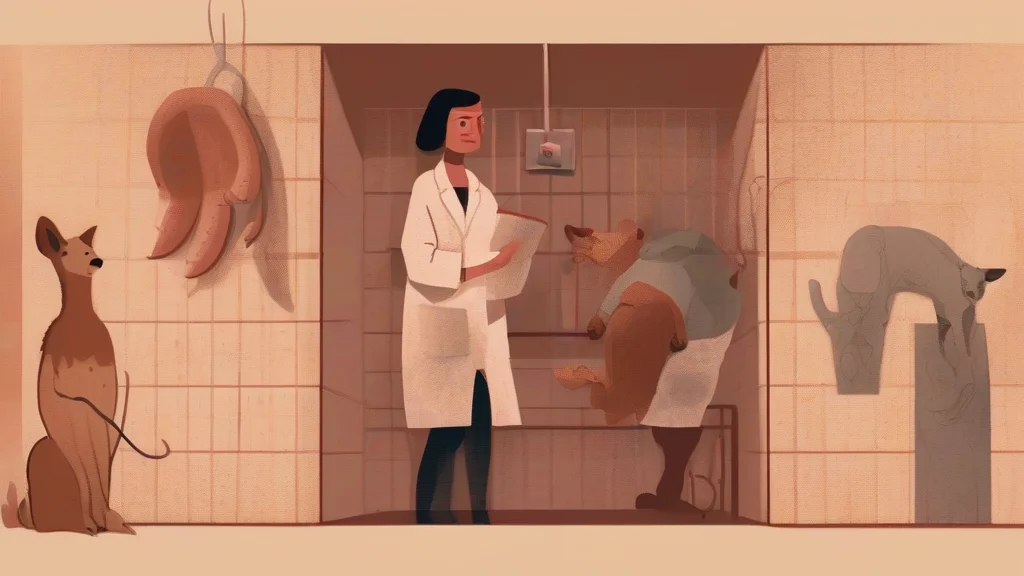
What does desexed mean?
"Desexed" describes an animal that has undergone surgery to remove or disable its reproductive organs, rendering it incapable of breeding. The word is the past tense and past participle of the verb "desex," and it functions adjectivally in phrases such as "a desexed cat." While speakers of American English usually reach for "neutered," "spayed," or the informal "fixed," Australian English strongly favors "desexed," and the term appears widely in Australian veterinary, shelter, and local-government contexts. It carries a neutral, matter-of-fact register rather than a euphemistic one, making it well suited to official guidelines about pet ownership and animal welfare. A rare figurative sense — something stripped of vitality or edge — occasionally appears in criticism, as in a "desexed" adaptation of a novel. For anyone writing for an international audience, it is worth remembering that "desexed" may sound unfamiliar outside Australia, where "neutered" or "sterilized" are the expected terms.
Removed the reproductive organs of (an animal); sterilized by castration, spaying, or a similar procedure.
"The clinic desexed over two hundred stray cats last year."
Chiefly Australian English; other varieties typically use "neutered," "spayed," or "sterilized."
(Of an animal) having had its reproductive organs removed or rendered inactive.
"Desexed rabbits generally live longer, healthier lives."
Applied almost exclusively to animals; figurative extensions are rare and can sound odd.
Aussie vets say "desexed," American shelters say "spay and neuter," and British clinics often prefer "neutered" — same surgery, three national dialects.
Reviewed by Deb Chak, Editor. AI-assisted content curated by RJS Tech Solutions LLP.
Etymology of desexed
"Desexed" derives from "desex," formed by adding the Latin-derived prefix "de-" (indicating removal or reversal) to "sex," which entered English from Latin "sexus." The verb arose in the twentieth century, particularly in Australian English, as a plain alternative to euphemisms like "fix" or clinical terms like "sterilize." It belongs to the productive family of "de-" verbs that undo a state — compare "defuse," "deregister," and "deform."
Related word forms
How desexed is actually used
As a verb form, "desexed" is the past tense and past participle of "desex." The term is especially common in Australian English, where "desex" is the standard verb for animal sterilization; American English typically uses "neuter," "spay," or "fix," while "sterilize" is the more clinical register everywhere. The adjective use is largely restricted to animals; applying it to people is unusual and can read as jarring. The figurative sense (lacking vigor or appeal) exists but is much less common than the literal veterinary sense.
Easily confused with desexed
"Deceased" means dead, while "desexed" means surgically sterilized — the words share a de- prefix but nothing else.