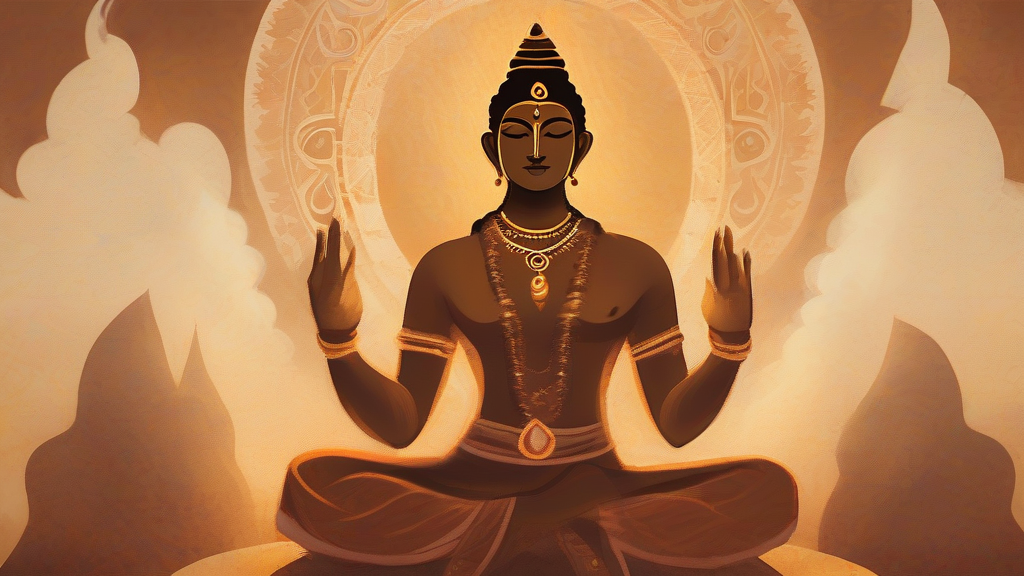
What does deva mean?
A deva is a divine being in the religious traditions of South Asia. In Hinduism, devas are gods or celestial beings — such as Indra, Agni, and Varuna — who inhabit heavenly realms, wield great powers, and are worshipped or propitiated in ritual and myth. Buddhism adopted the term as well, using it for benevolent superhuman beings who enjoy long lives of pleasure in heavenly realms but remain bound to the cycle of rebirth, making them objects of respect rather than ultimate refuge. In modern New Age and esoteric circles, the word has taken on an additional sense, referring to nature spirits thought to guard plants, landscapes, and natural processes. The term entered English through Sanskrit scholarship in the eighteenth and nineteenth centuries, and its ancient pedigree is remarkable: deva descends from a Proto-Indo-European root meaning 'to shine,' making it a direct cousin of Latin deus and of the English words divine and deity. Whether encountered in temple art, Buddhist cosmology, or contemporary spiritual writing, deva consistently evokes luminous, elevated beings of light and power.
nounIn Hinduism and Buddhism, a divine being or god; a benevolent supernatural being of a rank above humans. In New Age contexts, a nature spirit believed to watch over natural objects and processes.
- In Hinduism: a god or divine being, one of the celestial beings inhabiting the higher realms.
- In Buddhism: a benevolent supernatural being occupying one of the heavenly realms, still subject to rebirth.
- In New Age and esoteric belief systems: a spirit said to oversee a natural object, place, or process.
"The temple carvings depicted devas floating amid clouds, bestowing blessings on the faithful below."
"Indra, king of the devas, wields the thunderbolt in Vedic mythology."
"Gardeners who follow this tradition leave offerings for the devas that tend the land."
Standard English plural adds -s; scholarly texts sometimes retain the Sanskrit invariant 'deva'.
"Ancient hymns invoke many devas, each governing a different force of nature."
English 'divine' and 'deity' are distant cousins of 'deva' — all tracing back to the same ancient root meaning 'to shine.'
Reviewed by Deb Chak, Editor. AI-assisted content curated by RJS Tech Solutions LLP.
Etymology of deva
Deva comes from Sanskrit देव (devá), meaning 'god' or 'heavenly, shining one,' derived from the Proto-Indo-European root *deiwos, related to *dyew- 'to shine' or 'sky.' This makes it a genuine cognate of Latin deus ('god'), whence English deity and divine, and of Lithuanian dievas. The word was borrowed into English during the era of Sanskrit scholarship, as translators and orientalists described the pantheon of Hindu and Buddhist texts.
How deva is actually used
Plural is typically 'devas' in English; 'deva' also serves as the plural in Sanskrit-inflected usage. The word carries reverent connotations within religious contexts but may sound exotic or whimsical in everyday English.
Easily confused with deva
Devi refers specifically to a goddess or the great mother goddess in Hinduism, whereas deva denotes a god or divine being generally.