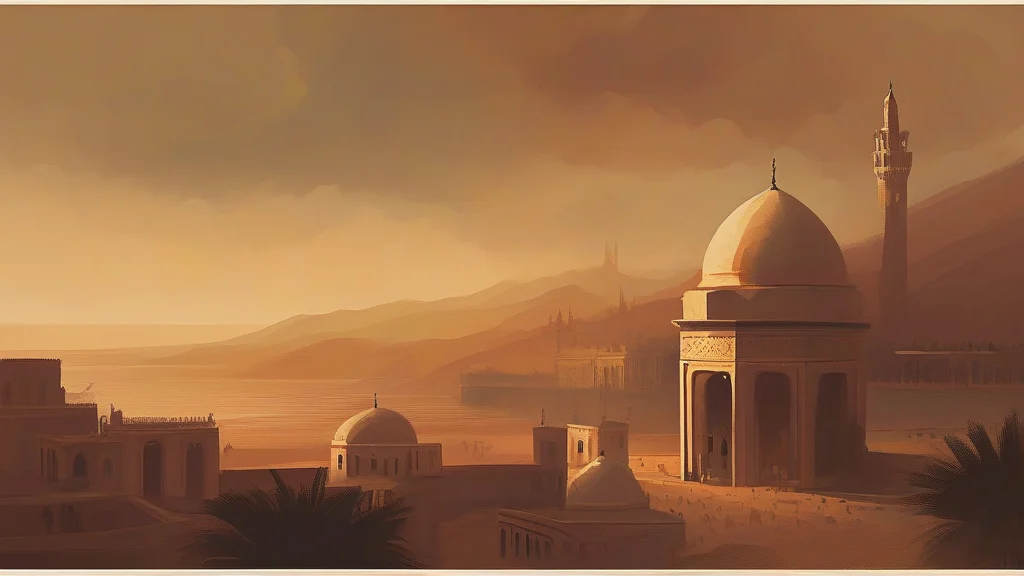
What does dey mean?
A dey was the title borne by the ruler of Algiers, and later also of Tunis, during the era of Ottoman influence in North Africa. The office emerged in the seventeenth century, when the deys — originally commanders of the janissary garrison in Algiers — wrested effective power from the pasha appointed by Constantinople and ruled with near-total autonomy. From their fortified palace, the Dey of Algiers controlled corsair activity in the Mediterranean, extracted tribute from European powers, and conducted diplomacy that repeatedly drew naval interventions from Britain, France, Spain, and the young United States. The most famous episode came in 1830, when an altercation between the Dey Hussein and the French consul gave France its pretext for invading Algeria, bringing dey rule to an end. Today the word appears almost entirely in historical writing about the Barbary states.
nounA dey was the title of the governor or military ruler of Algiers or Tunis under Ottoman rule, especially from the 17th to the early 19th centuries.
- The title of the ruler of Algiers or Tunis under Ottoman suzerainty, roughly from the 17th century to the 19th century.
"The Dey of Algiers refused to release the captured sailors without a hefty ransom."
"European navies frequently negotiated treaties with the Dey to curb piracy in the Mediterranean."
"In 1830, French forces besieged Algiers, ending three centuries of rule by the Dey."
The plural is regular and appears mainly in historical narratives referring to successive rulers.
"Over nearly three centuries, more than twenty deys ruled Algiers."
The Dey of Algiers once struck a French diplomat with a fly-whisk — an insult that helped spark France's conquest of Algeria.
Reviewed by Deb Chak, Editor. AI-assisted content curated by RJS Tech Solutions LLP.
Etymology of dey
The word "dey" entered English in the early seventeenth century from Turkish "dayı," literally meaning "maternal uncle," a term of address that became the title of Algeria's rulers. It spread through European languages via French and Italian accounts of the Barbary states, reflecting how much of what Europeans knew of Algiers came through Mediterranean trade and diplomacy. The same Turkish root underlies related Ottoman titles such as "bey," which likewise passed into English for regional rulers.
How dey is actually used
The word is almost exclusively historical and typically appears capitalized when referring to a specific officeholder. It survives mainly in discussions of North African history, Barbary corsairs, and colonial-era diplomacy.
Easily confused with dey
A bey is a provincial governor or chieftain in the Ottoman Empire, while a dey specifically governed Algiers or Tunis with broader sovereign authority.
"Day" refers to a 24-hour period, whereas a "dey" was a North African Ottoman ruler.