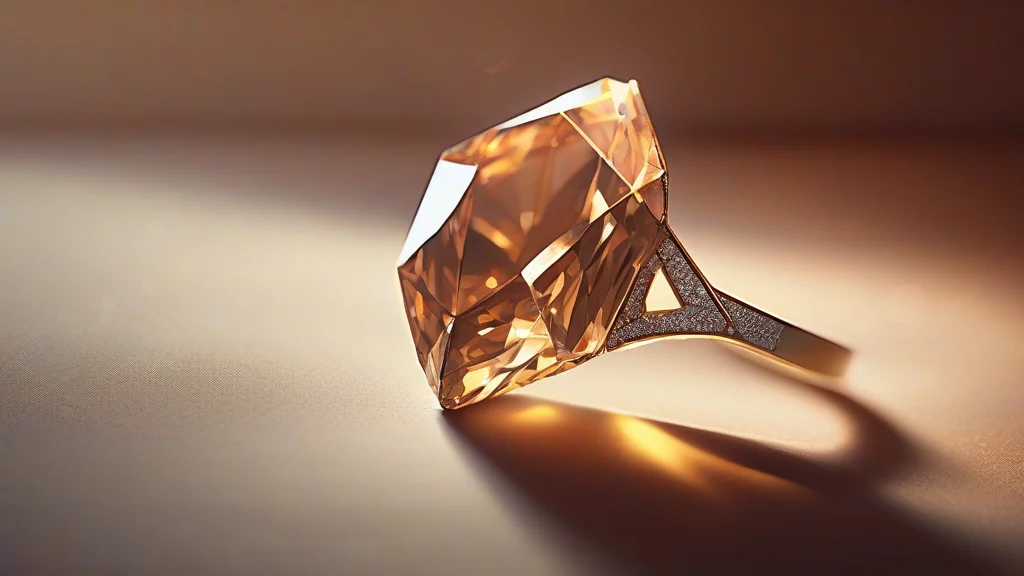
What does diamante mean?
Diamante is a noun with two distinct senses. Its older and more familiar sense refers to a small imitation diamond — a rhinestone or piece of cut glass — used to lend sparkle to clothing, jewellery, and accessories. In this use it frequently appears before other nouns, as in diamante earrings or a diamante-trimmed gown, and it carries connotations of glamour that is decorative rather than precious: eye-catching sparkle at an affordable price. The word is especially common in British fashion contexts, where Americans are more likely to say rhinestone. Diamante also names a form of concrete poetry: a short, unrhymed seven-line poem arranged so that its shape resembles a diamond. The first line holds a single subject word, the middle line builds toward a series of descriptive words, and the final line offers a word opposite in meaning to the first, making the form popular in classrooms for teaching contrast and parts of speech. Both senses derive ultimately from the same root as diamond.
A small imitation diamond, such as a rhinestone or piece of cut glass, used to decorate clothing and accessories.
"The vintage clutch was covered entirely in diamante."
Often used attributively before another noun, as in 'diamante trim' or 'diamante shoes'; more common in British English than American English.
A seven-line diamond-shaped poem that opens and closes with contrasting single words.
"Students wrote a diamante pairing 'fire' with 'ice'."
Regular plural; commonly used when speaking of loose stones or multiple decorated items, though the singular is frequent in attributive use.
"Sew the diamantes onto the bodice one at a time."
The sparkly 'diamond' on your favourite handbag isn't fooling anyone — it's literally just French for diamond, wearing a costume.
Reviewed by Deb Chak, Editor. AI-assisted content curated by RJS Tech Solutions LLP.
Etymology of diamante
Diamante comes from the Italian word for diamond, which itself traces back through Latin adamas ('unconquerable, hardest metal') from Greek adamas. It entered English via French diamant, and by the eighteenth century diamante was being used in English to describe imitation diamonds made of glass or paste. The name of the diamond-shaped poem form was borrowed directly from the Italian word in the twentieth century, when the form became a staple of creative-writing instruction.
How diamante is actually used
As a noun referring to imitation gems, diamante is common in British English, especially in fashion retail, where it often functions attributively (e.g. 'diamante trim', 'diamante heels'). In American English, 'rhinestone' is far more common for this meaning. The poetic sense, borrowed from Italian, is chiefly found in educational contexts.
Easily confused with diamante
A diamond is the actual hard crystalline gemstone, while a diamante is only an imitation of one made of glass or paste.