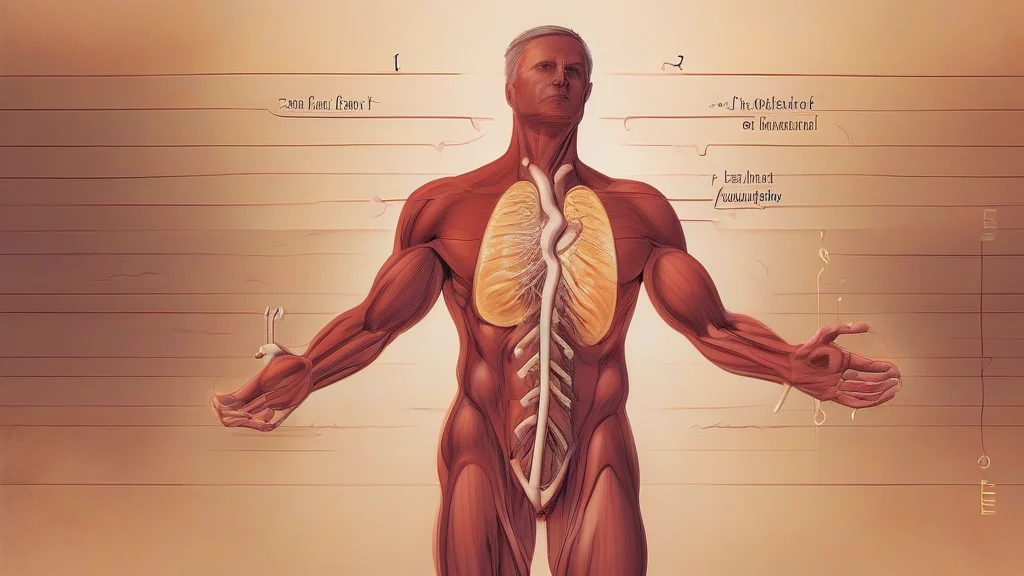
What does diastole mean?
Diastole is the noun used to describe the relaxation phase of the cardiac cycle — the interval between heartbeats during which the heart muscle relaxes and its chambers fill with blood. It stands in contrast to systole, the contraction that pumps blood out into the arteries. When a clinician measures blood pressure, the two figures recorded correspond roughly to these phases: the lower number reflects arterial pressure during diastole, giving rise to the related adjective 'diastolic'. The word belongs chiefly to medical and physiological registers, appearing in clinical notes, cardiology literature, and health education rather than casual conversation. Its Greek-derived form gives medicine a precise, unambiguous vocabulary for describing the rhythmic alternation of contraction and rest on which circulation depends. Understanding diastole means understanding that the heart's work includes a vital pause: without this filling phase, there would be nothing for the next beat to pump.
nounThe phase of the heartbeat during which the heart muscle relaxes and its chambers fill with blood, especially as measured by diastolic pressure.
- The period of relaxation and dilation of the heart muscle between contractions, during which the chambers fill with blood.
- In physiology and medicine more broadly, the corresponding phase of relaxation in any pulsating organ or structure.
"Blood pressure readings record the arterial pressure during both systole and diastole."
"During diastole, the ventricles relax and draw blood in from the atria."
"A reading of 120 over 80 records the arterial pressure at systole and at diastole respectively."
Rarely used in the plural, since the cardiac cycle is typically discussed as a single repeating sequence; the plural may appear in contexts comparing cycles across subjects or species.
"The recording captured hundreds of successive diastoles over the course of the night."
Your heart spends more time resting than working — diastole, the relaxing half of every beat, quietly fills your heart with the blood that keeps you alive.
Reviewed by Deb Chak, Editor. AI-assisted content curated by RJS Tech Solutions LLP.
Etymology of diastole
Diastole derives from Greek 'diastolē', meaning 'dilation' or 'expansion', from the verb 'diastellein', 'to dilate', formed from 'dia-' ('through' or 'apart') plus 'stellein' ('to send' or 'set'). The term entered English medical usage in the late sixteenth century alongside its counterpart 'systole', which shares the same root verb. The Greek root 'stellein' also lies behind unrelated-looking English borrowings such as 'apostle' and 'epistle', via words for one who is 'sent forth'.
Related word forms
How diastole is actually used
Diastole is a technical term used almost exclusively in medical, physiological, and scientific contexts; it is rare in everyday speech. It appears most often in discussion of blood-pressure measurement and cardiac function, frequently paired with its opposite, systole.
Easily confused with diastole
Systole is the contraction phase of the heart when blood is pumped out, whereas diastole is the relaxation phase when the chambers refill with blood.