What does diatomite mean?
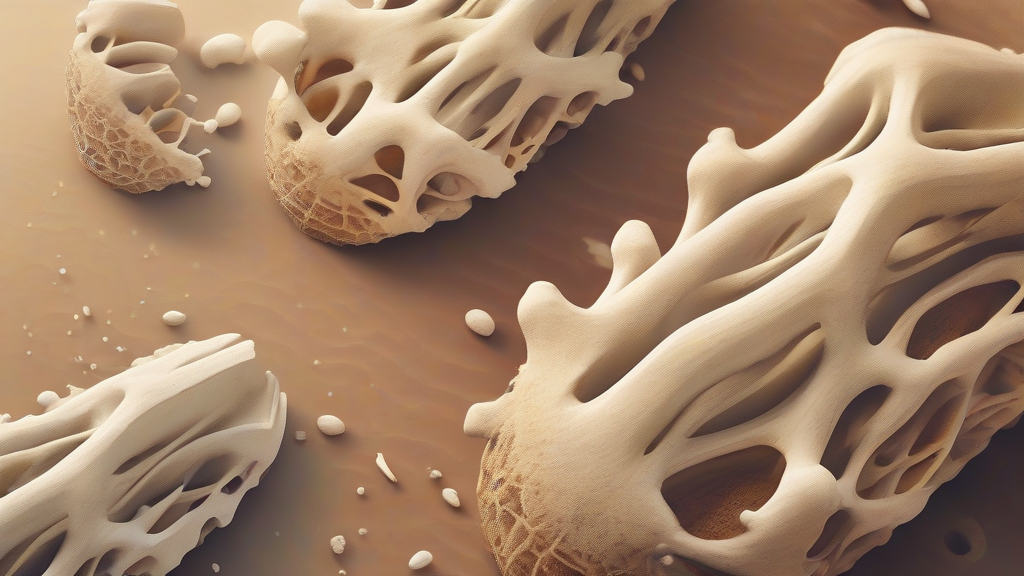
Diatomite, also known as diatomaceous earth or kieselguhr, is a soft, lightweight, highly porous sedimentary rock formed from the fossilized silica cell walls of diatoms — microscopic single-celled algae that flourished in ancient lakes and seas. As generations of these organisms died and settled on the seafloor over millions of years, their glass-like shells accumulated into thick, chalky deposits that are mined today in places such as the western United States, Denmark, and China. Prized for its fine particle size, chemical inertness, and enormous surface area, diatomite serves as a filtration medium for water, beer, and wine; as a mild abrasive in toothpaste and polishes; as an absorbent in cat litter and spill-control products; and as an insulating material. In horticulture it improves soil drainage and helps control insect pests mechanically. The word derives from 'diatom,' itself rooted in the Greek for 'cut through,' referring to the alga's split shell.
nounA soft, friable sedimentary rock composed chiefly of the fossilized siliceous remains of diatoms, used as a filtration medium, abrasive, absorbent, and insulating material.
- A light, porous sedimentary rock consisting of the accumulated silica cell walls of fossilized diatoms, used industrially as a filter aid, mild abrasive, absorbent, and thermal insulator.
"The brewery filtered its beer through beds of diatomite to achieve perfect clarity."
"Miners extracted the pale diatomite in vast open pits for use in water-filtration plants."
"Gardeners mix diatomite into potting soil to improve drainage and deter insect pests."
Rarely used in the plural; the singular mass form covers the material generally, while the plural appears mostly in geological writing about distinct deposits or commercial grades.
"Several high-purity diatomites were tested for suitability as filter aids."
The chalky cliffs of diatomite are essentially an ocean of algae that died millions of years ago — every filter in your swimming pool is full of tiny glass skeletons.
Reviewed by Deb Chak, Editor. AI-assisted content curated by RJS Tech Solutions LLP.
Etymology of diatomite
Diatomite was named after the diatom, the microscopic alga whose fossilized shells compose it, with the suffix '-ite' denoting a mineral or rock. 'Diatom' comes from the Greek 'diatomos,' meaning 'cut in half,' from 'diatemnein' ('to cut through'), a reference to the organism's two-part, split silica frustule. The Greek verb combines 'dia-' ('through, apart') with 'temnein' ('to cut'), the same root seen in 'anatomy,' 'epitome,' and 'tome.' The material was recognized scientifically in the 19th century, and the German-derived name 'kieselguhr' (from Kiesel, 'flint,' and Guhr, a mineral deposit) entered English around the same era.
Related word forms
How diatomite is actually used
A technical term used mainly in geology, industry, and horticulture; in everyday and commercial contexts the synonym 'diatomaceous earth' is far more familiar. The word is uncountable when referring to the material in general, though it can take a plural when referring to distinct deposits or grades.
Easily confused with diatomite
A diatom is the single-celled photosynthetic alga itself; diatomite is the rock formed from vast accumulations of fossilized diatom cell walls.