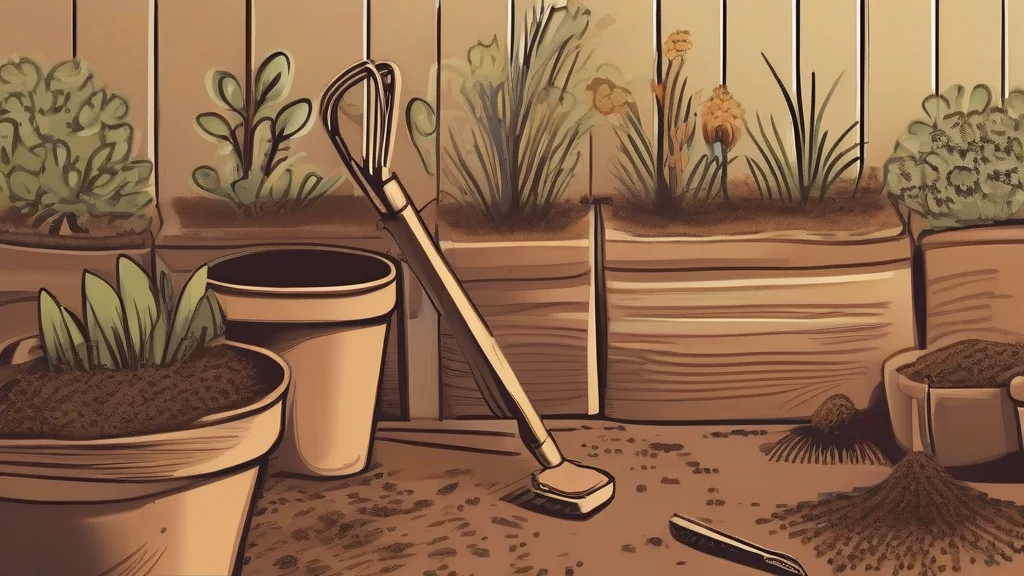
What does dibber mean?
A dibber is a small, simple gardening tool used to create holes in soil for sowing seeds, setting bulbs, or transplanting seedlings. Typically a short wooden or metal rod with a pointed or rounded tip, it may include graduated markings so the gardener can gauge planting depth at a glance. To use one, the gardener pushes the dibber into prepared soil to the required depth, drops in the seed or plant, and firms the soil around it. The tool is especially valued for tasks that demand uniform hole spacing and depth, such as planting onion sets, leeks, or beans. Though modest — often nothing more than a whittled stick — the dibber has long been a staple of British allotments and cottage gardens, and it remains popular among home gardeners who favour traditional hand tools. Its name is closely tied to the verb 'dibble', meaning to make such holes or to plant using them. Unpretentious and inexpensive, the dibber endures precisely because it does its single job perfectly.
nounA dibber is a small handheld gardening tool, typically a pointed wooden or metal stick, used to make holes in soil for planting seeds, bulbs, or seedlings.
- A pointed hand tool used to make holes in soil for planting seeds or bulbs.
"She used the dibber to poke neat holes for the onion sets along the row."
"The old gardener marked out the bed and made each hole with his well-worn wooden dibber."
"A sturdy steel dibber with a depth gauge makes transplanting leek seedlings much quicker."
Standard regular plural; countable noun referring either to multiple tools or, less commonly, to different types of the tool.
"The shed drawer held an assortment of dibbers, trowels, and twine."
One of gardening's simplest tools — essentially just a pointed stick — has been making perfect seed holes for centuries, and gardeners still swear by it over any fancy gadget.
Reviewed by Deb Chak, Editor. AI-assisted content curated by RJS Tech Solutions LLP.
Etymology of dibber
The word 'dibber' derives from 'dib', an English dialect verb meaning to dig or make holes in the ground, which is attested from around the late sixteenth century. The agent-noun form 'dibber' names the tool that performs this action, while the variant 'dibble' arose through the same verbal root. The ultimate origin of 'dib' is uncertain, but it belongs to a family of short English verbs describing small digging motions. Both 'dibber' and 'dibble' have remained in continuous horticultural use since at least the seventeenth century.
How dibber is actually used
Chiefly British in everyday use, though understood and used by gardeners in the US as well. The word has a homely, traditional register, associated with allotment and kitchen-garden culture rather than commercial horticulture. The variant form 'dibble' is equally common and also serves as the verb; 'dibber' remains strictly a noun.
Easily confused with dibber
Dibble can be either the noun for the same tool or a verb meaning to plant with such holes, while dibber is only the noun naming the tool itself.