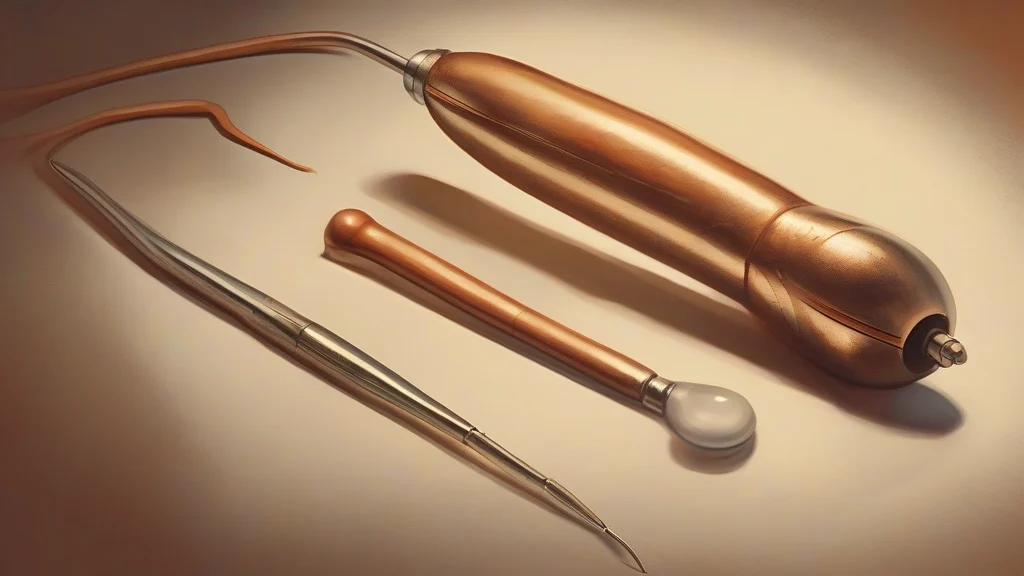
What does dilator mean?
A dilator is an instrument or device used to widen an opening, passage, or cavity in the body, most often in medical or surgical settings. Physicians and dentists rely on dilators to gently expand narrow airways, blood vessels, the cervix, or other canals during examinations and procedures, allowing access or restoring normal function. The word also has an anatomical sense: a dilator is a muscle whose contraction enlarges an opening or organ, working in opposition to a constrictor muscle — the pupil of the eye, for instance, is controlled by both dilator and constrictor muscles. Derived from the Latin dilatare, meaning "to spread wide," the term carries a neutral, technical register and appears chiefly in clinical literature and professional speech. Though rarely heard outside medicine, it is a precise and useful word for describing anything — mechanical or muscular — whose purpose is enlargement rather than constriction.
nounA device or instrument used to widen an opening or passage in the body, especially in medical or surgical procedures. More broadly, any muscle whose contraction enlarges an opening or organ, as opposed to one that constricts it.
- A medical or surgical instrument designed to enlarge a body opening, canal, or cavity.
- A muscle that expands an organ or opening, such as the dilator of the pupil.
"The surgeon inserted a dilator to gently widen the narrowed airway before the procedure."
"The doctor used a nasal dilator to relieve the patient's chronic congestion."
"The iris contains both constrictor and dilator muscles that regulate the size of the pupil."
Regular plural; standard in both British and American English.
"The kit contained dilators of gradually increasing sizes."
The same Latin word for "wide" that gives us latitude on a map gives surgeons the dilator — a tool literally built to open things up.
Reviewed by Deb Chak, Editor. AI-assisted content curated by RJS Tech Solutions LLP.
Etymology of dilator
Dilator comes from the Latin dilatare, meaning "to widen" or "spread apart," formed from dis- ("apart") and latus ("wide"). The same Latin root latus underlies related English words such as "dilate," "dilatation," "latitude," and "dilatory." The term entered English usage in the early modern period alongside the growth of anatomical science.
How dilator is actually used
Primarily a technical term found in medical, anatomical, and dental contexts rather than everyday conversation. In anatomy, it is often paired with its opposite, "constrictor," when describing opposing muscle groups.
Easily confused with dilator
"Dilatory" is an adjective meaning slow to act or causing delay, whereas "dilator" is a noun for an instrument or muscle that widens something.