
What does dinothere mean?
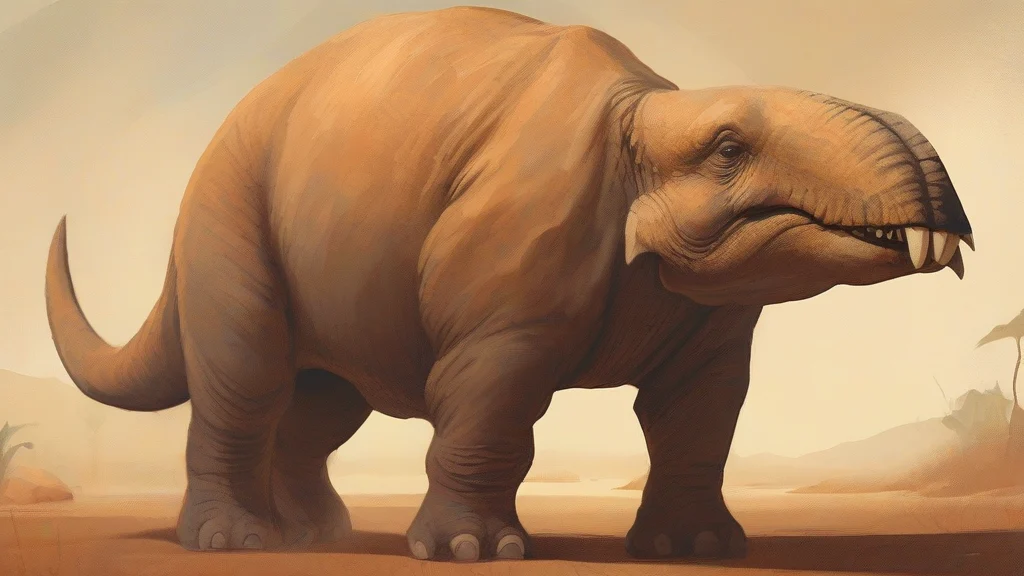
A dinothere is an extinct, elephant-like mammal from the family Dinotheriidae. Its most distinctive feature was a pair of tusks attached to the lower jaw, rather than the upper jaw, and pointing downward in many forms. Dinotheres were among the unusual large mammals that flourished during the Eocene and later periods, before becoming extinct. In modern usage, the word is chiefly associated with paleontology, fossil collections, museum exhibitions, and discussions of prehistoric megafauna. “Dinothere” is the singular form, while “dinotheres” is the usual plural and can also refer collectively to the group. The name combines Greek elements meaning “terrible” and “beast,” an apt description for an animal whose size and unusual anatomy make it memorable. Although the word is uncommon, it is useful when discussing extinct proboscidean relatives in greater detail than the broader term “prehistoric elephant” permits.
nounAn extinct, elephant-like mammal belonging to the family Dinotheriidae. Dinotheres were characterized by a pair of tusks projecting downward from the lower jaw.
- An extinct elephant-like mammal of the family Dinotheriidae, distinguished by lower-jaw tusks.
"The museum display features the reconstructed skeleton of a giant dinothere."
"The museum guide described the enormous skull as that of a dinothere."
"Paleontologists identified the fossilized lower jaw as belonging to a dinothere."
The regular plural is used for multiple animals and collectively for members of the extinct group.
"Dinotheres were widely distributed across Africa and Eurasia during the Cenozoic era."
Its name literally means “terrible beast,” and its unusual tusks grew from its lower jaw, pointing downward.
Reviewed by Deb Chak, Editor. AI-assisted content curated by RJS Tech Solutions LLP.
Where does dinothere come from?
The word comes through the taxonomic name Dinotherium, formed from Greek deinos, meaning “terrible” or “fearsome,” and thēr, meaning “beast.” The English common noun dinothere was developed from this name. Its components also connect it with dinosaur and theropod, which contain forms of the same Greek words for “terrible” and “beast,” respectively.
How dinothere is actually used
This is primarily a formal term used in paleontology, museums, and natural-history writing. The regular plural is “dinotheres,” and the term is relatively uncommon in everyday speech.
Easily confused with dinothere
A dinothere was an elephant-like member of an extinct mammalian family, whereas a mammoth was a member of a separate, elephant-like family that survived until the late Pleistocene.
Dinotherium is the taxonomic genus name, while dinothere is the common noun for any member of the broader family Dinotheriidae.