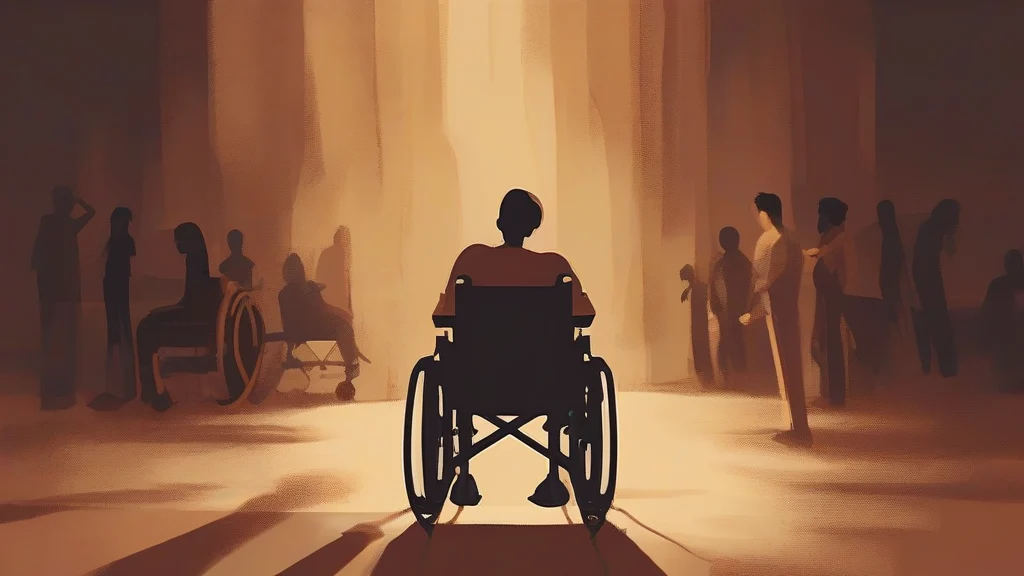
What does disabled mean?
"Disabled" is an adjective describing someone who has a physical or mental condition that limits their movements, senses, or activities. It is the standard modern term in British and American English for this meaning, having largely replaced older words like "handicapped," which are now widely considered dated or insensitive. Beyond its human sense, "disabled" also describes machinery, systems, or features that have been switched off or rendered inoperative — a disabled alarm, for instance, no longer functions. The word carries no inherent negative judgment; it states a fact about capability rather than worth, and contemporary usage favours person-first constructions such as "a person with a disability" in formal contexts. Common fixed phrases include "disabled access," "disabled parking," and "disabled facilities." Derived forms include the noun "disability," the verb "disable," and the process noun "disablement." Because it spans both human experience and technical function, "disabled" remains one of the most frequently encountered adjectives in everyday English, appearing everywhere from legislation and healthcare to software settings menus.
Having a physical or mental condition that limits a person's movements, senses, or activities; also (of a device or system) made inoperative or switched off.
"The museum offers free entry for disabled visitors and their carers."
When applied to people, prefer respectful, person-first phrasing where possible.
Used with "the": people with disabilities regarded as a group.
"The council has improved transport services for the disabled."
This collective use is grammatically plural and increasingly avoided in favour of "disabled people" or "people with disabilities."
The word "disabled" didn't always refer to people — it was first used of machines and soldiers rendered unfit for service before it became a term for anyone with a limiting condition.
Reviewed by Deb Chak, Editor. AI-assisted content curated by RJS Tech Solutions LLP.
Etymology of disabled
"Disabled" derives from the verb "disable," which combines the prefix "dis-" (expressing reversal or deprivation) with "able," from Latin "habilis" meaning "easily handled or apt." The Latin root also gives English words such as "ability," "enable," and "rehabilitation." Originally applied to things — machines, ships, or military personnel rendered unfit for duty — the word gradually extended to describe people with limiting physical or mental conditions, becoming the standard term by the twentieth century as older vocabulary fell out of favour.
Related word forms
How disabled is actually used
Person-first language ("people with disabilities") is increasingly preferred over "the disabled" as a collective noun in formal and journalistic writing. When referring to equipment, "disabled" simply means deactivated or non-functional and carries no social connotation. The adjective is neutral in register but should be applied respectfully — many style guides advise against using it as a standalone noun for individuals.
Easily confused with disabled
"Handicapped" is an older term now widely considered outdated and offensive in many contexts; "disabled" is the generally preferred modern term.
"Unable" means lacking the ability or power to do something specific, while "disabled" refers to having a physical or mental condition that limits functioning.