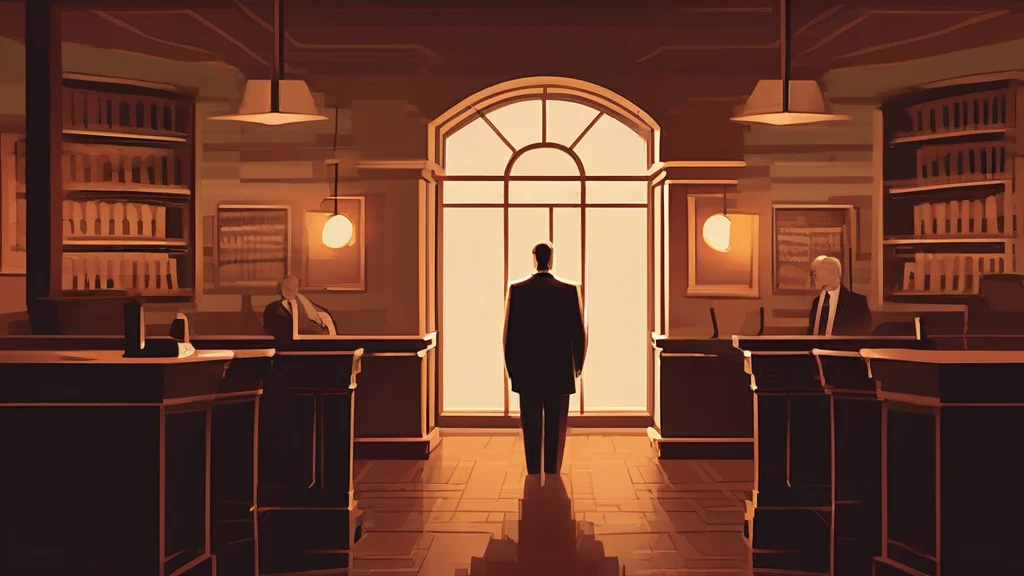
What does disbar mean?
Disbar is a formal verb meaning to expel a lawyer from the legal profession, thereby stripping them of the authority to practice law. The action is carried out by an official disciplinary body — such as a bar association in the United States or a similar regulator elsewhere — and is generally reserved for serious professional wrongdoing: fraud, theft of client funds, ethical violations, or criminal conduct. Because admission to the bar is what confers the right to argue cases and advise clients, being disbarred effectively ends a legal career, which gives the word a strong connotation of disgrace and finality. It appears most often in passive constructions, as in 'the attorney was disbarred for mishandling client funds.' The term derives from the word 'bar,' referring to the barrier separating the public from judges and counsel in a courtroom — to be disbarred is literally to be excluded from the space where law is practiced.
verbTo expel a lawyer from the bar (the legal profession), officially depriving them of the right to practice law, typically as a disciplinary punishment for professional misconduct.
- To formally expel a lawyer from the legal profession, stripping them of the license to practice law, usually as punishment for serious misconduct.
"The attorney was disbarred after it emerged that she had embezzled funds from her clients' trust accounts."
"After falsifying evidence in multiple cases, the once-celebrated litigator was disbarred by the state bar association."
"The committee voted unanimously to disbar him, ending a thirty-year legal career."
When a lawyer is 'disbarred,' they aren't just losing a job — they're being cast out of a profession whose very name comes from the physical bar in the courtroom they may never stand behind again.
Reviewed by Deb Chak, Editor. AI-assisted content curated by RJS Tech Solutions LLP.
Etymology of disbar
Disbar combines the prefix 'dis-' (indicating removal or reversal) with 'bar,' which in this context denotes the railing or barrier in a courtroom separating the bench and counsel from spectators. To be 'called to the bar' was to be admitted as a lawyer, so 'to disbar' arose as the natural opposite: exclusion from the profession. The word emerged in English usage around the late seventeenth century, alongside related terms such as 'debar.' Its root, 'bar,' traces back through Old French 'barre' to Late Latin 'barra,' a word of uncertain ultimate origin but shared by cognates like 'embargo' and 'barrister'.
How disbar is actually used
Formal register; used almost exclusively in legal and journalistic contexts. Typically appears in the passive ('was disbarred'). The act is performed by an official body such as a bar association or court. In the UK, the parallel term 'struck off' is also used for solicitors removed from the roll.
Easily confused with disbar
'Debar' is a general term meaning to exclude someone from a place or privilege, while 'disbar' applies specifically to removing a lawyer's right to practice law.