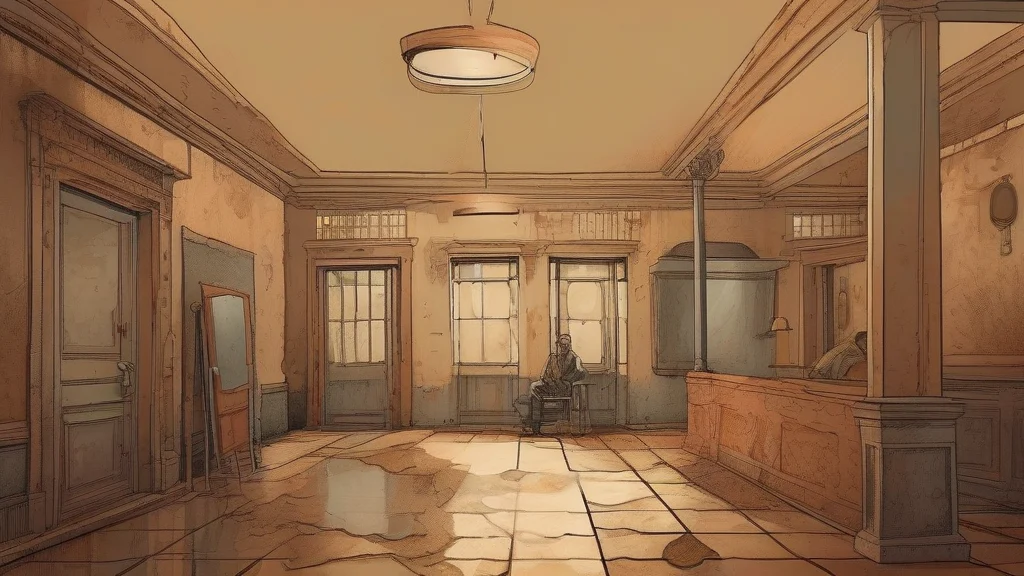
What does discolouration mean?
Discolouration refers to a change in the colour of something, or to the area or patch where such a change has occurred, usually when it is unwelcome. A stain on a shirt, a yellowed patch on old paper, a darkened spot on fruit, or a bruise-like mark on skin can all be described as discolourations. The word is most at home in formal and technical registers: doctors note discolouration of the skin as a diagnostic sign, dentists monitor tooth discolouration, conservators assess discolouration in artworks, and food inspectors watch for it as a marker of spoilage. It derives from the verb "discolour" — to change or spoil the colour of — combined with the noun-forming suffix "-ation," which turns the action into a thing. The British spelling retains the "u" of "colour," while American English writes "discoloration" without it. Because the word implies deterioration rather than deliberate change, choosing it subtly frames the colour change as damage to be explained or repaired.
nounThe process or state of changing, or being changed, in colour; an area of altered colouring on a surface, typically one that is unwanted or indicates damage, staining, decay, or ageing.
- An alteration of colour on something, especially one that spoils its appearance or signals damage, staining, or age.
- The process of becoming changed in colour.
"A faint discolouration along the edge of the wallpaper revealed where the damp had seeped in."
"The dentist noticed slight discolouration on the enamel of her lower molars."
"Conservators worked carefully to remove the discolouration from the surface of the old oil painting."
Usually treated as uncountable when referring to the general process or condition; the plural is used for distinct individual marks or patches.
"The doctor examined the discolourations spreading across the patient's forearm."
Whether it appears with a 'u' depends entirely on which side of the Atlantic you're standing — the meaning never changes.
Reviewed by Deb Chak, Editor. AI-assisted content curated by RJS Tech Solutions LLP.
Etymology of discolouration
Discolouration is formed from the verb "discolour" plus the Latinate suffix "-ation." The verb combines the prefix "dis-" (indicating reversal or negation) with "colour," which entered English from Old French "colour" in the Middle English period, itself from Latin "color." The compound "discolour" arose in English around the sixteenth century, and the noun "discolouration" followed shortly afterwards, first recorded in the early seventeenth century. Its American counterpart "discoloration" follows the same pattern minus the "u," reflecting the nineteenth-century spelling reforms of Noah Webster.
Related word forms
How discolouration is actually used
Chiefly used in formal, technical, medical, and conservation contexts (medicine, dentistry, food safety, art restoration). The spelling "discolouration" is standard in British English; American English uses "discoloration." The word carries a mildly negative connotation, implying that the change of colour is undesirable.
Easily confused with discolouration
"Discoloration" is simply the American spelling of the same word, while "discolouration" is the British spelling — the meanings are identical.