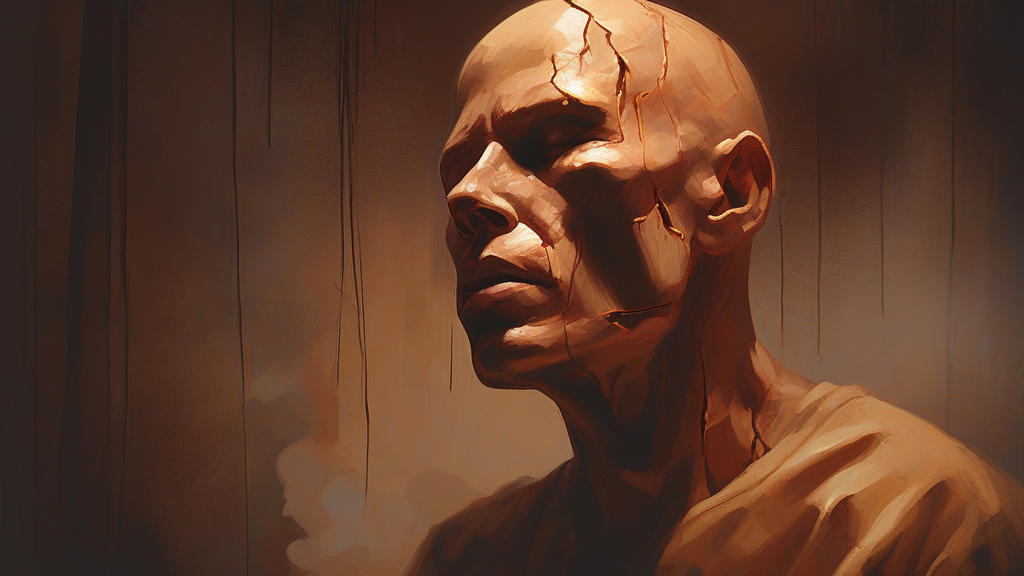
What does disfigurement mean?
Disfigurement is a noun referring to serious damage to the appearance of a person, object, or place. Most commonly, it describes a lasting injury — such as a burn, scar, or wound — that visibly alters someone's face or body, and it appears frequently in medical, legal, and insurance contexts where 'permanent disfigurement' carries real weight as a category of harm. The word can also be applied more loosely to buildings, landscapes, or public spaces whose character has been spoiled by intrusive development, litter, or neglect. Its connotations are strongly negative: unlike a minor blemish, disfigurement implies something severe, conspicuous, and usually irreversible. Related forms include the verb 'disfigure' and the adjective 'disfigured'. Because the term can feel blunt or clinical when applied to people, careful writers sometimes favour gentler alternatives such as 'facial difference', though 'disfigurement' remains the standard term in legal and medical writing.
A visible injury or mark that seriously damages a person's appearance; also, damage that spoils the appearance of a place or object.
"The crash left him with permanent disfigurement to his face."
Frequent in legal and medical contexts, where 'permanent disfigurement' is an established term of art.
The act of disfiguring; the process or result of ruining the form or beauty of something.
"Residents protested against what they saw as the disfigurement of the historic square."
The plural is used when counting distinct marks or instances of damage, though the uncountable singular is more common when speaking of disfigurement as a general condition.
"He carried the disfigurements of his boxing years into old age."
In law, 'permanent disfigurement' is treated as a serious form of personal injury — courts can award substantial damages for scars even when they cause no physical pain at all.
Reviewed by Deb Chak, Editor. AI-assisted content curated by RJS Tech Solutions LLP.
Etymology of disfigurement
Disfigurement comes from the verb 'disfigure', which entered English from Old French 'desfigurer', formed on Latin roots: the prefix 'dis-' indicating reversal or destruction, and 'figura', meaning shape or form, from 'fingere', to mould or fashion. English usage of the noun dates back several centuries, with its sense of marring the human figure well established by the early modern period. The same Latin root 'figura' gives English a wide family of related words, including 'figure', 'configuration', 'figment', and 'figurative', all sharing the core idea of form or shaping.
Related word forms
How disfigurement is actually used
Disfigurement is formal to neutral in register. When applied to people, it is used with care in medical, legal, and journalistic contexts; many style guides and disability advocates prefer phrasing like 'a person with a facial difference' over describing individuals as 'disfigured', so writers should consider tone when using the word about people rather than things.
Easily confused with disfigurement
Disfiguration means essentially the same thing as disfigurement (the act or state of disfiguring), but disfigurement is by far the more common form in modern English.