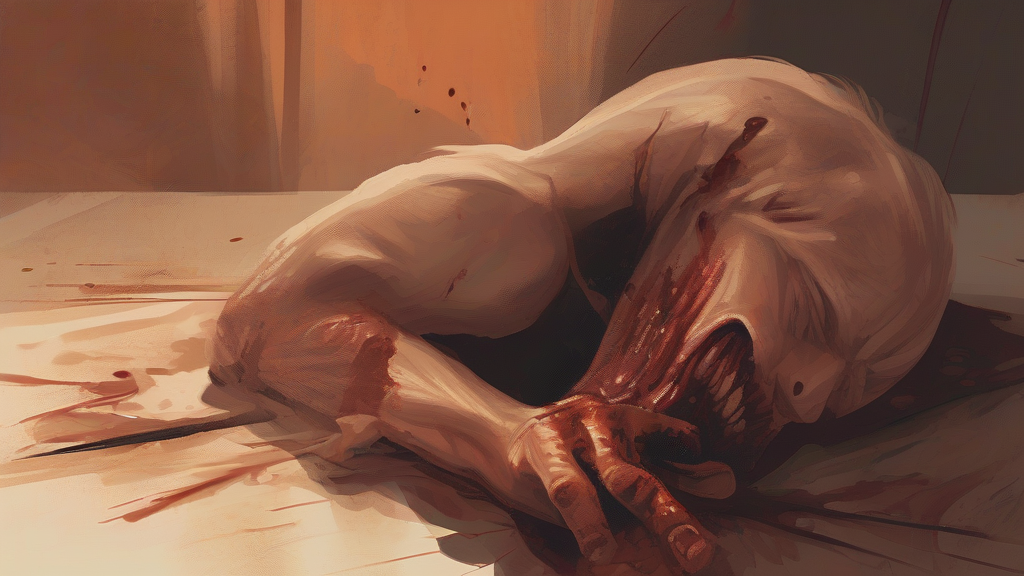
What does disflesh mean?
Disflesh is a comparatively rare English verb meaning to strip the flesh from a body, bone, or carcass. It is built transparently from the prefix 'dis-' and the noun 'flesh', and it appears most often in technical contexts: anatomists preparing skeletal specimens, forensic specialists processing remains, and archaeologists studying how bones were treated in the past may all speak of disfleshing. In such settings it competes with the more common modern term 'deflesh', which has largely displaced it in scientific literature. The word can occasionally be used figuratively to describe reducing an argument, text, or plan to its bare essentials, though this sense is uncommon. Because it is transparently formed and instantly understandable, disflesh requires little explanation even for readers meeting it for the first time, yet its rarity gives it a distinctly formal, clinical flavour. Writers seeking precision about the physical removal of flesh — as opposed to flaying skin alone — will find it exact, if somewhat old-fashioned.
verbTo strip the flesh from (a body or bone), or to remove flesh; also figuratively, to reduce something to its bare essentials.
- To strip the flesh from a body, bone, or carcass (literal, used in anatomy, butchery, and archaeology).
- To reduce something to its barest form or essentials (figurative, rare).
"The anatomist carefully disfleshed the specimen before the bones were catalogued."
"Vultures can disflesh a carcass within hours."
"The report was disfleshed of all but its core recommendations."
Before a bone can tell its story in an archaeological lab, someone has to disflesh it — one of the grimmest jobs in science.
Reviewed by Deb Chak, Editor. AI-assisted content curated by RJS Tech Solutions LLP.
Etymology of disflesh
Disflesh is formed within English itself from the prefix 'dis-', indicating removal or reversal, combined with the noun 'flesh', which descends from Old English 'flǣsc'. The word is attested from the Middle English period onward, when similar formations with 'dis-' were freely coined. It shares its root with related formations such as 'fleshy', 'fleshly', and the later 'deflesh'.
Related word forms
How disflesh is actually used
A rare and somewhat archaic verb found mainly in technical writing on anatomy, osteology, and taphonomy, where 'deflesh' is now the preferred term. Figurative uses are very uncommon.
Easily confused with disflesh
Both verbs mean essentially the same thing — to strip flesh away — but 'deflesh' is the more common modern term in archaeology and anatomy, while 'disflesh' is rarer and older.