What does disked mean?
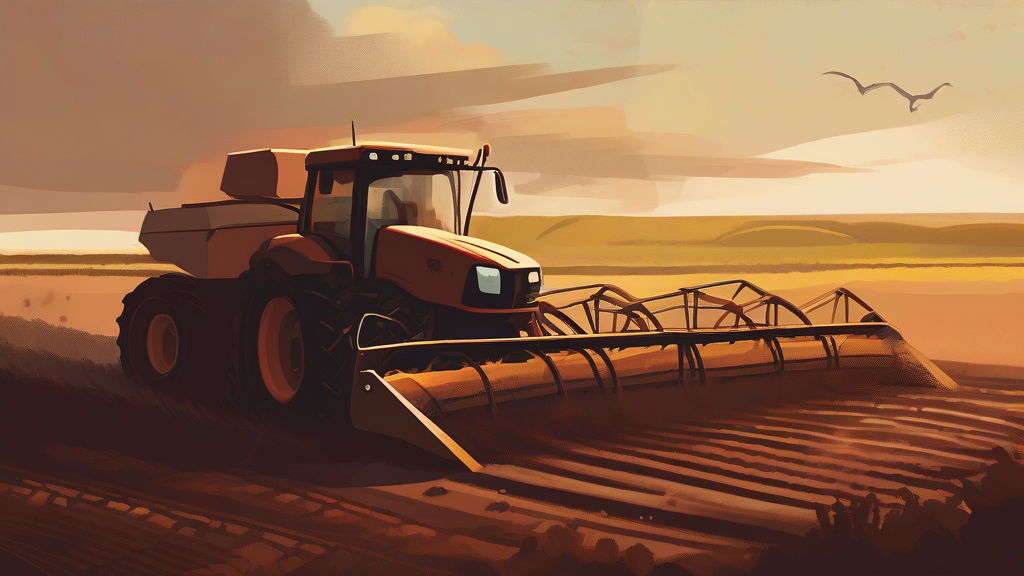
"Disked" is the past tense and past participle of the verb "disk," meaning to work soil with a disk harrow — an implement of concave steel blades that slice, lift, and break up the earth. When a farmer says a field was disked, they mean it has been chopped and loosened in preparation for planting, usually after plowing and before sowing. The term is firmly rooted in agricultural vocabulary, especially in North America, and appears constantly in farm reports, equipment manuals, and rural conversation: freshly disked ground, a disked seedbed, fields disked ahead of the rain. The noun behind it traces back to the Greek "diskos," the flat plate hurled by ancient athletes — the same root that gave English "discus," "disc," and ultimately "diskette" and "disco." A second, much rarer informal sense describes throwing or striking something with a flying disc. For anyone reading about land preparation or farm machinery, "disked" is the standard, precise term for this stage of tillage.
verbPast tense and past participle of the verb "disk": to break up or turn over soil using a disk harrow, or (informally) to throw or hit something with a flying disc.
- (of soil or a field) broken up or tilled using a disk harrow — by far the dominant sense in modern usage
- (informal, rare) thrown or struck with a flying disc
"The farmer disked the field twice before planting the winter wheat."
"By late afternoon he had disked the whole south pasture."
"The seedbed was disked and smoothed before the rains came."
Every "disked" field owes its name to ancient Greece — the plow's spinning blades come from the same word that gave us the Olympic discus.
Reviewed by Deb Chak, Editor. AI-assisted content curated by RJS Tech Solutions LLP.
Etymology of disked
The word descends from the Greek "diskos," meaning a flat circular plate or quoit, which Latin borrowed as "discus" before passing it into English as both "disc" and "disk." The verb "to disk" arose in nineteenth-century American agricultural usage once the disk harrow became common farm machinery, with "disked" as its regular past tense. It thus shares its origin with cognates such as "discus," "disc," "diskette," and "disco."
Related word forms
How disked is actually used
"Disked" is primarily agricultural and appears mostly in farming contexts and rural American English, where "disk" is the standard spelling of the implement; British writers more often use "disc." Outside agriculture the word is uncommon, though it occasionally appears in informal writing about disc sports.
Easily confused with disked
"Discussed" means talked over a topic, while "disked" refers either to tilling soil with a disk harrow or to throwing a disc; they sound similar but share nothing else.