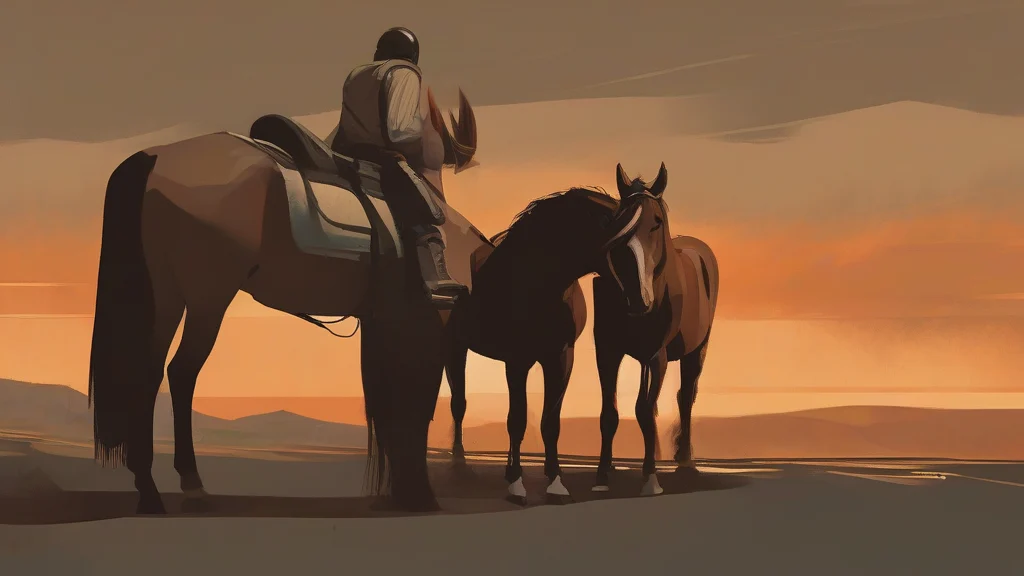
What does dismounted mean?
Dismounted is the past tense and past participle of the verb dismount, meaning to climb down from a horse, bicycle, motorcycle, or similar means of transport. It can also describe the act of removing an object from its mounting — taking a painting off a wall, for instance. Beyond these verbal uses, dismounted functions as an adjective with a distinctly military flavour: dismounted troops are soldiers who have left their horses or vehicles to operate on foot. The word carries a somewhat formal register in everyday speech, where people more often say they simply 'got off' their bike, but it remains standard in equestrian, cycling, and military writing. Its opposite is mounted, and the pair reflects the enduring vocabulary of horsemanship that English inherited centuries ago. Whether describing a rider stepping down after a long ride or infantry advancing without their vehicles, dismounted conveys a clear, purposeful transition from being carried to moving under one's own power.
Past tense and past participle of dismount: to get down from a horse, bicycle, or other vehicle, or to remove something from its mounting.
"He dismounted stiffly after six hours in the saddle."
Slightly formal in everyday speech; 'got off' is more common informally.
(Of soldiers) fighting or operating on foot rather than mounted on horses or in vehicles.
"The dismounted patrol advanced cautiously along the ridge."
Chiefly used in military contexts.
In military parlance, 'dismounted cavalry' sounds like a contradiction — yet history's most famous mounted regiments spent much of their time fighting on foot.
Reviewed by Deb Chak, Editor. AI-assisted content curated by RJS Tech Solutions LLP.
Etymology of dismounted
The word traces to the verb dismount, formed in Middle English from the prefix dis- ('apart, away') combined with mount, which itself came into English from Old French monter, ultimately derived from Latin mons, montis, meaning 'mountain'. To dismount was therefore literally to 'come down from the height' of one's steed. It shares this Latin root with words such as amount, paramount, and mountain itself. The military sense of dismounted troops developed alongside cavalry warfare, becoming especially prominent from the early modern period onward.
Related word forms
How dismounted is actually used
As a verb, 'dismount' is slightly formal compared with everyday alternatives like 'got off'. The adjectival use is largely confined to military contexts ('dismounted troops', 'dismounted operations'). In technical or art-handling contexts, 'dismount' can also mean to remove something from a wall or frame.
Easily confused with dismounted
'Unmounted' describes something not attached to a support (e.g. an unmounted photograph), while 'dismounted' refers to the act of getting off a vehicle or animal, or to soldiers who have left their mounts.