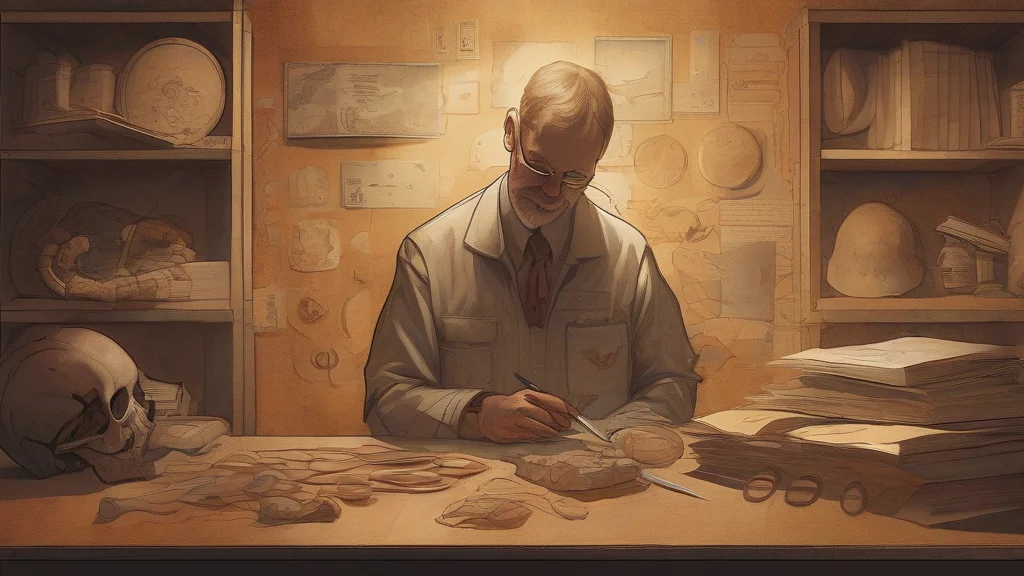
What does dissectible mean?
Dissectible is an adjective describing something that can be dissected — that is, cut apart and examined piece by piece. Its most concrete use appears in biology, medicine, and education, where a frog, cadaver, or plant specimen may be described as dissectible if it is suitable for hands-on anatomical study. By extension, the word applies figuratively to anything that lends itself to close analysis: an argument, a poem, a legal contract, or a computer program might all be called dissectible if their structure can be taken apart and understood component by component. The word derives from the Latin root 'secare,' meaning 'to cut,' combined with the prefix 'dis-' ('apart') and the suffix '-ible' ('capable of'). It is a formal term, common in scientific and academic prose but rare in casual conversation. Its value lies in precision: where 'analyzable' suggests mental scrutiny alone, 'dissectible' evokes the careful, methodical separation of parts that defines both laboratory dissection and rigorous critical analysis.
adjectiveCapable of being dissected, especially by cutting apart for anatomical or scientific study; more broadly, able to be analyzed or broken down into component parts.
- Capable of being dissected by cutting apart, especially an anatomical or biological specimen.
- Capable of being analyzed or broken down into distinct parts, as of an argument, text, or system.
"The anatomy lab was stocked with dissectible specimens for the students."
"The museum's collection included perfectly preserved frogs ideal as dissectible specimens."
"His argument was so carefully constructed that it remained dissectible even under hostile questioning."
Every medical student's first patient is a dissectible one — and the word itself is a perfect specimen of Latin surgery on English.
Reviewed by Deb Chak, Editor. AI-assisted content curated by RJS Tech Solutions LLP.
Etymology of dissectible
Dissectible combines the Latin prefix 'dis-,' meaning 'apart,' with the verb 'secare,' meaning 'to cut,' via the English verb 'dissect,' which entered the language in the early 17th century from Latin 'dissecare.' The suffix '-ible,' from Latin '-ibilis,' marks capability, making the word mean 'capable of being cut apart.' It shares this cutting root with words such as 'section,' 'sector,' and 'insect' (so named for its segmented body), all tracing back to 'secare.' The adjective arose in scientific writing as the practice of anatomical dissection became central to medical education.
Related word forms
How dissectible is actually used
A formal, technical word found chiefly in scientific, educational, and academic writing. In its figurative sense it often carries a neutral or slightly clinical connotation rather than a negative one; 'dissect' used figuratively can imply harsh criticism, but 'dissectible' usually just denotes analyzability.
Easily confused with dissectible
'Dissectible' means capable of being cut apart or analyzed, while 'disposable' means intended to be thrown away after use.