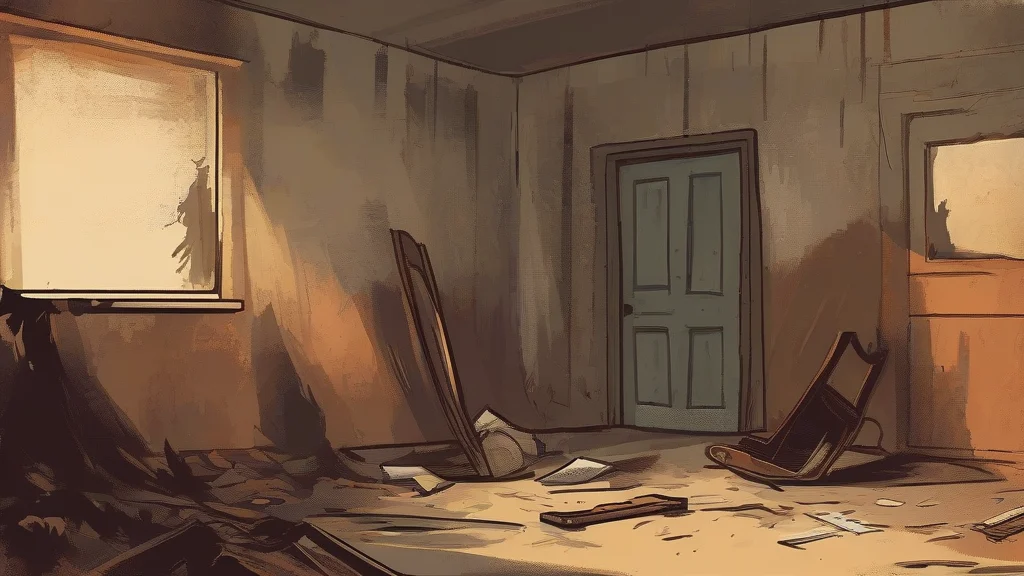
What does distressed mean?
"Distressed" is an adjective describing someone experiencing intense emotional suffering — acute anxiety, sorrow, or mental strain, often in reaction to a specific crisis or circumstance. A person may feel distressed after receiving bad news, witnessing something upsetting, or facing financial hardship, and the word frequently appears in phrases such as "visibly distressed" or "emotionally distressed." Beyond its emotional sense, the term has two well-established technical uses: in law, it can describe goods that have been seized to satisfy an unpaid debt (from the older verb "to distrain"), and in design and fashion, it characterizes materials such as furniture, leather, or denim that have been deliberately aged or worn for aesthetic appeal. The word derives ultimately from the Latin "stringere," meaning to draw tight, via Old French "destresser," the same root that gives English "stress" and "strict." Its versatility across emotional, legal, and stylistic registers makes it a valuable addition to any vocabulary.
Suffering severe emotional or mental strain, anxiety, or sorrow.
"The distressed family appealed for information about their missing son."
(Of property or goods) seized in order to enforce payment of a debt.
"The sheriff auctioned the distressed goods to settle the outstanding rent."
(Of furniture, clothing, or other materials) deliberately treated to look old, worn, or damaged for stylistic effect.
"The café's distressed wooden tables gave it a rustic charm."
In finance, a "distressed" asset isn't crying — it's one sold cheap because its owner is desperate to offload it.
Reviewed by Deb Chak, Editor. AI-assisted content curated by RJS Tech Solutions LLP.
Etymology of distressed
"Distressed" is the past participle of the verb "distress," which entered Middle English from Old French "destresser," itself derived from Late Latin "districtare," based on Latin "stringere" (to draw tight or bind). The same Latin root produced English words such as "stress," "strain," and "strict." The adjective has carried the sense of emotional anguish since at least the late Middle Ages, while the legal sense relating to seizure of goods reflects the word's older connection to enforcing payment of debts.
Related word forms
How distressed is actually used
Common in both everyday and formal registers; in legal and financial contexts it takes specialized meanings (seizure of goods, distressed assets). In interior design and fashion, "distressed" is neutral or even positive, describing intentional wear rather than suffering.
Easily confused with distressed
"Depressed" refers specifically to a clinical or persistent state of low mood, whereas "distressed" describes acute emotional upset or strain from a particular situation.