What does ditchwater mean?
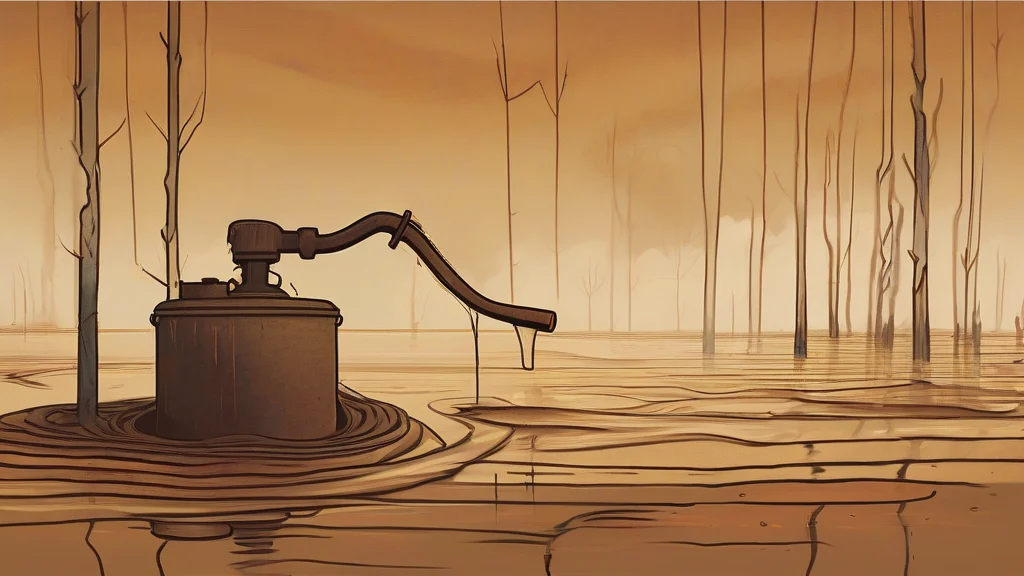
Ditchwater is the stagnant, often murky water that collects in a ditch or drainage channel, typically lacking flow and therefore accumulating mud, algae, and debris. In its literal sense it evokes something unclean and lifeless, which explains why the word has become best known through its figurative use: in the long-standing idiom 'as dull as ditchwater,' it describes anything unbearably boring or tedious, from a speech to a film to an evening of conversation. The comparison draws on the image of still, featureless water that neither moves nor sparkles. The idiom is especially common in British English; American speakers more often say 'as dull as dishwater.' Ditchwater is an uncountable noun and normally appears with a definite article or within its fixed phrase. Though humble in origin, the word carries vivid negative connotations of stagnation, dirtiness, and monotony.
nounStagnant, dirty water that has collected in a ditch. The word is chiefly used figuratively in the phrase 'as dull as ditchwater,' meaning extremely boring.
- Literal: stagnant, often foul-smelling water standing in a ditch or drainage channel.
- Figurative (in the idiom 'as dull as ditchwater'): something extremely tedious or uninteresting.
"The marshy field was crisscrossed with ditches full of murky ditchwater after the heavy rains."
"Mosquitoes bred in the warm ditchwater along the roadside."
"His account of the committee meeting was as dull as ditchwater."
In British English, calling a party 'as dull as ditchwater' is one of the oldest insults around — the idiom has been in print since at least the 1700s, though Americans usually swap in 'dishwater.'
Reviewed by Deb Chak, Editor. AI-assisted content curated by RJS Tech Solutions LLP.
Etymology of ditchwater
Ditchwater is a straightforward compound of 'ditch,' from Old English 'dīc' meaning a dug channel or embankment (a word related to 'dike' and 'dyke'), and 'water,' from Old English 'wæter.' The compound arose naturally to describe water standing in such channels. It has been in use since at least the eighteenth century, when the simile 'as dull as ditchwater' became established in English writing.
How ditchwater is actually used
Almost always uncountable and used with a definite article or in fixed phrases rather than with an indefinite article. The literal sense is relatively rare; most modern usage is figurative via the idiom 'as dull as ditchwater,' which is more common in British English than American English (where 'as dull as dishwater' predominates).
Easily confused with ditchwater
Dishwater is the grey, soapy water left after washing dishes; ditchwater is stagnant water in a ditch — both appear in idioms for dullness ('as dull as dishwater' vs 'as dull as ditchwater'), but they are different compounds.