
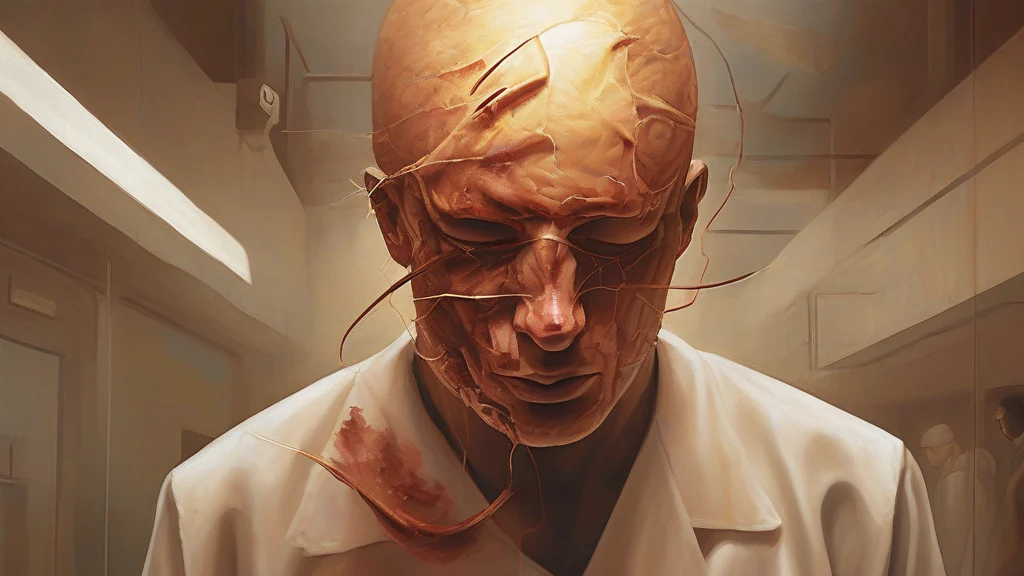
What does divulsion mean?
Divulsion is a rare noun denoting the act of tearing or pulling something forcibly apart. Its most enduring home is in medicine and surgery, where it describes the forcible separation or stripping away of tissue — as distinct from a clean incision made with a blade. The word descends from the Latin divellere, formed from di- ('apart') and vellere ('to pluck or tear'), the same root that produced convulsion, revulsion, and avulsion, all of which retain this underlying image of violent pulling. Because it is technical and largely confined to historical or specialized medical writing, divulsion carries a formal, clinical register and would strike most readers as archaic or scholarly. It remains useful, however, precisely for its precision: where ordinary words like 'tearing' are vague, divulsion names a deliberate, forceful act of separation, making it valuable to writers on anatomy, surgery, and the history of medicine.
nounThe act of tearing or pulling apart; specifically, in surgery and medicine, the forcible separation or tearing away of tissue or a body part.
- The act of forcibly tearing or pulling something apart.
- In medicine and surgery: the forcible separation or stripping away of tissue, as opposed to cutting it cleanly.
"The surgeon avoided divulsion of the surrounding tissue by making a precise incision instead."
"The divulsion of the muscle fibers left the tissue ragged where a scalpel would have cut it clean."
"Ancient surgical texts describe divulsion as a last resort when instruments alone could not free the structure."
The plural is regular but rarely used, since the word typically appears in uncountable or singular contexts referring to an act or procedure.
"The case notes recorded several divulsions performed before the safer technique was adopted."
Hidden inside 'divulsion' is the Latin verb vellere, 'to pluck' — the same root that gives us convulsion and revulsion, so every one of these words carries a trace of violent pulling.
Reviewed by Deb Chak, Editor. AI-assisted content curated by RJS Tech Solutions LLP.
Etymology of divulsion
Divulsion comes from the Latin divellere, meaning 'to pull apart' or 'to tear away', compounded from di- ('apart') and vellere ('to pluck, tear'). English adopted the word in the early modern period, primarily through medical and anatomical writing describing the forceful separation of tissues. It shares its root with convulsion, revulsion, and avulsion, all of which preserve the sense of forcible pulling inherent in vellere.
How divulsion is actually used
Divulsion is a rare, technical word found chiefly in medical, surgical, and historical texts. It is not part of everyday vocabulary, and in modern clinical writing 'avulsion' or plain 'tearing' is far more common.
Easily confused with divulsion
Avulsion refers to a tearing away that leaves a part detached entirely (as in an avulsed tooth), while divulsion emphasizes the act or process of forcibly pulling tissue apart.
Revulsion means a strong feeling of disgust or repugnance, whereas divulsion is a physical act of tearing or pulling apart.