What does dobro mean?
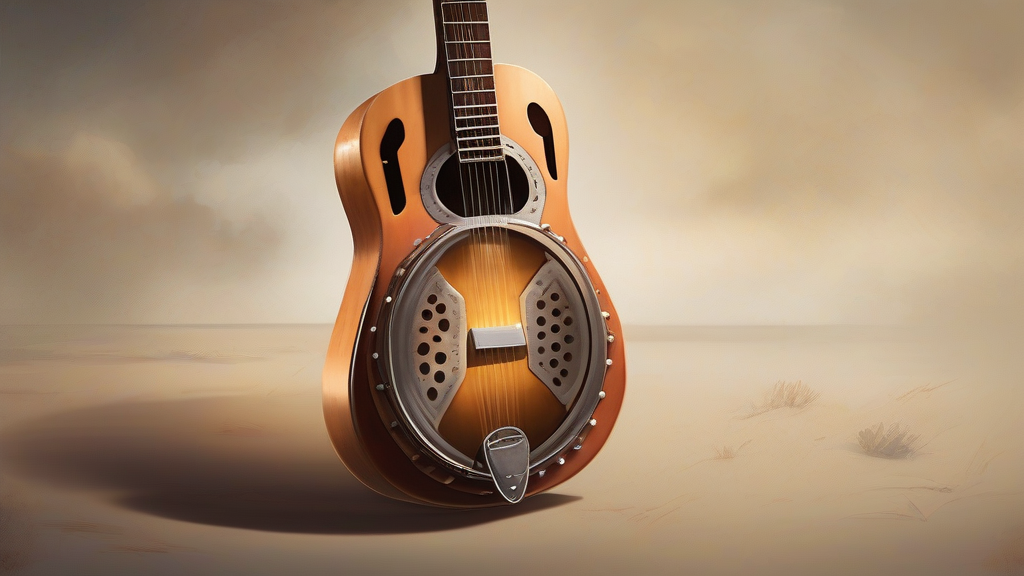
A dobro is an acoustic guitar fitted with one or more spun-metal resonator cones that amplify the strings mechanically, giving it a loud, bright, metallic voice quite distinct from that of an ordinary wooden guitar. The name began as a trademark of the Dobro Corporation, founded by John and Rudy Dopyera in the late 1920s, whose surname combined with "Brothers" to form the brand — fittingly, "dobre" also means "good" in Slovak, the family's native language. In practice, the word now commonly denotes any resonator guitar of that style, particularly the square-neck model played flat on the lap with a metal slide, a technique central to bluegrass, country, and blues. The dobro's penetrating tone lets it cut through a full string band, which made it indispensable in American roots ensembles. Today it remains a signature sound of Nashville sessions and festival stages alike.
nounA type of acoustic resonator guitar with one or more metal cones that amplify the strings, producing a distinctive metallic, banjo-like tone; originally a trademark of the Dopyera Brothers company.
- A trademarked brand and generic term for a resonator guitar played with a slide, common in bluegrass, country, and blues music.
"She played a slow slide melody on her dobro, its metallic shimmer cutting through the bluegrass band."
"The band's dobro player added a weeping slide line beneath the vocal harmonies."
"He traded his old mandolin for a battered square-neck dobro at a Nashville pawn shop."
Standard English plural, used when referring to multiple instruments or players' instruments generally.
"The shop had three vintage dobros lined up along the wall."
The dobro is named for the Dopyera brothers — 'Do' from Dopyera, 'bro' from Brothers — and 'dobre' happens to mean 'good' in their native Slovak.
Reviewed by Deb Chak, Editor. AI-assisted content curated by RJS Tech Solutions LLP.
Etymology of dobro
The word "dobro" comes from the Dobro Corporation, founded in the late 1920s by Slovak-born luthiers John and Rudy Dopyera after they left the National String Instrument Corporation. The name blends "Do-" from Dopyera with "-bro" from Brothers, while coincidentally echoing the Slovak word "dobre," meaning "good" or "well." Originally a protected trademark, the term gradually became genericized in American musical usage as a general name for this style of resonator guitar.
Related word forms
How dobro is actually used
"Dobro" originated as a trademark of the Dobro Corporation but has become largely genericized in musical contexts, especially in American roots music. It typically refers to the square-neck model played flat on the lap with a slide; round-neck models are usually just called resonator guitars. The word is informal-to-neutral in register.
Easily confused with dobro
A lap steel is a solid-body or table instrument played horizontally, whereas a dobro is specifically a resonator acoustic guitar, though both are often played with a slide.
A Weissenborn is a Hawaiian-style hollow-neck lap steel guitar without metal resonator cones, unlike the dobro's distinctive spun-metal sound chambers.