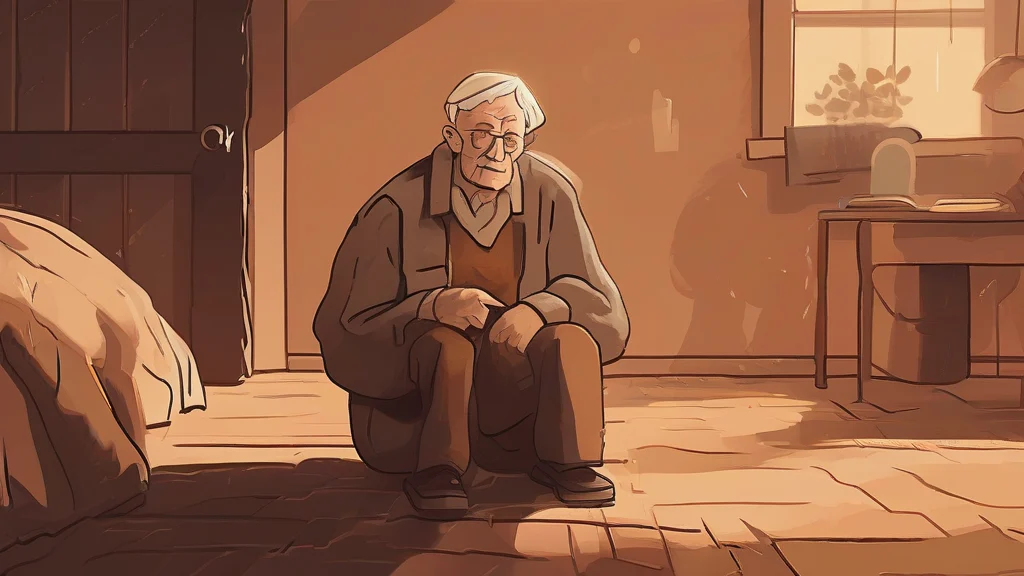
What does doddery mean?
Doddery is an informal adjective describing someone—usually an elderly person—who moves or behaves in a weak, unsteady, or shaky manner, often as a result of old age. A doddery old man might shuffle slowly, grip handrails for support, or pause mid-sentence as his thoughts wander. The word is used far more often in British English than American English, and it tends to carry an affectionate or gently comic tone rather than a harsh one: calling someone doddery usually suggests fondness mixed with mild concern rather than contempt. It appears frequently in phrases such as 'a doddery old man' or 'the doddery old professor'. Related forms include the verb 'to dodder' and the adjective 'doddering', both of which convey the same sense of trembling infirmity. The word remains a vivid, characterful choice for describing the physical frailties that can come with advancing years.
adjective(Of an elderly person) physically weak, unsteady, or shaky in movement, often with a suggestion of mental slowness; tottering with age.
- (Of a person, typically elderly) weak, unsteady, or trembling in movement, especially through age or infirmity.
"The doddery old professor shuffled into the lecture hall, clutching his notes."
"The doddery old caretaker took twice as long to lock up the gates each evening."
"He may be a bit doddery on his feet these days, but his mind is as sharp as ever."
Despite sounding like a made-up word, 'doddery' has been quietly describing shaky old gentlemen in British English for well over a century — and it's still going strong.
Reviewed by Deb Chak, Editor. AI-assisted content curated by RJS Tech Solutions LLP.
Etymology of doddery
Doddery derives from the English verb 'to dodder', which means to shake or tremble, especially from age or weakness. The verb 'dodder' itself first appeared in English around the early 17th century and is thought to be of imitative or Germanic origin, though its exact roots are uncertain. The adjective form 'doddery' developed later by adding the suffix '-ery' to the verb stem. It is related to words such as 'doddering', which serves the same descriptive function and shares the same verbal root.
Related word forms
How doddery is actually used
'Doddery' carries a mild, often affectionate or gently humorous connotation rather than a harshly critical one, and is more common in informal speech than formal writing. It is used almost exclusively of people (especially the elderly), rarely of animals or objects.
Easily confused with doddery
Doddering is a closely related adjective meaning the same thing (shaky with age), but it derives directly from the verb 'dodder', while 'doddery' is the adjectival form ending in -ery.