What does doldrums mean?
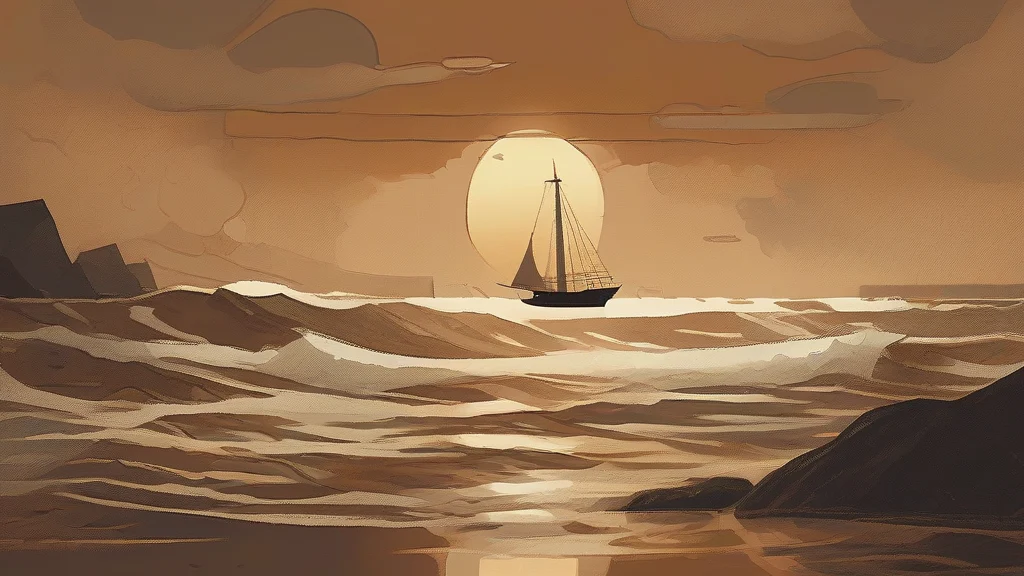
The doldrums refers to a state of inactivity, listlessness, or depressed spirits — as when a business, economy, or mood falls into stagnation. The word is always used in its plural form, typically preceded by the article 'the', and appears frequently in figurative expressions such as 'in the doldrums'. It also has a literal maritime sense: the doldrums are the belt of calm, windless weather near the Equator, notorious among sailors because sailing ships could be left drifting there for weeks. The figurative meaning grew directly out of this experience of being becalmed and powerless. Connotations are generally negative but mild — suggesting tedium, slump, or gloom rather than crisis — making the word useful for describing downturns without alarmist language. Its vivid nautical history gives it a memorable quality that plainer synonyms such as 'slump' or 'stagnation' lack.
nounA state of stagnation, listlessness, or low spirits; also (as 'the doldrums') the equatorial region of the Atlantic and Pacific oceans characterized by calms, sudden squalls, and light shifting winds.
- A state or period of inactivity, sluggishness, or depression (always used in the plural, often with 'the').
- (Nautical, usually 'the doldrums') The region of calm winds and squalls near the Equator that historically trapped sailing ships.
"After the holidays, sales fell into the doldrums for several weeks."
"The company's stock languished in the doldrums for most of the decade."
"The yacht drifted for days in the doldrums before catching a favourable breeze."
'Doldrums' exists only in plural form and always takes plural verb agreement when treated as a noun phrase; it is conventionally preceded by the definite article.
"The shipping industry was in the doldrums throughout the winter."
Sailors stuck in the equatorial doldrums could drift becalmed for weeks — which is exactly why we now use the word for any spell of gloom or stagnation.
Reviewed by Deb Chak, Editor. AI-assisted content curated by RJS Tech Solutions LLP.
Etymology of doldrums
'Doldrums' first appeared in English in the early nineteenth century, though it derives from much older material. Its origin lies in the archaic word 'dold', a past participle of 'dull', combined with an unexplained element '-rums' that may have been influenced by words like 'tantrums'. The nautical sense referring to the windless equatorial seas developed around the same time, and the psychological sense of gloom or listlessness followed shortly after. The word is thus related etymologically to 'dull' and its kin, including 'dolt' and 'dullard'.
How doldrums is actually used
'Doldrums' is almost always used in the plural form with the definite article ('the doldrums'); the singular 'doldrum' does not occur in standard usage. It is common in both literal nautical contexts and figurative ones describing moods or economies, with a slightly informal or journalistic flavour.