What does dorter mean?
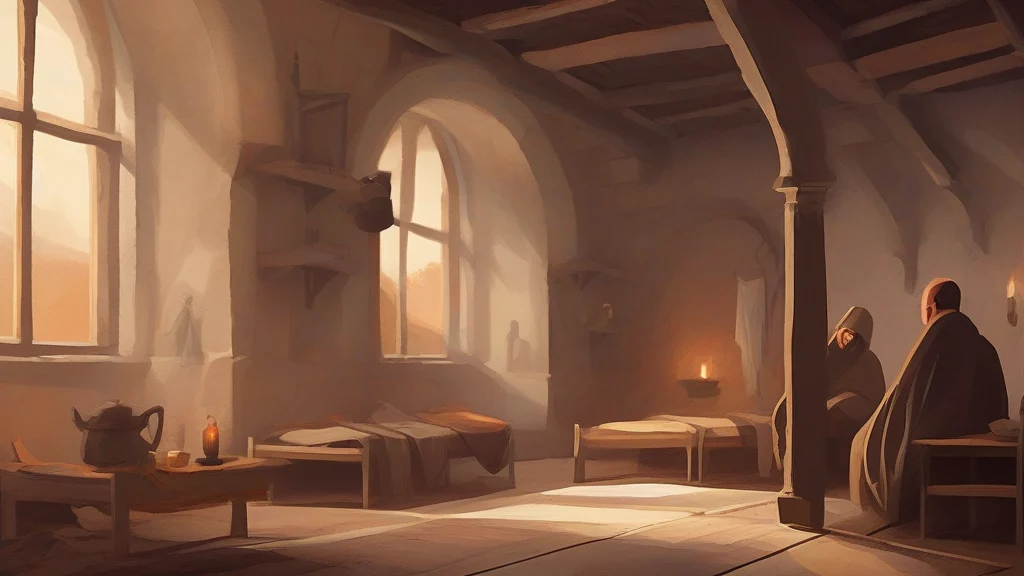
A dorter is the dormitory of a monastery or convent — the communal room where monks or nuns slept. The word comes from Old French 'dortoir', derived from Latin 'dormire', meaning to sleep, making it an older sibling of the modern word 'dormitory'. Dorter is now largely obsolete as everyday vocabulary, but it remains current in historical and archaeological contexts: guides to medieval abbeys and priories routinely refer to the dorter range, often located on an upper floor with a night stair leading down to the church so the community could attend the night offices. Its variant spelling 'dortour' appears in Middle English texts. For readers interested in monastic life or ecclesiastical architecture, dorter is a precise, evocative term that captures both the architecture and the disciplined rhythm of religious communal living.
nounA dorter is a communal sleeping quarters, especially the dormitory of a monastery where monks slept. The term is chiefly historical and architectural, used in descriptions of medieval monastic buildings.
- The dormitory or communal sleeping room of a monastery or convent.
"The monks descended from the dorter each night for the midnight office."
"The excavated abbey reveals a well-preserved dorter above the chapter house."
"Visitors can trace the layout of the dorter from its surviving stairway."
Standard regular plural; rarely encountered since the word itself is rare and usually refers to one specific room within a given monastery.
"The plan shows two dorters, one for the monks and one for the lay brothers."
Before 'dormitory' caught on, English monks climbed to their 'dorter' every night — and the word still survives in medieval architecture guides.
Reviewed by Deb Chak, Editor. AI-assisted content curated by RJS Tech Solutions LLP.
Etymology of dorter
Dorter entered Middle English from Old French 'dortoir', which derives from the Latin verb 'dormire', meaning 'to sleep'. It is thus a direct cognate of 'dormitory', which came into English later via the same Latin root, and also shares ancestry with 'dormant' and 'dormer'. The variant form 'dortour' was common in Middle English before the spelling settled.
Related word forms
How dorter is actually used
Dorter is archaic and rare in modern use; it appears mainly in historical, archaeological, and architectural writing about medieval monasteries. It was more common in British than American usage, and the variant spelling 'dortour' is found in older texts.
Easily confused with dorter
A dormer is a window projecting vertically from a sloping roof, while a dorter is a monastic dormitory; the two share a Latin root but denote entirely different things.