What does doughboy mean?
A doughboy is, most familiarly, an American foot soldier — a nickname that became indelibly attached to the infantrymen of the American Expeditionary Forces in the First World War. The term predates that conflict, having been used informally for U.S. infantrymen since at least the mid-nineteenth century, but it was the mud and trenches of 1917–1918 that fixed it in the national imagination; today it evokes that era with affectionate, slightly nostalgic connotations. Separately, in parts of New England, particularly Rhode Island and nearby coastal areas, a doughboy is a ball of dough fried until golden, often served dusted with sugar — a beloved boardwalk and fairground treat. The word's origins are debated: suggested explanations include the flour-like dust of old marching grounds, the dumplings soldiers ate, and the polished white buttons of early uniforms. Whatever its true source, doughboy remains a vivid, distinctly American word.
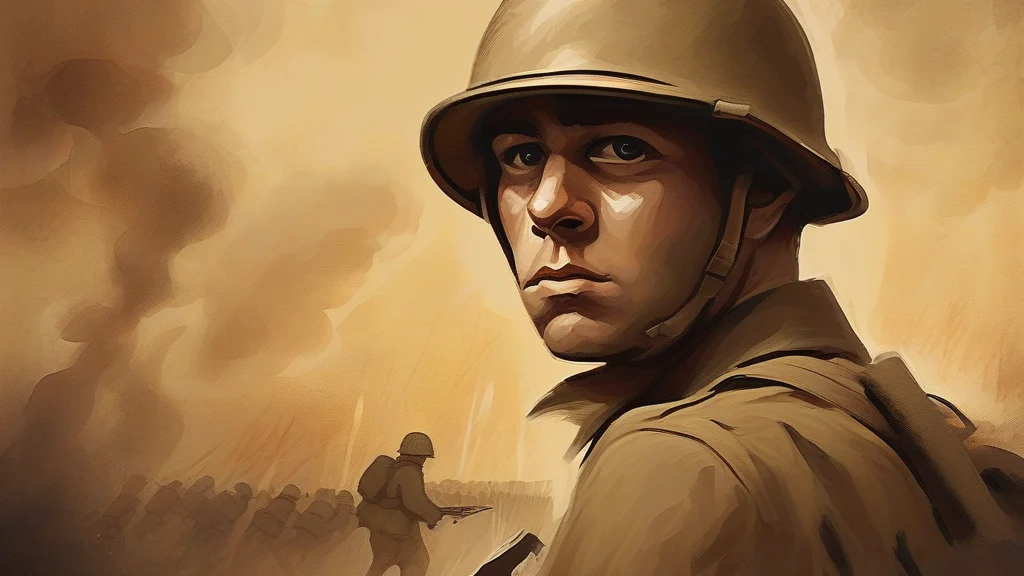
An American infantryman, especially one who served in the First World War.
"The doughboys came home in 1919 to parades in every major city."
Historical and informal; generally restricted to soldiers of or before World War I.
A ball of deep-fried dough eaten as a sweet or savory snack, especially in Rhode Island and coastal New England.
"Nothing ends a day at the beach quite like a fresh, sugary doughboy."
Regional to southern New England; also spelled "dough boy" in some sources.
The standard plural adds -s; it is used both for multiple infantrymen and for multiple pieces of fried dough.
"Thousands of doughboys crossed the Atlantic in the spring of 1918."
Nobody knows exactly why WWI Americans were called doughboys — theories range from their buttoned uniforms resembling dough to the dust of the Mexican border campaigns caking them like flour.
Reviewed by Deb Chak, Editor. AI-assisted content curated by RJS Tech Solutions LLP.
Etymology of doughboy
Doughboy first appeared in English in the seventeenth century as a simple compound of "dough" and "boy," originally denoting a baker's apprentice or a person who worked with dough. By the mid-nineteenth century it had become a colloquial nickname for American infantrymen, used notably during the Mexican-American War and the Civil War, though the reason for the transfer is uncertain. Proposed explanations include the adobe dust of southwestern marches, the dough-based rations of soldiers, and the appearance of early uniform buttons. The name reached its fullest currency during World War I, after which it gradually yielded to newer terms such as "GI."
How doughboy is actually used
The military sense is historical but still widely understood, often carrying affectionate, patriotic connotations; it applies chiefly to soldiers of the Great War rather than later conflicts. The fried-dough sense is regional to southern New England and may be unfamiliar elsewhere. Both senses are informal.
Easily confused with doughboy
"GI" refers to American service members of the Second World War era onward, while "doughboy" specifically denotes American infantrymen of the First World War.
"Tommy" (from Tommy Atkins) is the British equivalent nickname for a common British soldier, whereas "doughboy" is the corresponding American term.