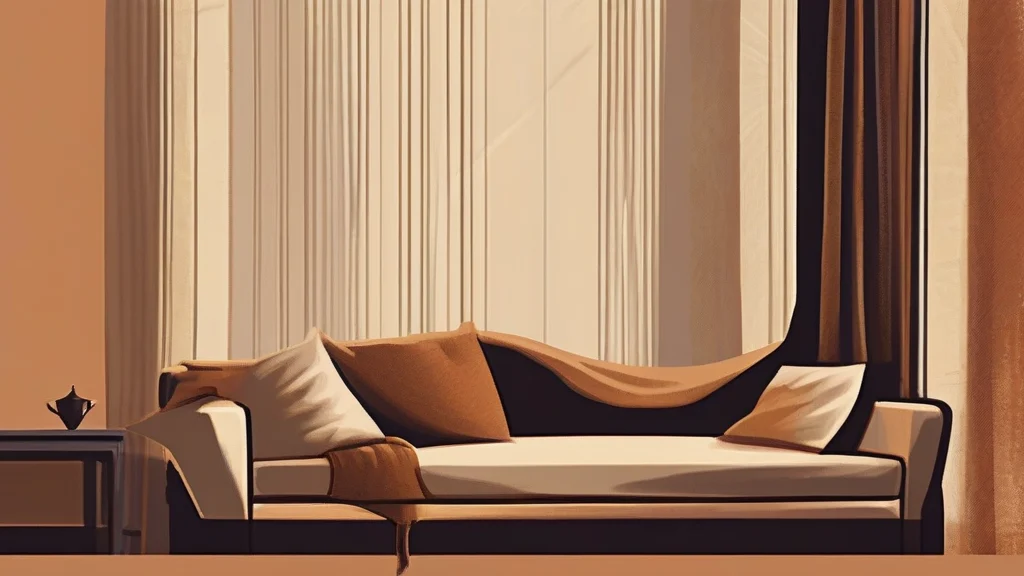
What does drapery mean?
Drapery refers to decorative cloth hangings—most commonly curtains used to dress windows, doorways, or stages—but the word also denotes the art of arranging fabric into pleasing folds, a skill prized in both interior design and the visual arts. Derived from 'draper,' the historical term for a cloth merchant, it carries an air of refinement and craftsmanship that plain 'curtains' does not. One might speak of heavy velvet drapery lending grandeur to a drawing room, or praise a sculptor's handling of drapery in rendering flowing robes from cold marble. The word appears most often in formal, aesthetic, or commercial contexts: interior design, theater production, and art history. Whether describing luxurious window treatments or the elegant folds of fabric captured in paint and stone, 'drapery' evokes texture, movement, and a certain old-world sophistication that makes it a valuable word for anyone writing about design, art, or décor.
nounCloth curtains or hangings used as decoration, especially in a room or on a stage; also, the art or craft of arranging fabric in graceful folds, or cloth so arranged.
- Decorative cloth hangings, especially curtains for windows, doors, or stage settings.
- The art, trade, or business of a draper; the selling of cloth and fabrics.
- Fabric arranged in graceful folds, as depicted in painting or sculpture.
"The heavy velvet drapery gave the drawing room an air of Victorian grandeur."
"She chose a rich burgundy drapery to frame the tall windows of the parlor."
"In classical sculpture, the sculptor's mastery of drapery reveals the form beneath the stone."
The plural 'draperies' typically refers to multiple separate sets of curtains or hangings, especially in American usage for window treatments across different rooms.
"The interior designer selected silk draperies for every window in the suite."
The word 'drapery' comes from 'Draper', a medieval surname given to cloth merchants — so every time you admire a curtain, you're paying tribute to a 13th-century fabric salesman.
Reviewed by Deb Chak, Editor. AI-assisted content curated by RJS Tech Solutions LLP.
Etymology of drapery
Drapery entered English in the late Middle Ages, derived from 'draper,' meaning a dealer in cloth or woolen goods, which itself came from Old French 'drapier,' from 'drap' meaning cloth. The root ultimately traces back through Old French to a Germanic source related to weaving or cloth-making. Cognates include the French 'drap' (cloth) and English words such as 'drape' and 'draper,' all sharing the same textile-trade origin.
How drapery is actually used
'Drapery' is slightly more formal than 'curtains' and often carries connotations of elegance, luxury, or theatricality. In American English it frequently refers to high-end or custom window treatments, while in British English the word is less common in everyday speech. In art criticism, 'drapery' has a specialized sense referring to the depiction of folded cloth in painting and sculpture.
Easily confused with drapery
'Drapes' refers specifically to window curtains, while 'drapery' more broadly covers any decorative hanging fabric and also the art of arranging cloth in folds.