What does draughty mean?
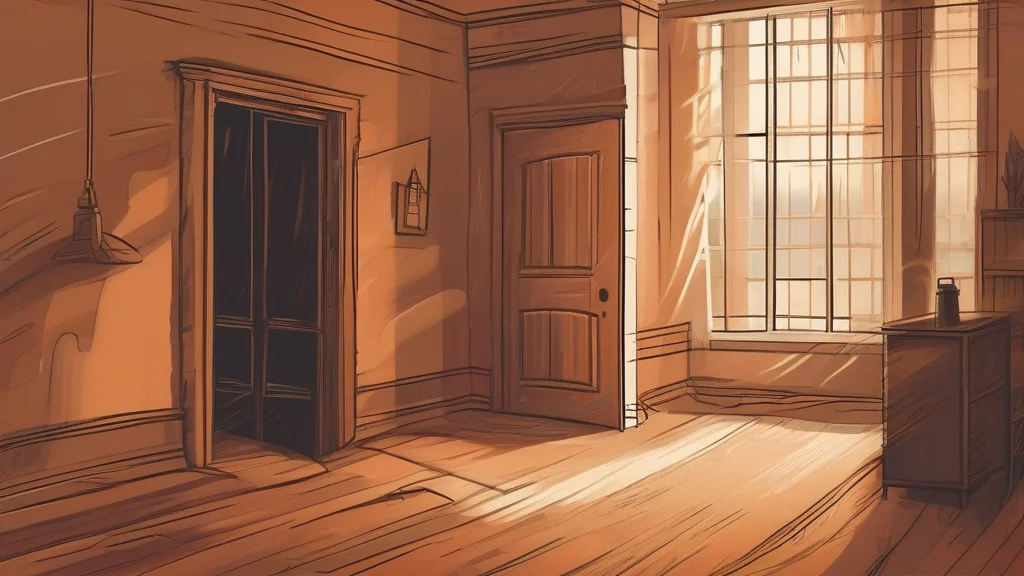
'Draughty' is an adjective describing a room, building, or other space through which cold currents of air flow, usually through ill-fitting doors, leaky windows, cracks in floors, or other gaps. The American spelling is 'drafty'; 'draughty' is the standard British form, following the British spelling 'draught' for what Americans write as 'draft'. The word typically carries negative connotations, conjuring images of chilly Victorian houses, rattling sash windows, and occupants huddled near fires with blankets. It can also extend figuratively to clothing or outdoor positions exposed to cold wind. Deriving from 'draught', which traces back through Middle English to Old English 'dragan', meaning to pull or draw, the word literally evokes air being drawn through a building. Common collocations include 'draughty old house' and 'draughty corridor', and related forms include 'draughtily', 'draughtiness', and the comparative 'draughtier'. It should not be confused with 'droughty', which relates to drought.
(Of a room, building, or enclosed space) admitting cold currents of air through gaps, cracks, or poorly fitting openings.
"The castle's vast stone halls were beautiful but unbearably draughty in winter."
Standard spelling in British English; American English prefers 'drafty'.
(Of clothing or an exposed position) allowing or exposed to cold wind or moving air; not windproof or sheltered.
"The thin canvas jacket was far too draughty for the exposed clifftop walk."
That '-ugh' isn't decoration — 'draughty' preserves one of English's oldest spellings for a word whose root simply meant 'to pull', as in pulling air through your windows.
Reviewed by Deb Chak, Editor. AI-assisted content curated by RJS Tech Solutions LLP.
Etymology of draughty
'Draughty' is formed from the noun 'draught' plus the adjectival suffix '-y'. 'Draught' comes from Middle English, derived from Old English 'dragan', meaning 'to pull' or 'to draw', the same root that gives us the verbs 'draw' and 'drag'. A 'draught' originally meant something drawn or pulled, later acquiring the sense of an air current drawn through an opening — hence a 'draughty' room. The spelling 'draught' reflects Middle English orthography influenced by Middle Dutch or Middle Low German, while American English simplified it to 'draft'; both spellings survive, making 'draughty' and 'drafty' regional variants of one word.
Related word forms
How draughty is actually used
Chiefly British spelling; American English uses 'drafty' almost exclusively. The word carries mildly negative connotations, often evoking discomfort, poor insulation, or shabby older buildings, though it can appear affectionately in descriptions of rustic or historic charm.
Easily confused with draughty
'Draughty' means exposed to cold air currents, while 'droughty' (a rare word) means affected by drought or dryness.
'Drafty' and 'draughty' are simply American and British spellings of the same word, differing only in the spelling of 'draft'/'draught'.