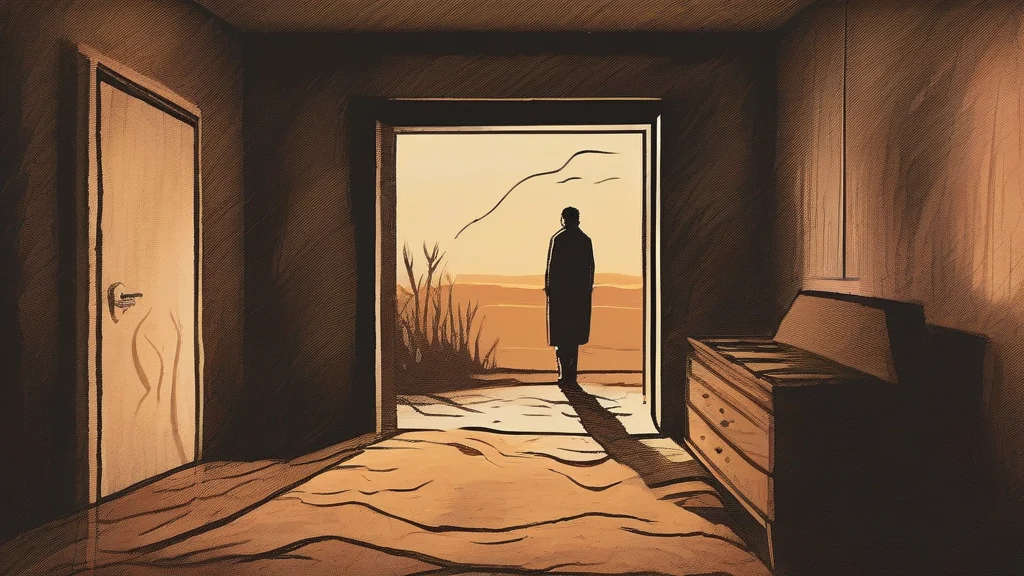
What does dreading mean?
"Dreading" is the present participle and gerund of the verb "dread," meaning to look forward to some future event with fear, anxiety, or profound reluctance. It describes not sudden terror but a lingering, anticipatory unease — the sinking feeling that builds before a difficult conversation, a medical result, or an unwelcome obligation. English speakers typically pair it with a noun ("dreading the exam") or a gerund clause ("dreading telling her the news"), and its connotation is firmly negative across both formal and informal registers. The underlying verb "dread" descends from Old English "drǣdan," and historically the related adjective could convey awe or reverence as much as fear, as in the "dread" majesty of a monarch. Today the word survives almost exclusively in its negative sense, making "dreading" a precise and evocative choice whenever anticipation itself becomes the source of suffering. Its closest synonym is "fearing," though dreading specifically emphasizes the drawn-out quality of anxious expectation rather than fear in the moment.
To anticipate something future with fear, anxiety, or deep reluctance.
"I've been dreading this phone call all day."
Frequently takes a gerund complement: "dread doing something."
The act or state of anticipating something with fear or reluctance.
"Her constant dreading drained more energy than the task itself."
Dread once carried a sense of reverence as well as fear — an archaic phrase like "the dread sovereign" meant a ruler held in awe, not one you were afraid to meet.
Reviewed by Deb Chak, Editor. AI-assisted content curated by RJS Tech Solutions LLP.
Etymology of dreading
"Dreading" derives from the verb "dread," which comes from the Old English "drǣdan," a contraction of "ondrǣdan," meaning to fear or be in awe of. The root is Germanic, and the word has been continuous in English since the earliest records of the language. Historically, "dread" could express reverent awe as well as fear — hence phrases like "dread lord" — though that honorific sense has largely faded, leaving the modern sense of anxious apprehension.
Related word forms
How dreading is actually used
Common in both formal and informal registers; often followed by a gerund clause ("dreading going back") or a noun phrase ("dreading the exam"). Strongly negative in connotation, implying sustained anticipatory distress rather than momentary fright.
Easily confused with dreading
"Dreading" means fearing or anticipating with anxiety, while "dredging" means clearing out mud or sediment from a riverbed or harbor.