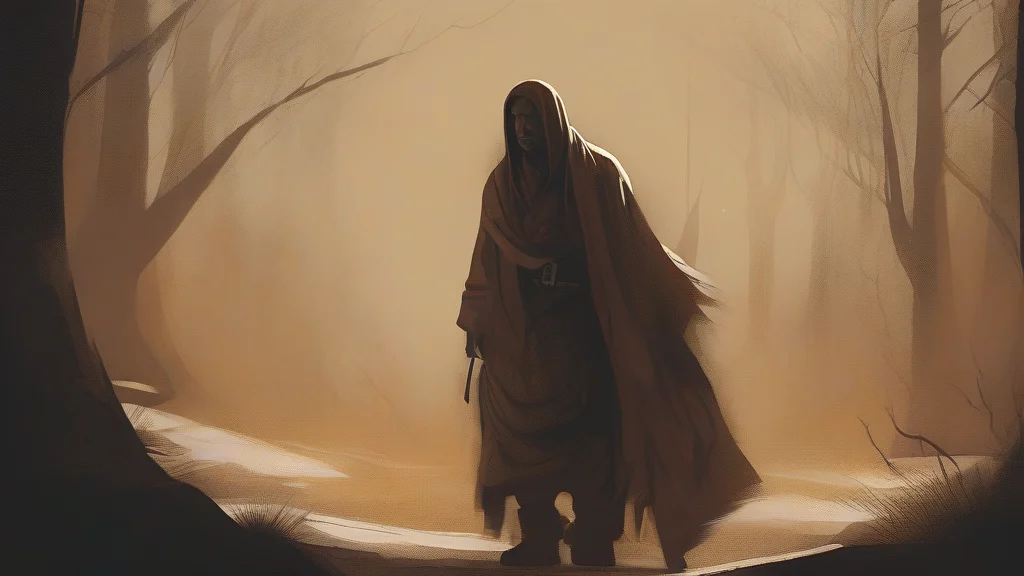
What does dreed mean?
Dreed is an archaic English and Scots word meaning to endure or suffer, particularly with patience in the face of hardship or inevitable fate. It functions as both a verb — as in the traditional phrase 'to dree one's weird,' meaning to bear what destiny has ordained — and, less commonly, a noun denoting affliction or endurance itself. Rooted in Old English, the word was once ordinary across Northern England and Scotland but gradually fell out of general use, surviving mainly in Scottish literature, ballads, and proverbial speech. Its connotations are distinctly stoic: to dree something is not merely to suffer it, but to bear it with a grim, uncomplaining resolve that has long been considered characteristically Scottish. Though obsolete in everyday modern English, dreed retains a place in literary and dialectal contexts, where it evokes an older moral world of fortitude, resignation, and quiet strength before adversity.
To endure or suffer, especially patiently or resignedly.
"She dreed many a hardship in her years on the moor."
Chiefly found in Scots and Northern English dialect; best known in the phrase 'dree one's weird.'
Suffering, endurance, or affliction.
"Through frost and famine he bore his dree without complaint."
Rare even within Scots; encountered mostly in older poetry and song.
To 'dree your weird' is to stoically endure whatever fate throws at you — a phrase so stubbornly Scottish that it survived centuries after the rest of English abandoned it.
Reviewed by Deb Chak, Editor. AI-assisted content curated by RJS Tech Solutions LLP.
Etymology of dreed
Dreed derives from the Middle English and Scots verb 'dreen', which traces back to Old English 'drēogan', meaning to endure, carry out, or suffer. The same Old English root gave rise to related forms in other Germanic languages, reflecting an ancient Germanic concept of bearing hardship. In Scots, the word remained in living use long after it faded elsewhere, preserved above all in the proverbial phrase 'to dree one's weird', where 'weird' means fate or destiny.
Related word forms
How dreed is actually used
The word survives almost exclusively in Scots literature and in the fixed expression 'to dree one's weird' (to endure one's fate). It carries connotations of grim, uncomplaining endurance rather than mere passive suffering.
Easily confused with dreed
'Dreamed' is the past tense of 'dream' (to have visions while sleeping or to aspire), whereas 'dreed' is an archaic form of 'dree', meaning to endure or suffer.