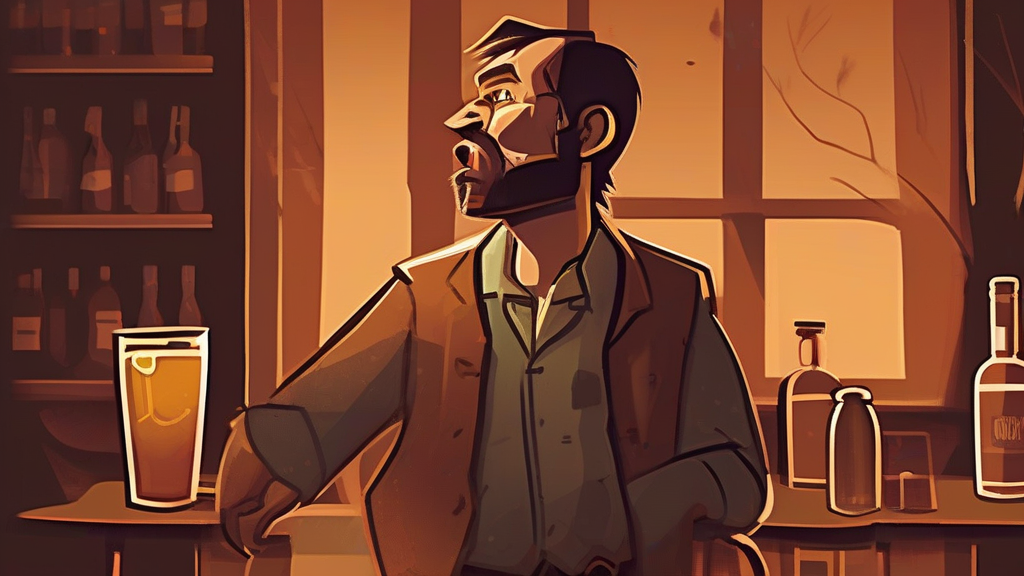
What does drunkard mean?
A drunkard is a person who is habitually drunk — someone who drinks alcohol excessively and repeatedly, often with visible damage to health, reputation, or relationships. The word functions only as a noun and always refers to a person, never to behaviour itself (for that, English uses 'drunken'). Its tone is distinctly pejorative: unlike the clinical 'alcoholic', which frames heavy drinking as a medical condition, 'drunkard' passes moral judgement and belongs largely to older, literary, or moralizing registers. You are most likely to meet it in classic fiction, sermons, temperance-era writing, or deliberate archaism. Common pairings include 'habitual drunkard' and 'hopeless drunkard'. Related words include 'drunk', 'drunkenness', and 'sot'. Though somewhat dated in everyday speech, the word remains useful precisely because of its sharp, judgemental edge — no other common English noun so directly condemns a person for chronic drunkenness rather than describing their condition.
nounA person who is habitually drunk; someone who drinks alcohol excessively and often to the point of intoxication.
- A person who is habitually or frequently drunk from drinking alcoholic beverages.
"The old drunkard shuffled into the tavern before noon, as he had done every day for years."
"By the end of his life, the once-respected merchant had become a notorious drunkard."
"In the novel, the drunkard serves as a cautionary figure whose downfall mirrors the town's own decay."
Regular plural formation; used when referring to multiple people who habitually drink to excess.
"The reformer dedicated her life to rescuing drunkards from the streets."
The '-ard' ending in drunkard was originally an insult in medieval French — it also gave us coward, bastard, and sluggard, so calling someone a drunkard has always packed a sneer.
Reviewed by Deb Chak, Editor. AI-assisted content curated by RJS Tech Solutions LLP.
Etymology of drunkard
Drunkard was formed in Middle English by adding the suffix '-ard' — borrowed from Old French, where it carried a pejorative force — to the past participle 'drunk'. The same French-derived '-ard' ending appears in words like 'coward', 'bastard', and 'sluggard', all of which began as insults. The root verb 'drink' traces back through Old English 'drincan' to Proto-Germanic origins shared with Dutch 'drinken' and German 'trinken'.
How drunkard is actually used
Drunkard carries a strongly negative, disapproving connotation and sounds somewhat old-fashioned or literary compared with more neutral modern terms like 'alcoholic' or 'heavy drinker'. It implies habitual, chronic drunkenness rather than occasional intoxication.
Easily confused with drunkard
Drunken is an adjective describing something characterized by or involving excessive drinking (e.g. drunken behaviour), while a drunkard is a noun referring to the person who drinks habitually.