What does dun mean?
Dun occupies two quite separate corners of English. As a noun and adjective, it names a dull grayish-brown color — the shade of dusty earth, faded cloth, and, most famously, a certain kind of horse. A dun horse has a coat of this muted brown, usually marked by a dark stripe running along its spine and darker points on the mane and tail, and the term appears constantly in Westerns and equestrian literature. The word's other life is as a verb: to dun someone is to press them repeatedly for payment of a debt, a usage rooted firmly in commercial and legal language. Collection agencies send dunning letters, and businesses may dun delinquent customers by phone or mail before escalating further. The verb carries a connotation of insistent, slightly pestering persistence rather than outright hostility. Though the two senses look alike on the page, they arose from distinct historical sources, making dun a compact example of how unrelated meanings can come to share a single spelling.
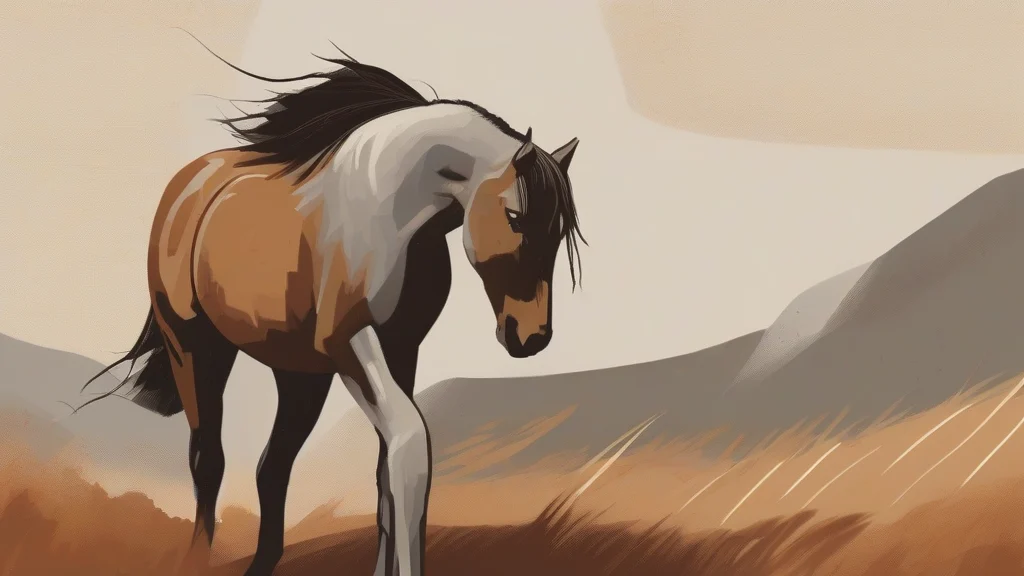
A dull grayish-brown color; also, a horse having a coat of this color, typically with a dark dorsal stripe and darker mane and tail.
"She rode a dun across the open range."
In horse terminology, the dark stripe along the back is called the dorsal stripe or 'eel stripe.'
To insistently and repeatedly demand payment of a debt from someone.
"The utility company dunned him for months before referring the account to a collector."
Of a dull grayish-brown color.
"A dun mist settled over the moor."
The plural applies when referring to multiple horses of this coloring, or less commonly to instances or notices demanding payment.
"The herd was mostly bays, with a few duns among them."
The word for chasing deadbeats and the color of an old horse's hide share one syllable — and both trace back over a thousand years.
Reviewed by Deb Chak, Editor. AI-assisted content curated by RJS Tech Solutions LLP.
Etymology of dun
The color sense traces back to Old English "dunn," meaning dull brown or dusky, which is also found in Old Norse as "dunn"; it has been applied to horses since at least the Middle English period. The verb meaning "to demand payment" emerged separately in early modern English, around the seventeenth century, and its precise origin remains debated — one plausible account derives it from the color word via the figure of a dark-clothed debt collector, while another links it to "din," suggesting the notion of making a persistent noise at a debtor. Because the evidence is inconclusive, dictionaries generally mark the verb's etymology as uncertain.
Related word forms
How dun is actually used
The verb is chiefly commercial and legal in register, common in contexts involving collections, credit agencies, and formal correspondence; "dunning letter" is an established term in business English. The noun and adjective senses belong mainly to descriptions of horses and rural landscapes, and appear frequently in equestrian and literary writing.
Easily confused with dun
"Done" is the past participle of do (finished or completed), while "dun" is either the gray-brown color/horse coat type or the act of pressing someone for debt repayment — they are pronounced identically in most dialects but entirely unrelated in meaning.