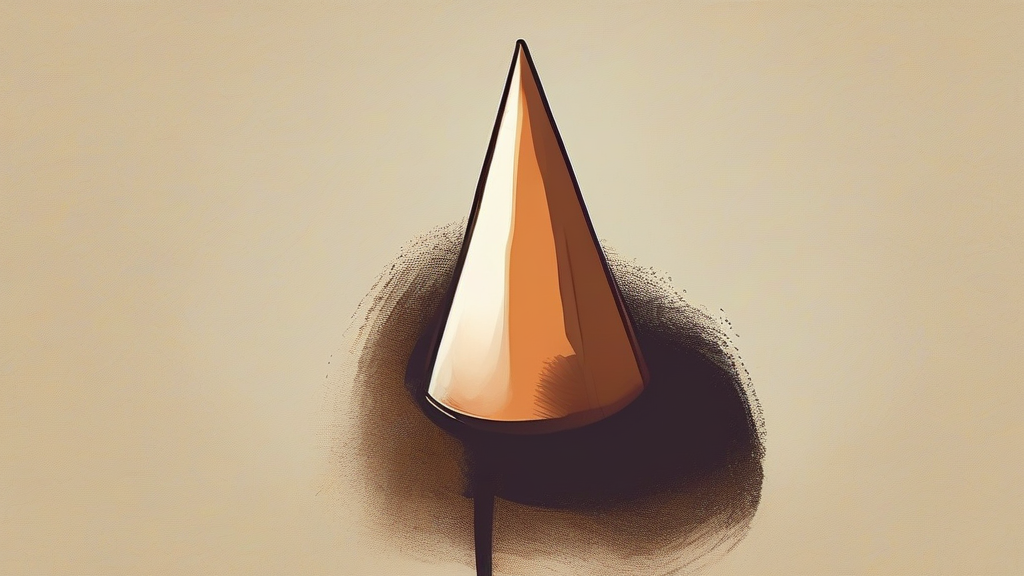
What does dunce mean?
A dunce is a person who is slow to learn or widely regarded as unintelligent, especially a student who struggles with schoolwork. The word carries an informal, mildly mocking tone rather than vicious abuse, and it survives most vividly in the image of the 'dunce cap', the pointed paper hat traditionally forced on struggling pupils as public humiliation. Its history is strikingly ironic: the term derives from John Duns Scotus, a medieval Scottish philosopher and theologian celebrated for his subtlety of mind. During the Renaissance, his followers were attacked for pedantic, hairsplitting reasoning, and 'Duns' or 'dunce' gradually came to mean a blockhead incapable of learning. Today the word appears mostly in playful or nostalgic contexts — teasing a friend who cannot fix a flat tyre, recalling old classroom rituals — making it a useful, mildly humorous alternative to blunter terms like fool or idiot.
nounA person who is slow at learning or who is regarded as stupid, especially a pupil who struggles at school.
- A slow learner or someone considered stupid, especially a schoolchild.
- (Historical) A follower of Duns Scotus, whose ideas were later ridiculed as hair-splitting.
"He was mocked as a dunce for failing algebra twice, though he later became a skilled engineer."
"She was labelled the class dunce for her shaky spelling."
"Even the biggest maths dunce can master long division with practice."
Regular plural, pronounced /ˈdʌnsɪz/.
"The cartoon showed two dunces sitting in the corner wearing paper hats."
The insult 'dunce' began as a tribute — it comes from John Duns Scotus, one of the most brilliant philosophers of the Middle Ages.
Reviewed by Deb Chak, Editor. AI-assisted content curated by RJS Tech Solutions LLP.
Etymology of dunce
'Dunce' originated in the early sixteenth century as an insulting nickname for the followers of John Duns Scotus (c. 1266–1308), the medieval Scottish scholastic philosopher and theologian. Renaissance humanists such as Thomas More and Erasmus derided the 'Dunses' for what they saw as narrow, hairsplitting logic, and the name was transferred to anyone judged dull-witted or resistant to learning. The word thus travelled from a mark of scholastic allegiance to a general term for a fool or slow learner, its sense ironically reversing the reputation of the brilliant philosopher it honours. Related terms such as 'Scotism' and 'Scotist' still denote Scotus's philosophical school.
Related word forms
How dunce is actually used
'Dunce' is informal and mildly insulting; it is dated compared with harsher insults but still used teasingly about poor performance at schoolwork, especially fixed phrases like 'dunce cap'. It is not usually applied as seriously offensive abuse.
Easily confused with dunce
'Dense' is an adjective meaning stupid or slow-witted, while 'dunce' is a noun referring to the person themselves.