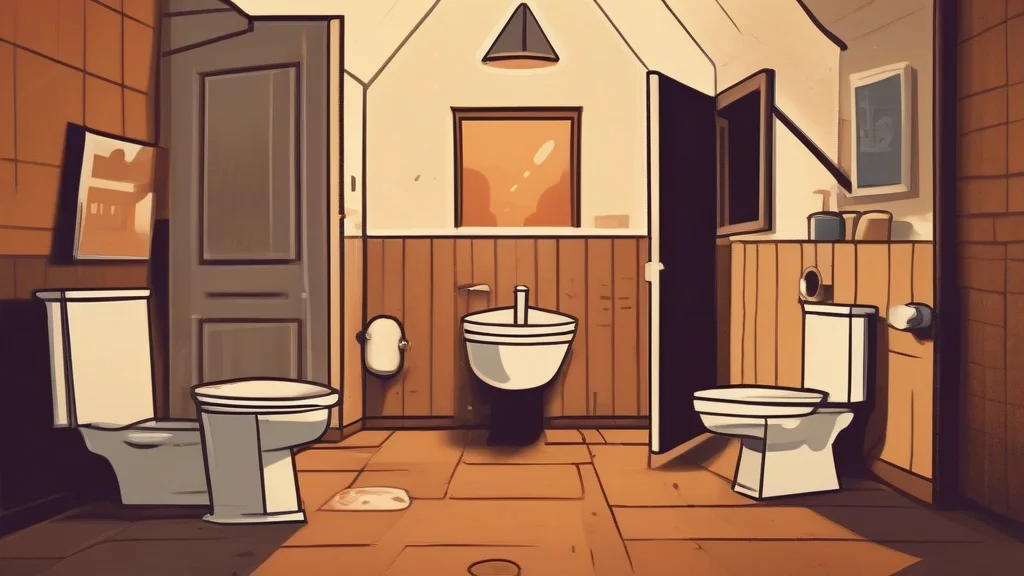
What does dunny mean?
A dunny is an informal word used mainly in Australia and New Zealand for a toilet. Historically it referred specifically to an outside lavatory — often a small shed over a pit or septic tank — common in rural areas and older suburbs before indoor plumbing became universal. In contemporary speech the word has broadened to mean any toilet, much like 'loo' in Britain. Its tone is casual but not offensive; it tends to sound friendly, folksy, and distinctly local rather than crude. The word survives in fixed expressions such as 'dunny roll' (toilet paper) and evokes strong nostalgia, appearing frequently in writing about Australia's past and in children's books. For visitors and learners, 'dunny' is a useful marker of authentic Australasian vocabulary — instantly recognizable to locals, mildly amusing to outsiders, and perfectly acceptable in everyday conversation even if it would look odd on a formal sign.
nounAn outdoor toilet or lavatory, especially one of a simple or old-fashioned kind; in modern usage, any toilet.
- An outdoor toilet, especially an old-fashioned one built over a pit or septic system (chiefly Australian/New Zealand, informal)
- Any toilet or lavatory (informal Australian/New Zealand)
"The old farmhouse still had a dunny down the back of the garden."
"Grandpa's childhood home had no plumbing — just a corrugated-iron dunny at the end of the yard."
"Excuse me a moment, I need to visit the dunny."
Regular plural; used when speaking of multiple toilets, most often in historical or rural contexts.
"The old camping ground had two long-drop dunnies at the edge of the site."
In Australia, the humble 'dunny' once meant an outdoor shed over a pit — and the nightly 'dunny man' who collected the pan was a real profession until the 1970s.
Reviewed by Deb Chak, Editor. AI-assisted content curated by RJS Tech Solutions LLP.
Etymology of dunny
The word 'dunny' originated in British dialect before being carried to Australia, where it took root and flourished. It is commonly connected with the older dialect term 'dunnekin', meaning a privy, which itself may derive from Middle English 'dun' relating to dung — though the exact chain of development is not fully documented. The word became established in Australian English by the late nineteenth century, and its association with outdoor toilets made it a fixture of rural life until the mid twentieth century.
Related word forms
How dunny is actually used
Informal and colloquial, but affectionate rather than vulgar; widely understood across Australia and New Zealand and instantly recognizable as Australasian English. It carries a rustic, nostalgic connotation when referring to the old outdoor type, and is generally acceptable in casual conversation though out of place in formal writing.
Easily confused with dunny
'Dunnie' is an obscure Scottish dialect variant referring to the same thing, but it is rarely encountered and should not be treated as a standard spelling.