What does duple mean?
"Duple" is an adjective meaning twofold — consisting of, or organized into, two parts. Its natural home is music theory, where "duple time" denotes a metre built on recurring groups of two beats, as in marches and many popular songs, standing in contrast to triple or quadruple time. The term also appears in prosody to describe verse patterns based on pairs of syllables, and occasionally in general usage to describe anything binary or paired. Because of its technical flavor, "duple" rarely surfaces in everyday conversation, where speakers reach instead for "double" or "twofold." Yet within its domains it is precise and indispensable: a musician analyzing rhythm, or a scholar scanning verse, relies on it to name a structure that simpler words describe only loosely. Derived from Latin "duplus," meaning double, it shares ancestry with "duplicate" and "duplex."
adjectiveConsisting of or characterized by two parts, beats, or elements; twofold. Especially in music and prosody, describing metre or rhythm based on groups of two.
- (of music or verse) Having a basic unit of two beats or two syllables; organized in groups of two.
- (general) Consisting of or involving two parts or members; twofold.
"The march moves in duple time, its steady two-beat pulse driving the dancers forward."
"The piece shifts from duple to triple metre halfway through, catching listeners off guard."
"The poem's duple structure mirrors its theme of divided loyalties."
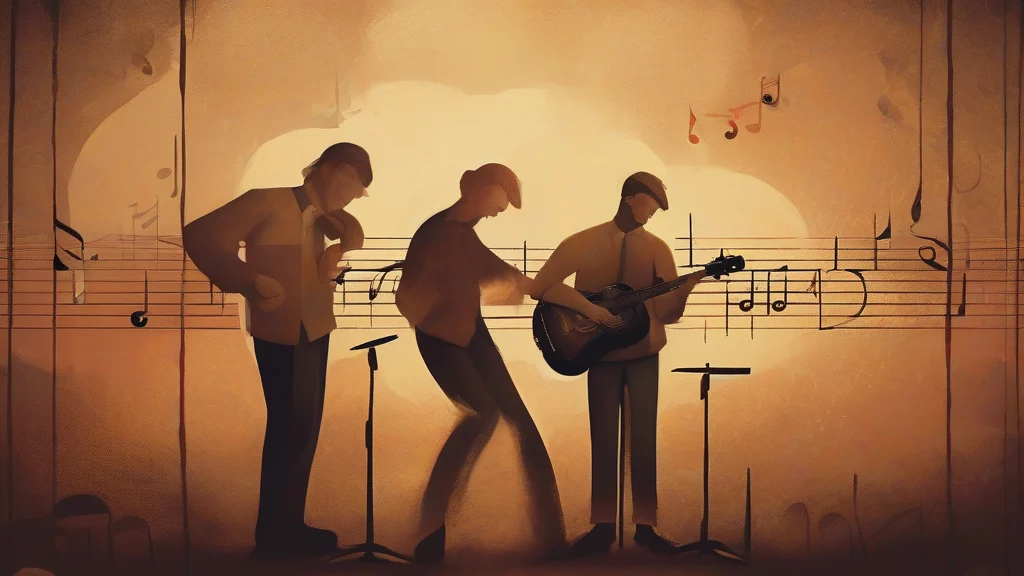
Every march you've ever heard stomps along in duple time — that relentless ONE-two, ONE-two is the word "duple" doing its work.
Reviewed by Deb Chak, Editor. AI-assisted content curated by RJS Tech Solutions LLP.
Etymology of duple
"Duple" derives from Latin "duplus," meaning twofold or double, formed from "duo" (two) on the pattern of words like "triplex." It entered English in the mid-16th century, initially carrying the general sense of double before narrowing toward its modern technical use in music and verse. It is closely cognate with "duplicate" and "double" (via Old French), all tracing back to the same Latin root.
Related word forms
How duple is actually used
"Duple" belongs chiefly to technical registers — music theory, prosody, and formal description — and would sound stilted in casual speech, where "double" or "twofold" are preferred. In musicology it stands in contrast to triple and quadruple time.
Easily confused with duple
"Double" is the everyday word for something twice as much or having two parts, while "duple" is a more technical term used mainly in music and prosody to describe patterns organized in twos.
"Duplet" is a noun naming a group of two (especially two notes played in the time of three), whereas "duple" is an adjective describing anything structured in twos.