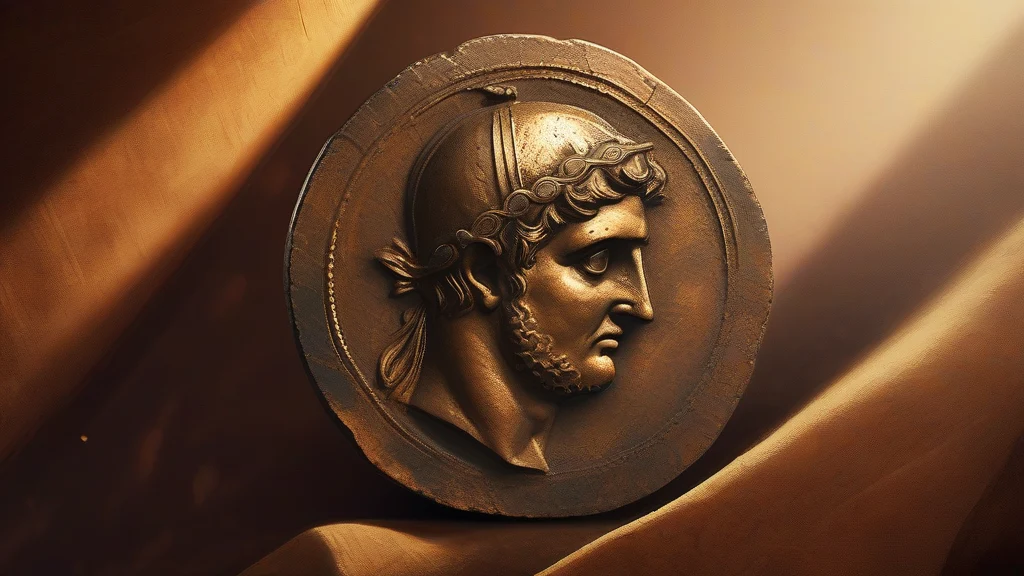
What does dupondius mean?
The dupondius was a Roman coin worth two asses, introduced under Augustus as part of his monetary reform around 23 BC–AD 14. It was typically struck from orichalcum, a gold-colored brass alloy that gave it an appearance very similar to the sestertius, which was worth four asses. To help users distinguish the two coins at a glance, the emperor's portrait on the dupondius was shown wearing a radiate crown symbolizing the sun. The name derives from Latin duo, meaning "two," combined with pondus or pondo, meaning "weight" — literally "two-pounder." The dupondius circulated widely throughout the early Roman Empire for everyday purchases before gradually declining in use. Today the word survives almost exclusively in numismatic literature, museum catalogs, and archaeological reports, where scholars describe surviving specimens to date sites, reconstruct ancient prices, and study imperial portraiture across the Julio-Claudian and later dynasties.
nounAn ancient Roman bronze coin worth two asses, introduced during the reign of Augustus and distinguished by its brass-like alloy and the radiate crown worn by the emperor on its obverse.
- A Roman coin worth two asses, typically made of orichalcum (a gold-colored brass alloy), bearing the emperor's radiate portrait.
"The museum's collection includes a remarkably well-preserved dupondius struck under Nero."
"She identified the worn dupondius by the radiate crown on Hadrian's portrait."
"Prices in the market were quoted in sestertii, though small transactions often involved the humble dupondius."
The standard plural follows Latin declension; "dupondiuses" is rare and generally avoided in scholarly writing.
"The excavation uncovered three well-worn dupondii alongside a handful of sestertii."
Roman emperors wore a radiant sun crown on the dupondius purely so people could tell it apart at a glance from the nearly identical sestertius worth twice as much.
Reviewed by Deb Chak, Editor. AI-assisted content curated by RJS Tech Solutions LLP.
Etymology of dupondius
Dupondius comes directly from Latin, combining duo ("two") with pondo ("by weight"), essentially meaning "two-pounder" — a coin twice the weight of the as. It entered scholarly English usage through Renaissance and early modern studies of Roman numismatics. It shares its Latin roots with words such as pound, ponderous, and duo, all tracing back to Indo-European roots meaning "to weigh" or "two."
Related word forms
How dupondius is actually used
Dupondius is a technical term used almost exclusively in numismatics, archaeology, and classical scholarship. It is rare in everyday English and appears mainly in museum catalogs and academic writing. The standard plural is the Latinate "dupondii," though "dupondiuses" occasionally occurs in informal contexts.
Easily confused with dupondius
The sestertius was worth four asses (two dupondii) and shared a similar golden-brass appearance, while the dupondius was worth only two asses.
The as was a copper coin worth half a dupondius and bore no radiate crown.