
What does durra mean?
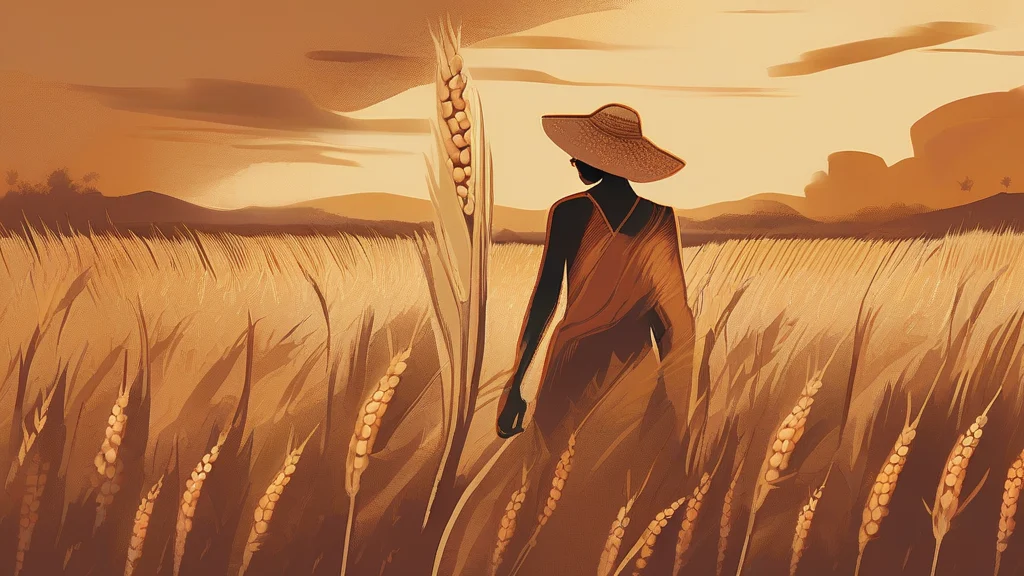
Durra is the name given to a widely grown variety of sorghum, a hardy cereal grass cultivated across the hot, dry belt stretching from West Africa through the Middle East to South Asia. Prized for its tolerance of drought and poor soils, durra produces small grains that are ground into flour for flatbreads and porridges, while its stalks serve as valuable livestock fodder. The word entered English from Arabic and remains primarily an agricultural and historical term rather than a word in daily conversation. Readers are likeliest to meet it in discussions of Sahelian farming, famine resilience, or traditional North African cuisine. Because spelling varies—doura and dourah appear as alternatives—the term can be easy to misrecognize, but its meaning is consistent: a staple grain whose reliability in harsh climates has made it a cornerstone of subsistence agriculture for centuries.
nounA variety of sorghum (Sorghum bicolor) widely cultivated in hot dry regions of Africa and Asia for its grain, which is used as food and fodder.
- A drought-tolerant variety of sorghum grown for grain, especially in North Africa, the Middle East, and South Asia; also called great millet.
"The farmers of the Sahel rely on durra as a staple cereal that withstands the dry season."
"Durra is threshed by hand and ground into flour for flatbread across the Sahel."
"The stalks left after the durra harvest provide valuable fodder for cattle."
Usually treated as an uncountable mass noun referring to the crop or grain; a plural form appears only when counting distinct varieties or fields of the plant.
"Farmers compared the yields of two durras bred for shorter growing seasons."
Durra isn't exotic at all if you eat sorghum bread or couscous in North Africa — it's the same grain under its classical Arabic name.
Reviewed by Deb Chak, Editor. AI-assisted content curated by RJS Tech Solutions LLP.
Etymology of durra
Durra comes from Arabic ḏurra (ذرّة), meaning 'grain' or 'corn', transmitted into English through Mediterranean and colonial trade and travel writing, likely in the early modern period. It is thus one of many English agricultural words borrowed from Arabic alongside crops that spread through the Islamic world. The variant spellings doura and dourah reflect different routes of transmission into European languages.
How durra is actually used
Durra is a technical and agricultural term, most often found in agronomy, ethnobotany, and historical or regional writing about North Africa and the Middle East. It is not part of everyday conversation in most English-speaking countries. Spelling varies considerably, with doura, dourah, and dura appearing as variants, so readers may encounter the same plant under several names. In South Asian contexts the closely related crop is usually called jowar rather than durra.
Easily confused with durra
Doura is simply an alternative spelling of the same plant; it is not a different word.
Dura (as in 'dura mater') is the tough outer membrane surrounding the brain and spinal cord, unrelated to the cereal grain durra.