What does dzo mean?
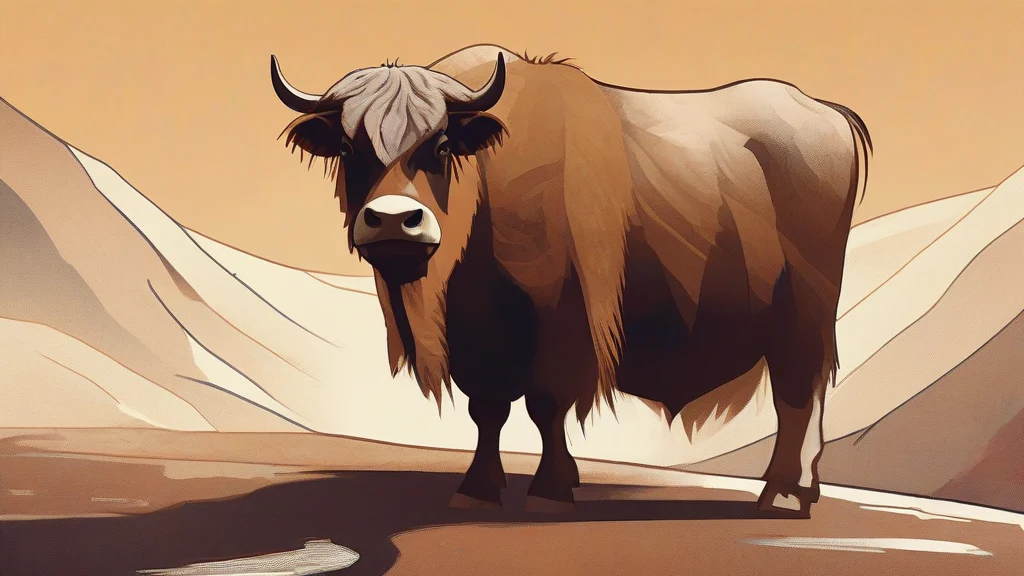
A dzo is a hybrid animal produced by mating a male yak with a domestic cow, a cross long bred by communities in Tibet, Nepal, and other parts of the Himalayas. Prized for combining the yak's tolerance of extreme altitude with the cow's productivity and docility, the dzo serves as a dairy animal, a source of meat, and a dependable pack and plough animal on terrain where neither parent breed performs as well. The name comes from Tibetan, and the variant spellings zho and zo appear in older sources; the corresponding female hybrid is often called a dzomo. Because the cross involves different species, male hybrids are typically sterile, while females can be fertile, a pattern familiar from other cattle hybrids. Outside specialist literature on Himalayan farming and travel writing about the region, the word is rare in general English, but it endures as an evocative term for one of the world's distinctive livestock hybrids.
nounA sterile or semi-fertile male hybrid offspring of a yak (Bos grunniens) and a domestic cow, valued in the Himalayas for milk, meat, and as a beast of burden.
- A male hybrid of a yak and domestic cattle, bred in Tibet and neighbouring Himalayan regions for strength, milk, and draught work.
"The herder led his dzo along the mountain trail, its sturdy frame carrying supplies far above the reach of ordinary cattle."
"In the high valleys of Nepal, farmers rely on the dzo to plough fields that pure yaks cannot tolerate."
"A well-fed dzo produces more milk than either of its parent breeds at high altitude."
Both 'dzos' and the unchanged form 'dzo' are attested; 'dzos' follows standard English pluralisation and is the safer choice in general writing.
"The herd consisted of six dzos and two full-blooded yaks."
The dzo is one of the rare animals whose very name is a Scrabble player's secret weapon — a legitimate three-letter word most people have never heard of.
Reviewed by Deb Chak, Editor. AI-assisted content curated by RJS Tech Solutions LLP.
Etymology of dzo
The word dzo derives from the Tibetan language, in which it names the yak–cattle hybrid central to traditional Himalayan husbandry. It entered English through travellers' and naturalists' accounts of Tibet and the Himalayan region, appearing alongside alternative transliterations such as zho. As a loanword directly from Tibetan, it has no Latin- or Greek-derived English cognates.
How dzo is actually used
The word is a technical and regional term, encountered mainly in writing about Himalayan agriculture, geography, or travel; it is uncommon in everyday conversation. The plural may be given as dzos, though the singular form is sometimes also used collectively.
Easily confused with dzo
A yak is a long-haired bovine native to the Himalayas, whereas a dzo is specifically the hybrid produced by crossing a yak with domestic cattle.
Zho is simply an alternative transliteration of the same Tibetan word for the yak–cattle hybrid, not a different animal.