What does earthmover mean?
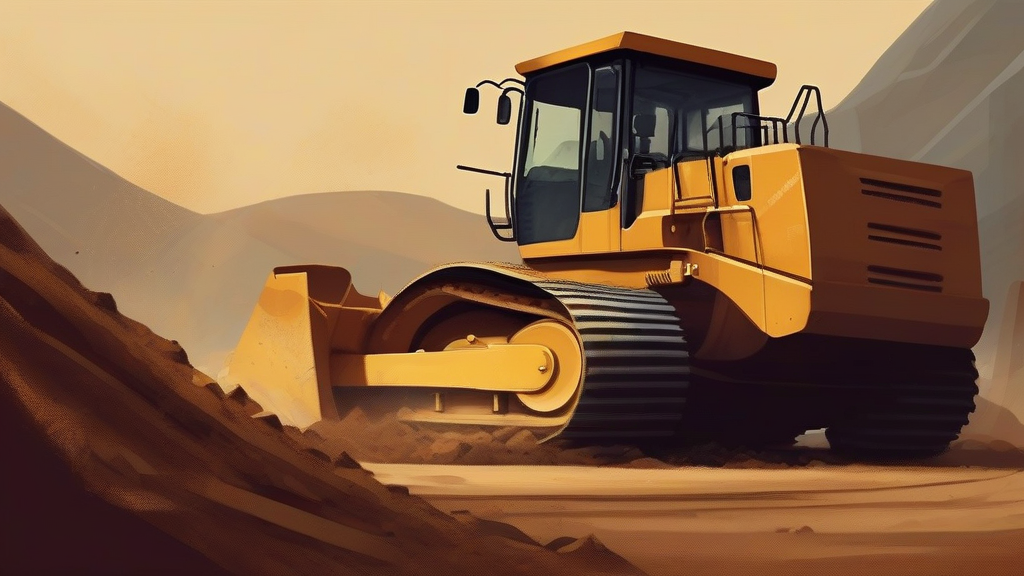
An earthmover is a heavy piece of machinery designed to move, dig, and reshape large volumes of soil and rock. The term covers a range of equipment familiar from construction sites and mines — bulldozers, excavators, scrapers, loaders, and graders among them — and is especially common in industrial and commercial contexts such as 'earthmoving equipment' or 'earthmoving contractor'. Earthmovers are essential to road building, foundation work, quarrying, and open-pit mining, where vast quantities of material must be shifted efficiently. The word is literal rather than figurative: it names the machine's function plainly, combining 'earth' with 'mover'. Because the term is broad, speakers often prefer the specific machine name when precision matters, reserving 'earthmover' for general discussion of heavy plant. Its connotations are practical and industrial — power, scale, and the transformation of landscape by human engineering.
nounA powerful machine, such as a bulldozer or excavator, used to move large quantities of earth in construction, mining, and civil engineering.
- A heavy machine (bulldozer, excavator, scraper, etc.) used to move or shape large amounts of soil and rock in construction, mining, or quarrying.
"The crew brought in an earthmover to clear the hillside before laying the foundation."
"An enormous yellow earthmover rumbled across the construction site, carving out a trench for the new pipeline."
"The open-pit mine operated around the clock, its earthmovers shifting thousands of tonnes of rock each day."
Regular plural, formed by adding -s.
"The quarry's fleet of earthmopers was replaced last year."
'Earthmover' is one of those rare words that does exactly what it says — a machine whose entire job description is the planet itself.
Reviewed by Deb Chak, Editor. AI-assisted content curated by RJS Tech Solutions LLP.
Etymology of earthmover
Earthmover is a straightforward English compound of 'earth', from Old English 'eorþe' meaning ground or soil, and 'mover', the agent noun from the verb 'move', which entered Middle English via Anglo-Norman French from Latin 'movēre' (to move). The compound arose in the modern industrial era as mechanized excavation developed in the nineteenth and twentieth centuries. It is transparently formed and shares its Latin root with words such as 'motion', 'removal', and 'mobile'.
How earthmover is actually used
The word is chiefly technical and commercial, common in the construction, mining, and heavy-equipment industries. The related compound 'earthmoving' is frequently used attributively (e.g., 'earthmoving equipment', 'earthmoving contractor'). It carries no figurative connotation in standard usage.
Easily confused with earthmover
An earthworm is a small burrowing annelid that improves soil; an earthmover is a heavy machine for moving soil.