What does earwig mean?
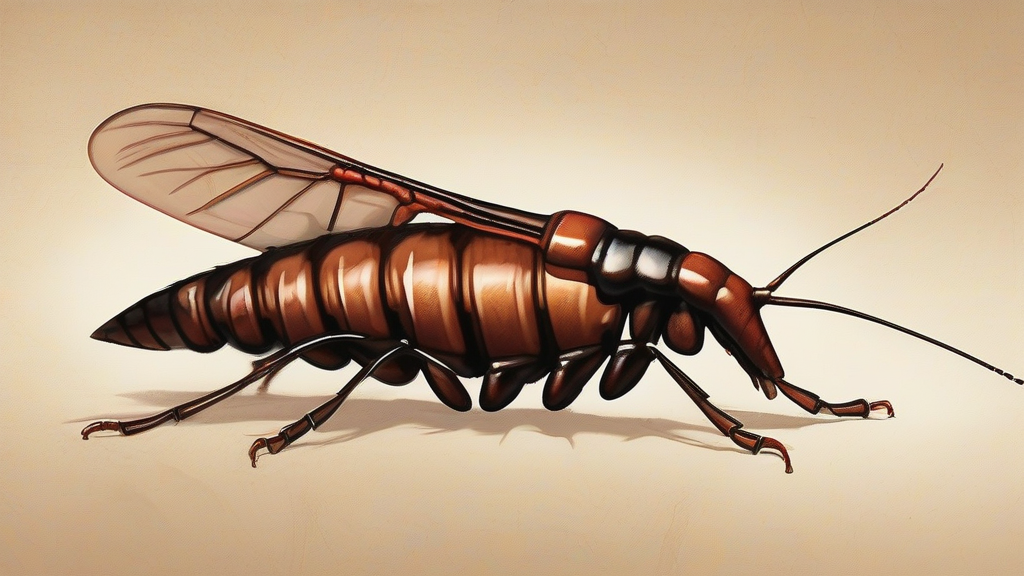
An earwig is a small, mostly nocturnal insect belonging to the order Dermaptera, easily recognised by its elongated, flattened body and the pair of forceps-like pincers (cerci) at the tip of its abdomen. Earwigs are found throughout most of the world and favour dark, damp hiding places such as under bark, stones, and plant debris during the day, emerging at night to feed on decaying organic matter, plants, and other insects — which makes them familiar, if sometimes unwelcome, visitors in gardens. The name comes from Old English and reflects an old folk belief that the insects creep into people's ears, a notion that persists as myth despite having no basis in fact; while an earwig can deliver a mild nip with its pincers if handled, it poses no real threat. The word is standard in both British and American English, appearing equally in casual conversation about garden pests and in scientific contexts.
nounA nocturnal insect of the order Dermaptera, having an elongated body and a pair of curved pincer-like appendages (cerci) at the rear of the abdomen.
- An insect of the order Dermaptera, typically brownish-black, with slender antennae and forceps-like cerci at the tip of the abdomen.
"An earwig scuttled out from under the flowerpot when she lifted it."
"She shook out the garden gloves after finding an earwig curled inside one."
"The gardener set out rolled-up damp newspaper traps to lure the earwigs away from his seedlings."
Standard plural, formed by adding -s. Used both for multiple insects and generically for the group.
"Earwigs often gather in large numbers beneath damp flowerpots."
Despite the name and an enduring myth, earwigs don't crawl into people's ears — though they can pinch with those fearsome-looking tail pincers.
Reviewed by Deb Chak, Editor. AI-assisted content curated by RJS Tech Solutions LLP.
Etymology of earwig
The word 'earwig' derives from Old English 'ēarwicga', a compound of 'ēare' (ear) and 'wicga' (an insect or beetle, related to the verb meaning to move nimbly, whence modern 'wiggle'). It has been part of the language since at least the early medieval period, making it one of the older native English names for an insect. The name reflects a longstanding folk belief — never substantiated — that earwigs enter the ears of sleeping people. Cognate forms appear in other West Germanic languages, such as German 'Ohrwurm' (literally 'ear-worm'), showing how widespread this folk association was across Europe.
How earwig is actually used
The word is entirely neutral in register and used in both everyday gardening talk and entomological writing. Folklore that earwigs crawl into human ears while sleeping is widespread but false; the name instead reflects a folk belief or fanciful resemblance recorded in Old English. The verb sense ('to earwig', meaning to whisper suggestions into someone's ear or to eavesdrop) is dated and rare in modern usage.