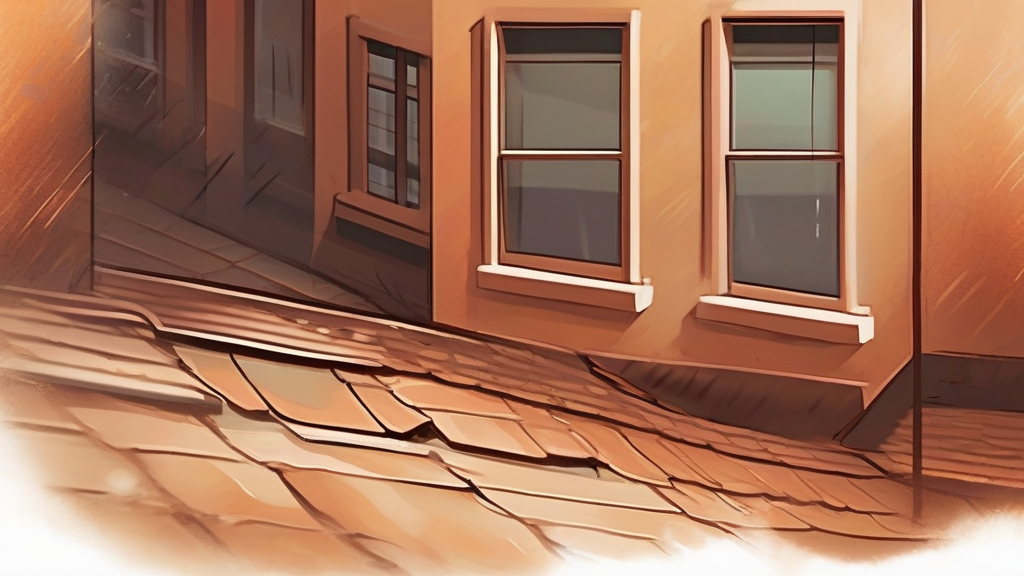
What does eavestrough mean?
An eavestrough is a channel — usually made of aluminum, vinyl, or steel — that runs along the lower, overhanging edge of a roof to catch rainwater and melting snow as it drains off, directing it toward downspouts that carry it safely away from a building's foundation. The term is used almost exclusively in Canada and parts of the northern United States; elsewhere in the English-speaking world the same object is simply called a gutter. Because eavestroughs prevent water from pooling around foundations, seeping into basements, and eroding soil, they are an essential part of home maintenance, and keeping them clear of leaves and ice is a familiar seasonal chore in colder climates. In Canadian speech the word is completely neutral and ordinary, heard in hardware stores, contractor estimates, and household conversation alike. Its transparent construction — combining 'eaves', the roof's overhang, with 'trough', a long narrow container for liquid — makes its meaning easy to grasp once the components are known.
nounA channel, typically of metal or plastic, fixed along the lower edge of a roof to collect and carry away rainwater.
- A channel fixed along the eaves of a roof to collect rainwater and direct it to downspouts.
"The old eavestroughs sagged under the weight of autumn leaves and had to be cleared before the first snowfall."
"After the storm, water was overflowing the eavestrough because the downspout was blocked with debris."
"They hired a contractor to replace the aluminum eavestroughs before winter set in."
The plural is the most common form in practice, since houses normally have eavestroughs running along several roof edges.
"The crew spent Saturday clearing pine needles out of the eavestroughs."
Canadians are among the only English speakers who say 'eavestrough' — everyone else calls it a gutter — making it one of those words that instantly reveals where you're from.
Reviewed by Deb Chak, Editor. AI-assisted content curated by RJS Tech Solutions LLP.
Etymology of eavestrough
The word is a compound of two Old English elements: 'eaves', the plural of 'efes', meaning the overhanging edge of a roof, and 'trough', from Old English 'trog', meaning a long open vessel for holding liquid or feed. Both roots are ancient Germanic words inherited directly into modern English, so the compound was formed entirely from native stock rather than Latin or French borrowing. Such compounds appear to have arisen in North American English, where the term became established as the standard word for a roof gutter in Canada while remaining rare elsewhere.
How eavestrough is actually used
The word is chiefly Canadian; speakers in Britain and most of the United States say 'gutter' or 'rain gutter' instead. It is standard, neutral vocabulary in Canadian usage, appearing in both everyday conversation and building trade contexts. It is almost always used in the plural when referring to a whole house's system.
Easily confused with eavestrough
An eave is the overhanging lower edge of a roof itself, whereas an eavestrough is the water-collecting channel attached beneath that edge.
A downspout is the vertical pipe that carries water down from an eavestrough to the ground, not the horizontal channel along the roof.