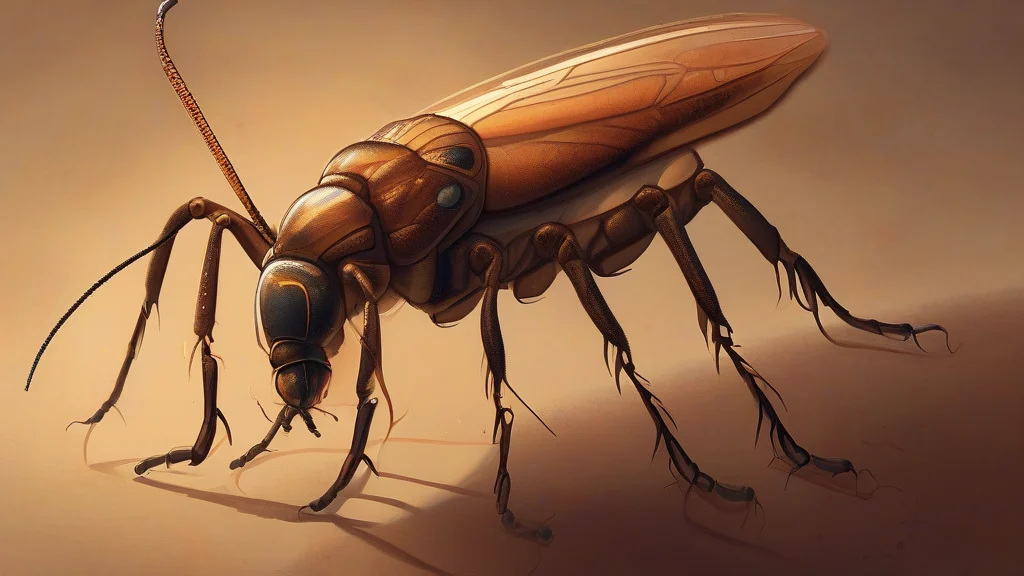
What does ecdysone mean?
Ecdysone is the principal moulting hormone of insects and other arthropods. It is a steroid belonging to a class of related hormones called ecdysteroids, and its release into the insect's blood triggers ecdysis — the shedding of the old exoskeleton — as well as the developmental transitions between larval stages and, ultimately, metamorphosis into the adult form. In practice, biologists often refer to 20-hydroxyecdysone, a more active derivative produced from ecdysone in target tissues, which acts through the ecdysone receptor to switch specific genes on or off at precisely timed points in development. The word is strictly scientific, appearing almost exclusively in entomology, endocrinology, and biochemistry rather than everyday speech. Its study matters well beyond pure curiosity: because ecdysone controls processes found only in arthropods, it is a key target for insecticides designed to disrupt pest life cycles, and plant-derived analogues have been investigated for possible effects on animal physiology.
nounA steroid hormone in insects and other arthropods that triggers moulting — the shedding of the exoskeleton — and the associated developmental changes from one larval stage to the next.
- The principal moulting hormone of insects and other arthropods, a steroid (specifically an ecdysteroid) that triggers ecdysis and regulates metamorphosis.
- (Biochemistry, broader use) Any member of the class of related steroid hormones (ecdysteroids) with similar moulting-inducing activity in arthropods.
"Rising levels of ecdysone signal the caterpillar to begin forming its chrysalis."
"The researchers measured ecdysone levels in the larvae to pinpoint the onset of metamorphosis."
"Because plants such as spinach contain phytoecdysteroids chemically similar to ecdysone, some insects are deterred from feeding on them."
Rarely pluralised; the plural appears mainly when discussing different ecdysteroid compounds collectively.
"Several naturally occurring ecdysones were isolated from the plant extract."
Ecdysone is the chemical alarm clock that tells an insect it's time to shed its skin — without it, a caterpillar could never become a butterfly.
Reviewed by Deb Chak, Editor. AI-assisted content curated by RJS Tech Solutions LLP.
Etymology of ecdysone
The term was coined in the mid-20th century by German biochemist Adolf Butenandt and colleagues following the isolation of the hormone from silkworm pupae in the early 1950s. It derives from the Greek 'ekdyein', meaning 'to strip off' or 'to moult' — formed from 'ek-' ('out') and 'dyein' ('to enter', here in the sense of slipping out of one's skin) — combined with the '-one' suffix standard for ketones, since the compound is a steroidal ketone. It shares this Greek root with the older entomological term 'ecdysis', the process of moulting.
Related word forms
How ecdysone is actually used
Ecdysone is a technical term confined to entomology, endocrinology, and biochemistry; it is rarely encountered outside scientific literature. It is typically discussed alongside its more active metabolite, 20-hydroxyecdysone, and its interaction with juvenile hormone in controlling insect development.
Easily confused with ecdysone
Ecdysis is the act or process of moulting itself, whereas ecdysone is the hormone that initiates it.