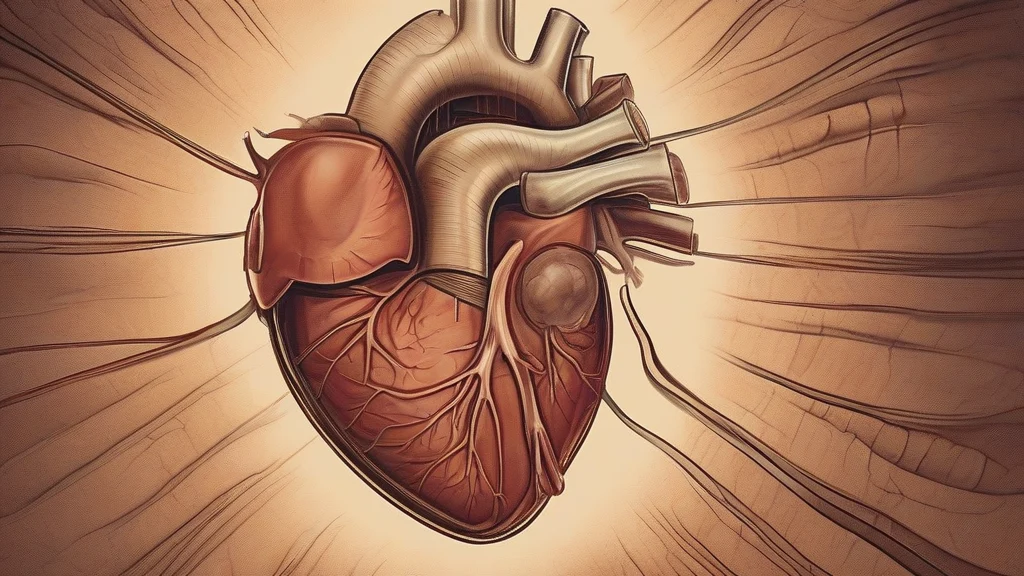
What does ectasis mean?
Ectasis is a technical noun denoting the stretching or widening of a bodily structure, most often a tubular organ such as a blood vessel, bronchus, or chamber of the heart. In medical contexts it describes a form of dilatation that may be physiological or pathological — for example, aneurysmal ectasis of the aorta — and it appears frequently in radiology reports and clinical literature. A second, largely historical sense belongs to classical prosody, where ectasis named the lengthening of a short vowel or syllable for metrical purposes. The word derives from the Greek 'ekteinein', meaning 'to stretch out', sharing a root with 'ecstasy', which literally evokes a standing outside oneself. In contemporary usage 'ectasis' has been largely superseded by its variant 'ectasia' and by more specific terms naming particular conditions, so it reads as formal and somewhat old-fashioned outside specialist settings. Its adjective 'ectatic' remains current in medicine.
nounThe stretching or dilatation of a tubular organ or body part, especially of blood vessels or the heart; in linguistics, the lengthening or protraction of a syllable or vowel sound.
- Medicine: the stretching, widening, or dilation of a tubular structure such as a blood vessel, bronchus, or part of the heart.
- Linguistics/Prosody: the lengthening or protraction of a vowel or syllable in pronunciation.
"The cardiogram revealed an ectasis of the aortic root that required close monitoring."
"The scan showed mild ectasis of the pulmonary artery, which the physician elected to monitor rather than treat."
"In classical prosody, ectasis referred to the lengthening of a naturally short syllable for metrical effect."
The plural follows the Greek-style '-es' ending typical of medical terms from Greek; it is rare because the word usually appears in singular clinical descriptions.
"Multiple arterial ectases were identified across both renal vessels."
Ectasis shares its Greek root with 'ecstasy' — one word describes your heart stretching, the other your mind standing outside itself.
Reviewed by Deb Chak, Editor. AI-assisted content curated by RJS Tech Solutions LLP.
Etymology of ectasis
Ectasis comes from the Greek 'ékstasis'/'éktasis', formed from 'ek-' ('out') plus 'teinō' ('to stretch'), hence literally 'a stretching out'. It was adopted into New Latin as a medical term during the early modern period and passed into English anatomical and pathological vocabulary. The same Greek root yields 'ectatic' (adjective) and the variant 'ectasia', as well as the more familiar 'ecstasy', whose sense shifted metaphorically from bodily displacement to emotional rapture.
Related word forms
How ectasis is actually used
Ectasis is a formal, technical term found almost exclusively in medical and academic writing. In clinical practice the related form 'ectasia' (e.g., 'coronary artery ectasia') is now considerably more common, and many modern texts prefer it; 'ectasis' survives chiefly in older literature and in specific fixed compounds.
Easily confused with ectasis
'Ecstasis' refers to a state of being beside oneself or displacement (the root of 'ecstasy'), whereas 'ectasis' denotes physical stretching or dilation of tissue.
'Ectopia' means abnormal displacement of an organ to a wrong position, while 'ectasis' means abnormal widening or stretching of it.