What does edamame mean?
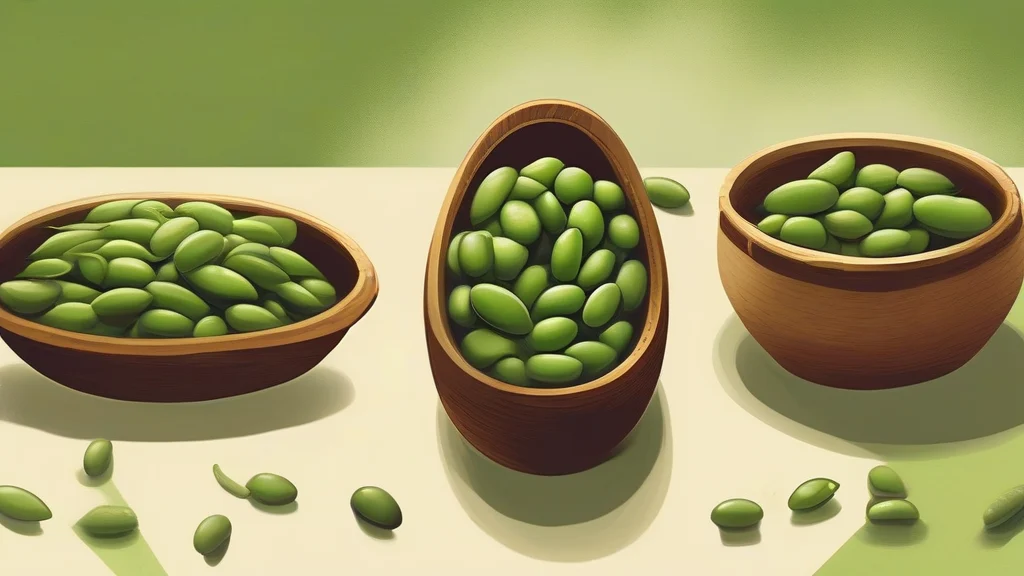
Edamame refers to young, green soybeans picked before they have ripened or hardened, commonly boiled or steamed whole in their pods and sprinkled with salt. A staple of East Asian cuisine, particularly Japanese, it has become widely familiar in Western countries as a healthy snack, appetizer, or addition to salads and grain bowls. Diners typically squeeze the beans directly out of the pod with their teeth or fingers, discarding the pod itself; when recipes call for the loose beans alone, they are described as shelled edamame. Nutritionally prized as a source of complete plant protein, fiber, and vitamins, edamame carries connotations of freshness and healthful eating. The word entered English from Japanese, where it means 'stem bean', and it functions grammatically as both a mass noun and a count noun, with no separate plural form required.
nounYoung, green soybeans harvested before they mature, typically boiled or steamed in the pod and salted, then eaten as a snack or appetizer.
- The edible green pods of immature soybeans, usually boiled or steamed and salted, eaten especially in East Asian cuisine and as a snack or appetizer.
"The restaurant served a bowl of steamed edamame dusted with sea salt as a starter."
"She snacked on a handful of salted edamame while waiting for her ramen to arrive."
"The salad was topped with shelled edamame for a boost of plant-based protein."
Standard usage treats edamame as invariant, functioning as either a mass noun or a count noun depending on context. The form 'edamames' appears occasionally but is not widely accepted in formal writing.
"We ordered two more plates of edamame."
In Japanese, 'edamame' literally means 'stem bean' — because the beans were traditionally sold still attached to their stalks.
Reviewed by Deb Chak, Editor. AI-assisted content curated by RJS Tech Solutions LLP.
Etymology of edamame
The word 'edamame' is a direct borrowing from Japanese, where 枝豆 combines 'eda' (branch or stem) and 'mame' (bean), a name that arose because the beans were traditionally sold on the stem. It entered English in the late twentieth century as Japanese food culture spread internationally, appearing first in specialist culinary writing before becoming common on menus. It shares its Japanese origin with many other food-related loanwords in English, such as 'tofu' and 'sushi', though it has no Latin or Greek cognates.
How edamame is actually used
Used as both a mass noun ('some edamame') and a count noun ('an order of edamame'). The word is fully naturalized in English, particularly in food writing and menus, and carries no informal register. When referring to individual beans removed from the pod, speakers often say 'shelled edamame'.
Easily confused with edamame
Miso is a fermented paste made from mature soybeans, whereas edamame is fresh, immature soybeans eaten whole in the pod.