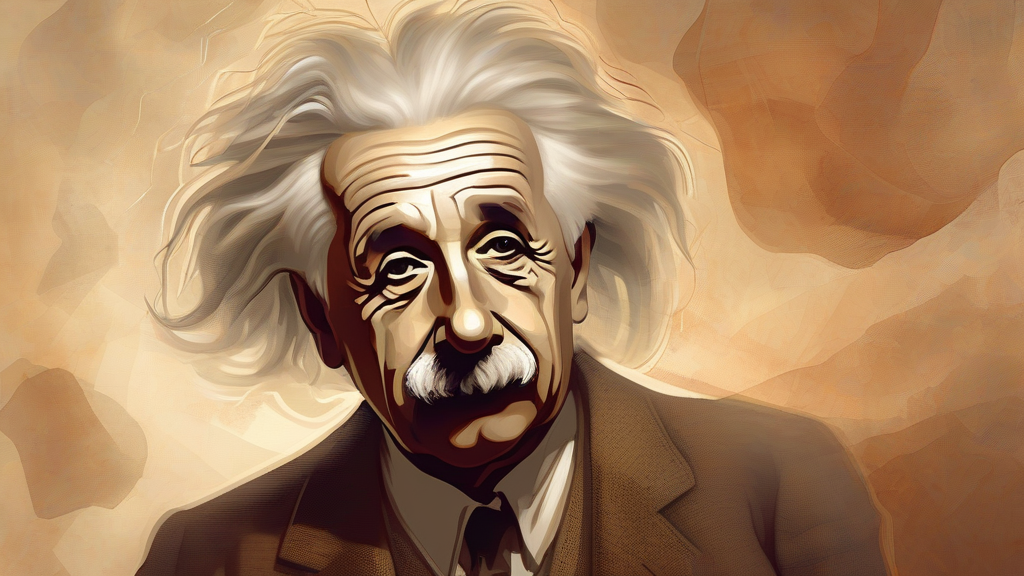
What does einstein mean?
"Einstein" is used as a common noun to describe a person of exceptional intelligence — in short, a genius. The word comes from the name of Albert Einstein, the German-born physicist whose theory of relativity made him the twentieth century's most famous emblem of intellectual brilliance, and it entered everyday English as informal shorthand for anyone remarkably clever. It is most often heard in casual speech, frequently with irony or in negative constructions: "I'm no Einstein, but even I can see the flaw in that argument." In such uses it is typically written lowercase, though it remains capitalized when referring to the physicist himself. The word carries a broadly admiring connotation, though its ironic uses can be gently sarcastic. Its enduring popularity reflects how deeply Einstein's public image became fused with the idea of genius itself.
(informal) An exceptionally intelligent person; a genius.
"She's a bit of an Einstein when it comes to mathematics."
Usually lowercase in generic use; often ironic or in negated constructions ('no Einstein').
(capitalized) Refers to Albert Einstein, the German-born theoretical physicist who formulated the theories of special and general relativity.
"Einstein published his paper on special relativity in 1905."
Proper-noun use; always capitalized.
Informal plural referring to multiple exceptionally intelligent people; rare but attested in casual usage.
"The lab was full of young einsteins competing for the same grant."
Albert Einstein himself never liked being called 'the world's smartest man' — yet his surname became the everyday shorthand for a genius.
Reviewed by Deb Chak, Editor. AI-assisted content curated by RJS Tech Solutions LLP.
Etymology of einstein
The word derives from the surname of Albert Einstein (1879–1955), the German-born theoretical physicist who developed the theory of relativity. The surname itself is of German origin, formed from the elements "ein" (one) and "Stein" (stone), a family name common among German Jews. By the mid-twentieth century, following Einstein's rise to global fame, English speakers began using the name generically for any person of outstanding intelligence. A related coinage is "einsteinium," the name given to element 99 on the periodic table in honor of the physicist.
Related word forms
How einstein is actually used
Informal and conversational in tone. Frequently used ironically or in negation ('he's no Einstein') to imply someone is not bright. Often capitalized when referring directly to the physicist, but usually lowercase when used generically for a clever person.
Easily confused with einstein
Frankenstein is the scientist (or his monster) in Mary Shelley's novel, whereas an einstein is simply any highly intelligent person.