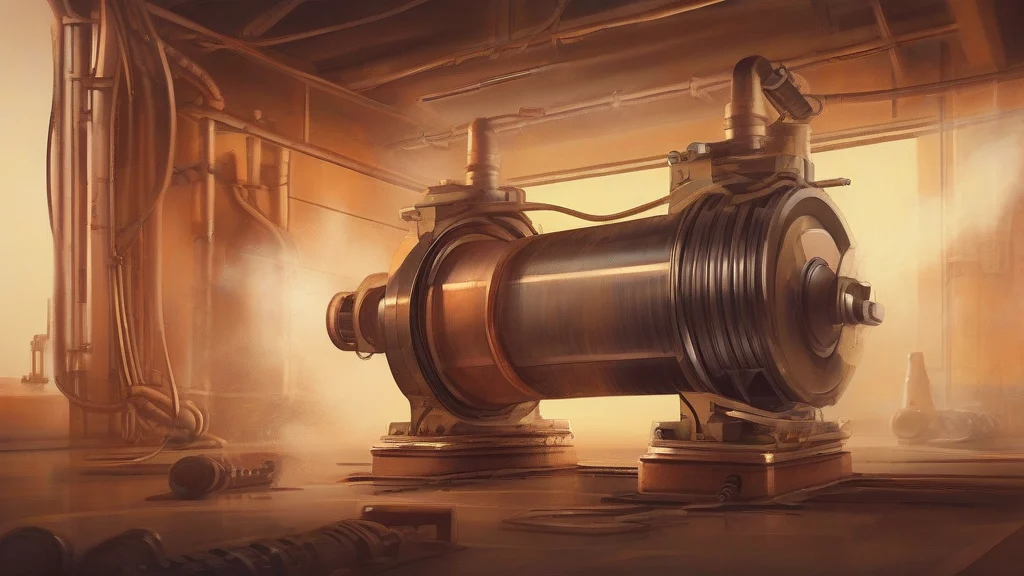
What does ejector mean?
An ejector is a device designed to force something out — whether that is a fluid, a gas, or a solid object. The word appears most often in engineering contexts. A steam ejector, for instance, uses a high-velocity jet of steam to entrain and remove air or other gases from a vessel, a principle long exploited in power stations, condensers, and railway braking systems. In manufacturing, ejector pins push moulded components free from their dies, and in aviation the ejector seat famously propels a pilot clear of a stricken aircraft. The term carries a precise, technical connotation rather than an emotional one, and it rarely appears outside specialist or compound usage. Derived from the Latin verb eicere, meaning 'to throw out', ejector names both the agent and the apparatus of expulsion. Understanding the word helps readers navigate technical writing about pumps, turbines, moulding machinery, and safety systems where controlled ejection is essential.
nounA device or mechanism that ejects or forces something out, especially one that expels fluid, gas, or material by pressure or suction; in engineering, a pump-like device that uses a jet of fluid to draw in and discharge another fluid.
- A mechanical device that forcibly expels or discharges material (fluid, gas, or objects), as in an ejector pump or an ejector seat in aircraft.
- In thermodynamics and engineering, a jet pump that uses the momentum of a high-velocity primary fluid to entrain and compress a secondary fluid.
"The condenser's ejector removed air from the system by means of a high-pressure steam jet."
"The moulding machine uses ejector pins to push the finished plastic part cleanly from the cavity."
"Steam locomotives relied on an ejector to create vacuum in the brake pipes, applying the brakes along the whole train."
Regular plural; used when referring to multiple devices or instances.
"Both condensers are fitted with twin ejectors to handle peak steam loads."
Before the ejector seat saved pilots' lives, the humble steam ejector was already doing heroic work — silently pumping water and removing air from engines using nothing but a jet of its own steam.
Reviewed by Deb Chak, Editor. AI-assisted content curated by RJS Tech Solutions LLP.
Etymology of ejector
Ejector derives from the Latin eicere (also spelled ejicere), meaning 'to throw out or cast forth', formed from ex- ('out') plus iacere ('to throw'). English adopted the verb eject from this root in the early 17th century, with ejector following shortly after as the agent noun denoting the thing that ejects. It shares its Latin ancestry with cognates such as reject, project, inject, and trajectory, all built on the same verb iacere.
Related word forms
How ejector is actually used
Predominantly technical and engineering vocabulary, common in mechanical, chemical, and aerospace contexts. In everyday British English it survives mainly in fixed compounds such as 'ejector seat'.
Easily confused with ejector
An injector forces a fluid into a system, whereas an ejector draws or drives something out of it.