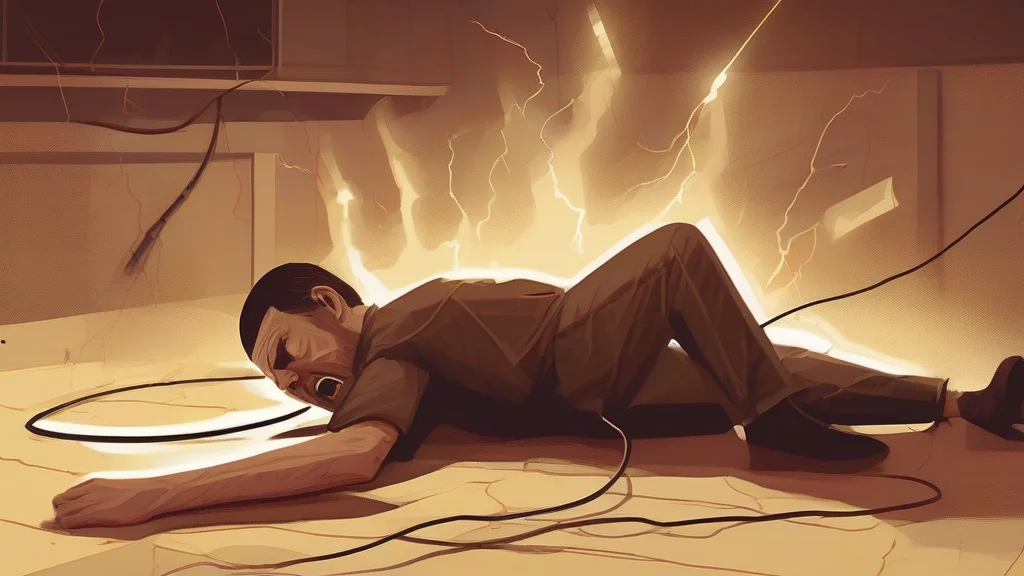
What does electrocution mean?
Electrocution refers to death or severe injury caused by an electric current passing through the body. The word is also used, more narrowly, for the execution of a condemned prisoner by electric shock, though this sense has become largely historical as jurisdictions have moved away from the electric chair. In modern usage the word appears most frequently in contexts of workplace safety, household hazards, and accident reporting: frayed wiring, downed power lines, and wet electrical equipment are all classic causes. Many careful writers restrict the term to fatal shocks, using 'electric shock' for lesser injuries, although loose everyday use often blurs that line. The word's connotations are grim and urgent, which makes it a staple of warning labels and public-safety campaigns. Its origin is itself memorable — it was coined in late nineteenth-century America by blending 'electric' with 'execution', anticipating the electric chair before it existed. For learners, electrocution is worth knowing both as precise vocabulary for a real danger and as a vivid example of how English coins new words for new technologies.
nounThe injury or killing of a person by an electric shock, or the execution of a person by means of a lethal electric current.
- Death or severe injury caused by an electric current passing through the body.
- Execution of a condemned person by means of a lethal electric shock (chiefly historical/legal usage).
"The old factory wiring was so faulty that workers risked electrocution every time they touched the machinery."
"Safety inspectors cited the company after a maintenance worker suffered fatal electrocution from exposed cables."
"The state abolished electrocution as a method of capital punishment decades ago."
Used when referring to multiple individual instances, typically in statistics or reports.
"Regulators reported a decline in workplace electrocutions over the past decade."
The word 'electrocution' was invented in the 1880s as a blend of 'electric' and 'execution' — coined before anyone had actually been put to death in the electric chair.
Reviewed by Deb Chak, Editor. AI-assisted content curated by RJS Tech Solutions LLP.
Etymology of electrocution
Electrocution was coined in American English in the late nineteenth century, shortly before the introduction of the electric chair, as a portmanteau blending 'electro-' (from Greek 'ēlektron', meaning amber, the root of 'electric') with the ending of 'execution'. It entered circulation around 1889 amid public debate over electrical execution as a supposedly humane method of capital punishment. The broader sense of accidental death by electricity developed naturally from this legal coinage. Its cognates include 'electric', 'electricity', and 'electron', all tracing back to the same Greek root.
How electrocution is actually used
Strictly speaking, many style guides reserve 'electrocution' for electric shocks that cause death; non-fatal incidents are better described simply as 'electric shocks'. In everyday use, however, the word is often applied loosely to serious but survivable shocks. The term carries strongly negative connotations and appears most often in safety warnings, news reports of accidents, and legal contexts.
Easily confused with electrocution
An electric shock is any passage of current through the body and may be minor or survivable, whereas electrocution specifically implies severe injury or death.