What does electromagnet mean?
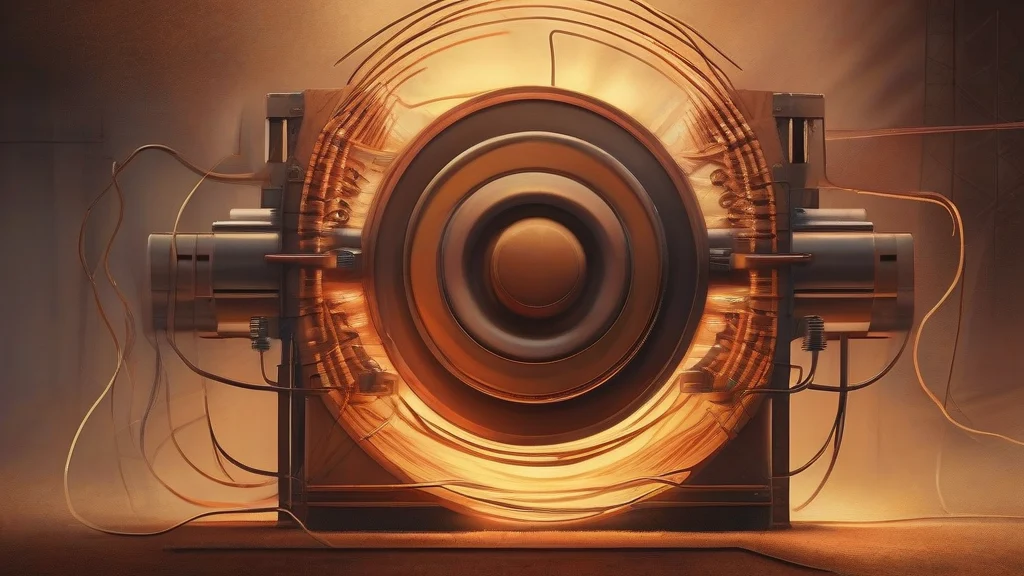
An electromagnet is a device that generates a magnetic field by means of an electric current rather than through permanent magnetization. In its most common form, it consists of a coil of insulated wire wound around a core of ferromagnetic metal such as iron; when current flows through the coil, the core becomes strongly magnetized, and when the current stops, the magnetism largely disappears. This controllability is the electromagnet's defining advantage: by adjusting the current, one can vary the field's strength or switch it on and off at will. Electromagnets are indispensable throughout modern technology — they drive electric motors, operate relays and solenoid valves, produce sound in loudspeakers, lift heavy steel scrap in salvage yards, and generate the powerful fields required in particle accelerators and MRI scanners. The word combines "electric" with "magnet" and belongs to technical but widely understood vocabulary, familiar from school science lessons as well as engineering practice.
nounA magnet in which the magnetic field is produced by an electric current, typically consisting of a coil of wire wound around a core of ferromagnetic material such as iron. Its strength can be controlled by varying the current, and it loses its magnetism when the current is switched off.
- A device consisting of a coil of wire, often around an iron core, that becomes magnetic when an electric current passes through it and ceases to be magnetic when the current stops.
"The scrapyard crane used a powerful electromagnet to lift and drop tons of steel."
"The doorbell's electromagnet pulls a small hammer against a bell each time current flows through the circuit."
"Engineers at the laboratory cooled the superconducting electromagnet to near absolute zero to achieve the enormous field strength required."
Standard regular English plural; used when referring to multiple devices or instances.
"Particle accelerators contain thousands of precisely aligned electromagnets."
Switch off the current and an electromagnet simply stops being a magnet — which is exactly how cranes let go of a car they just lifted.
Reviewed by Deb Chak, Editor. AI-assisted content curated by RJS Tech Solutions LLP.
Etymology of electromagnet
The word "electromagnet" is formed from "electric," ultimately deriving from the Greek "ēlektron" (amber), combined with "magnet," from the Latin "magnes," referring to the lodestone of Magnesia. The term emerged in the early nineteenth century, following Hans Christian Ørsted's 1820 discovery that an electric current deflects a compass needle and William Sturgeon's construction of the first practical iron-cored electromagnet shortly afterward. It shares its roots with cognates such as "electricity," "electronic," and "magnetism."
How electromagnet is actually used
A technical term used chiefly in physics, electrical engineering, and everyday contexts involving motors, relays, speakers, MRI machines, and lifting equipment. It is neutral in register. The plural is straightforwardly "electromagnets."
Easily confused with electromagnet
An electromagnet produces its field only when electric current flows through it, whereas a permanent magnet retains its magnetism without any current.